
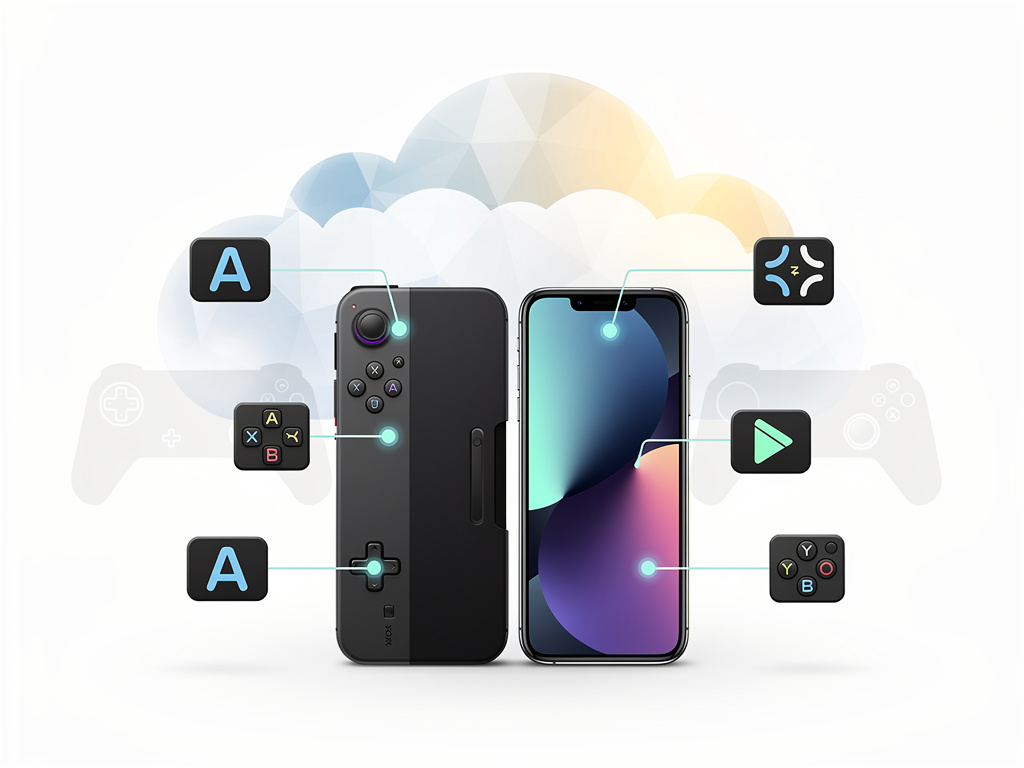
Google is quietly building something that mobile gamers have wanted for years: the ability to remap physical controller buttons directly from the operating system, no third-party apps required. The feature, tucked into the first developer preview of Android 17, signals that Google is finally treating handheld gaming as a first-class priority rather than an afterthought.
The new controller remapping capability lets users reassign buttons on connected gamepads through Android’s system settings. That means if a game hard-codes jump to the A button but you prefer it on B, you can fix that at the OS level. No workarounds. No sideloaded utilities. Just a settings menu that does what it should.
As Lifehacker reported, the feature was spotted in Android 17 Developer Preview 1 and represents one of several gaming-focused improvements Google is baking into the next major release of its mobile operating system. The publication noted that this kind of system-level remapping has been a standard expectation on PC and console platforms for years, making its absence on Android all the more conspicuous.
Context matters here. Android powers not just phones but also a growing fleet of handheld gaming devices, tablets, and Chromebooks that increasingly double as portable gaming machines. The Lenovo Legion Go S, which launched earlier this year running Android, is a direct competitor to Valve’s Steam Deck and Nintendo’s Switch. Asus’s ROG Ally X has flirted with Android variants. And Google’s own Pixel Tablet, while not marketed as a gaming device, supports Bluetooth controllers and cloud gaming services like Xbox Cloud Gaming and Nvidia GeForce Now.
For all these devices, controller support has been inconsistent at best. Some games recognize controllers natively. Others don’t. And when button mappings feel wrong, users have historically been stuck — forced to rely on apps like Mantis Gamepad Pro or octopus-like overlay tools that simulate touch inputs from controller presses. These solutions work, but they’re clunky, sometimes conflict with anti-cheat systems, and require per-game configuration that most casual players won’t bother with.
Android 17’s approach is cleaner. By handling remapping at the system level, it ensures that every app receiving controller input gets the remapped version, regardless of whether the game itself offers customization options. This is how Windows has handled it through Steam Input and Xbox Accessories for years. It’s how PlayStation and Xbox consoles work natively. Android was the outlier.
Not anymore.
The timing isn’t accidental. Google has been watching the handheld PC gaming market explode. Steam Deck sales crossed the multimillion-unit mark. Competitors from Asus, MSI, and Lenovo have piled in. And Android-based handhelds from companies like Retroid and AYN have carved out a niche among emulation enthusiasts and cloud gaming subscribers who want a pocketable device that isn’t locked to a single storefront. Google clearly sees an opportunity to make Android the default operating system for this category — or at least a serious contender — and controller remapping is table stakes for that ambition.
There’s more to Android 17’s gaming push than just button remapping. Google has also been working on improvements to its game mode APIs, which allow the system to optimize performance, thermal management, and notification behavior when a game is running. Developer Preview 1 hints at expanded support for variable refresh rate displays during gameplay, a feature that could reduce battery drain on devices that support 120Hz or 144Hz screens by dynamically lowering the refresh rate during less demanding scenes.
The broader picture is one of convergence. Google wants Android to be viable everywhere — phones, tablets, foldables, cars, TVs, and now dedicated gaming hardware. Each of those form factors has different input requirements. A phone relies on touch. A TV uses a remote or controller. A handheld gaming device needs tight, responsive gamepad integration with customization options that serious players expect. Android 17 appears to be the release where Google starts closing the gap on input flexibility in a meaningful way.
Industry analysts have noted that mobile gaming revenue continues to dwarf console and PC gaming combined, with global mobile game spending projected to exceed $90 billion in 2025 according to recent estimates from Newzoo. But much of that revenue comes from free-to-play touch-based games — the Candy Crushes and Genshin Impacts of the world. The segment that’s growing fastest, and attracting the most hardware investment, is the premium and cloud gaming space where controllers are expected, not optional.
Google’s Play Games on PC initiative, which brings Android games to Windows, has also reinforced the need for proper controller support. If Android games are going to run on desktops and laptops where gamepads are standard peripherals, the underlying OS needs to handle those peripherals gracefully. Remapping is part of that. So is proper vibration support, analog stick dead zone calibration, and trigger sensitivity — features that haven’t been confirmed for Android 17 but that developers and hardware partners have been requesting for years.
Sony and Microsoft solved these problems long ago on their respective platforms. Nintendo has offered button remapping on Switch since a 2020 firmware update. Apple added game controller support to iOS and tvOS years back, and with iOS 16 introduced system-level button remapping that works across all games. Google is late. But late is better than never, and the implementation in Android 17 suggests the company is taking a thoughtful approach rather than rushing out a half-baked feature.
One open question is how granular the remapping will be. Will users be able to create per-game profiles, or will remapping apply globally? Can analog sticks be remapped, or just face buttons and triggers? Will there be support for creating macros or multi-button shortcuts? The developer preview doesn’t answer all of these questions yet, and Google hasn’t published detailed documentation on the feature’s full scope. But the foundation is there, and Android’s open-source nature means that device manufacturers like Samsung, Lenovo, and Asus can extend the feature with their own customization layers if Google’s default implementation falls short.
For accessory makers like 8BitDo, Razer, GameSir, and Backbone, OS-level remapping could simplify their own software stacks. Many of these companies ship companion apps that handle remapping on a per-controller basis, storing profiles in the controller’s firmware or in a phone app. If Android handles remapping natively, these companies can focus their software efforts elsewhere — perhaps on advanced features like motion control mapping, gyro aiming configuration, or community profile sharing — rather than solving a basic problem the OS should have addressed years ago.
The competitive implications extend beyond hardware. Cloud gaming services have struggled with inconsistent controller behavior on Android. Xbox Cloud Gaming, for instance, works well with Xbox controllers but can be finicky with third-party pads. GeForce Now has similar quirks. A standardized, OS-level remapping layer could smooth out these inconsistencies and make cloud gaming on Android feel more polished, which benefits Google’s own efforts to position Android as a cloud gaming platform.
Android 17 is expected to reach stable release in the second half of 2025, likely around August or September based on Google’s typical release cadence. Developer Preview 1 is available now for Pixel devices, with subsequent previews and beta releases expected throughout the spring and summer. The controller remapping feature could evolve significantly between now and the final release — or, as sometimes happens with developer preview features, it could be pulled or delayed if it isn’t ready.
But the signal is clear. Google is investing in making Android a better platform for gaming with physical controls, and controller remapping is the most visible proof point so far. For an industry that has long treated Android as a touch-first, controller-maybe platform, that’s a meaningful shift. And for the millions of gamers who’ve been jury-rigging controller setups on their Android devices for years, it’s about time.


 WebProNews is an iEntry Publication