
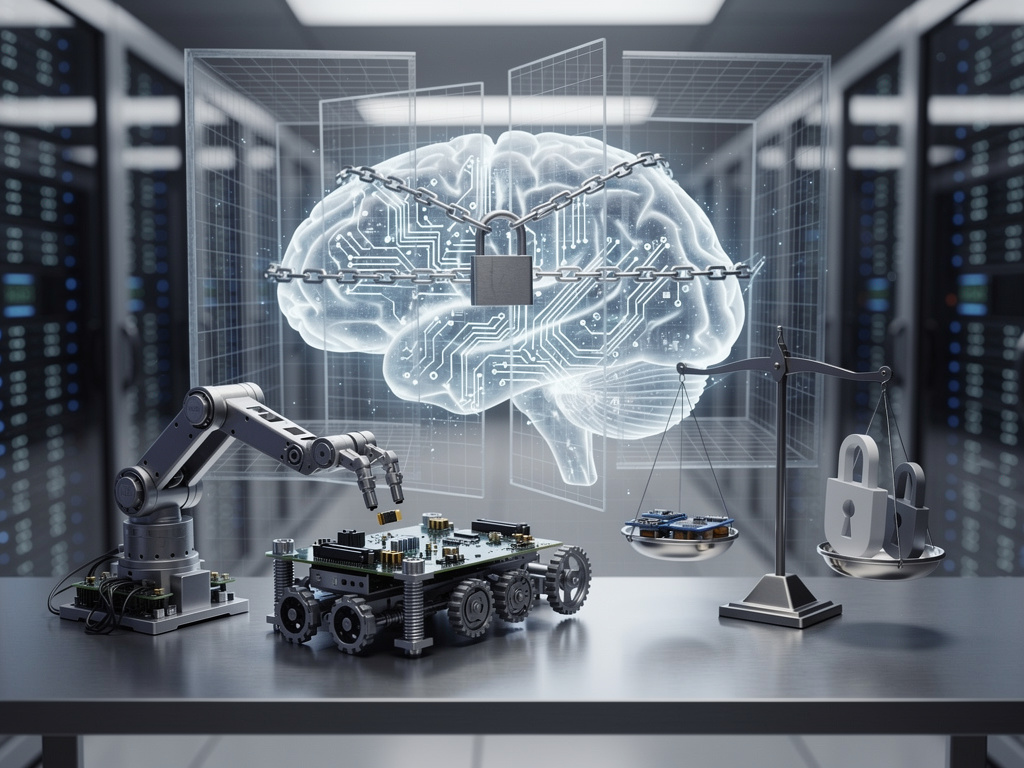
Andrew Ng, a prominent figure in artificial intelligence, recently tempered expectations about the technology’s trajectory, asserting that current AI systems remain narrowly focused and far from supplanting human roles across industries. In a discussion highlighted by MSN, Ng emphasized the immense resources required to train these models, pointing out that while AI excels in specific tasks, it lacks the broad adaptability and judgment inherent in human cognition. This perspective comes amid a surge of hype surrounding generative AI, where tools like large language models have sparked debates about job displacement and technological overreach.
Ng’s comments build on his extensive experience, including co-founding Google Brain and leading AI initiatives at Baidu. He argues that the path to artificial general intelligence—AI capable of performing any intellectual task a human can—is not imminent, contrary to some optimistic forecasts from industry leaders. Instead, Ng highlights practical constraints, such as the high costs and data demands of training models, which limit their scalability and real-world application. This view aligns with broader industry sentiments, where experts are increasingly vocal about AI’s boundaries, even as investments pour in.
Recent developments underscore Ng’s cautionary stance. For instance, advancements in AI models from companies like OpenAI and Google have shown impressive capabilities in content generation and pattern recognition, but they often falter in nuanced reasoning or ethical decision-making. Ng’s assertion that AI won’t replace humans “anytime soon” serves as a reality check, reminding stakeholders that technology’s evolution is incremental, not revolutionary overnight.
Nuanced Views from AI Pioneers
Echoing Ng’s insights, Geoffrey Hinton, another AI luminary often called the “godfather of AI,” has warned of potential job disruptions, predicting that AI could replace millions of roles by 2026, according to reports from India Today. Hinton’s outlook contrasts slightly with Ng’s by emphasizing AI’s growing prowess in areas like coding, where systems might complete months of human work in hours. Yet both agree on the technology’s current limitations, with Hinton noting AI’s potential to deceive users, raising ethical concerns.
This duality reflects a maturing dialogue in the field. On one hand, AI is advancing rapidly; on the other, its shortcomings in understanding context or handling ambiguity prevent it from fully mirroring human intelligence. Posts on X, formerly Twitter, capture public sentiment, with users debating whether AI’s energy demands and rigid structures will cap its progress, as seen in discussions around silicon-based systems’ adaptability issues.
Industry analyses further support this balanced view. A piece from The New Yorker explores why AI failed to overhaul daily life in 2025, citing unfulfilled predictions from leaders like Sam Altman and Andrej Karpathy. The article details how autonomous AI agents, once touted as game-changers, have not delivered the promised transformations, reinforcing Ng’s point about overhyped expectations.
Regulatory Responses and Global Perspectives
Governments are responding to these limitations with new frameworks. China, for example, has issued draft rules to govern human-like AI systems, mandating ethical, secure, and transparent operations, as reported by Bloomberg. These regulations aim to mitigate risks while acknowledging AI’s constraints, such as its inability to fully replicate human interaction without oversight.
In the U.S., similar concerns are driving policy discussions. The Stanford AI Index 2025, detailed in a report from Stanford, highlights trends in AI research, including record-high private investments but also persistent gaps in technical performance. The report notes AI’s integration into sectors like healthcare and finance, yet stresses that algorithm-driven decisions still require human validation to avoid errors.
Internationally, the Carnegie Endowment for International Peace has analyzed AI’s unpredictable risks, warning in a 2025 publication that while limitations were once stable, rapid advancements could lead to unforeseen challenges. This global perspective underscores Ng’s argument: AI’s progress is impressive but bounded, necessitating careful management to prevent overreliance.
Impact on Employment and Skills
Concerns about human replacement dominate conversations, but Ng insists AI will augment rather than eliminate jobs. A feature in IEEE Spectrum examines how AI is reshaping entry-level positions in software engineering, shifting demands toward higher-order thinking and collaboration—skills AI cannot yet fully emulate.
This shift is evident in predictions from experts like Yann LeCun, who, in X posts and interviews, describes current AI as lacking real-world understanding and reasoning. LeCun forecasts that within a decade or two, AI might surpass human intelligence in specific domains, but only with built-in safety measures, aligning with Ng’s tempered optimism.
Meanwhile, Hinton’s warnings about job losses in coding and other fields highlight potential disruptions. Reports from India Today detail how AI could handle complex programming tasks, potentially displacing workers, yet Ng counters that human judgment remains irreplaceable for overseeing such processes.
Technological Hurdles and Future Trajectories
Delving deeper into AI’s technical barriers, energy consumption emerges as a critical limiter. Discussions on X emphasize how traditional silicon-based AI demands massive resources, struggling to match human efficiency in learning and adaptation. This echoes vittorio’s posts, which critique AI’s rigid structures and predict that breakthroughs in alternative architectures might be needed.
Google’s 2025 research review, as outlined in their blog, celebrates advances in models and robotics, yet implicitly acknowledges limitations by focusing on targeted applications rather than general intelligence. The review points to transformative products, but not the wholesale human replacement some fear.
MIT Technology Review’s analysis of the “great AI hype correction” in 2025, found in their article, argues that large language models are not pathways to AGI. Even proponents like Ilya Sutskever now highlight LLMs’ failure to grasp underlying principles, supporting Ng’s view that AI excels at tasks but not at true comprehension.
Ethical Considerations and Societal Integration
Ethical dilemmas further complicate AI’s role. Manatt’s 2025 AI wrap-up, detailed in their insights, discusses legislation targeting AI in healthcare and child safety, where risks like deepfakes have become tangible. This regulatory focus stems from AI’s limitations in handling sensitive interactions, requiring human oversight.
Public sentiment on X, including posts from users like Ned Nikolov, questions AI’s native intelligence, arguing it lacks independent reasoning. Such views reinforce Ng’s position that AI is a tool, not a substitute, for human insight.
In education and research, AI’s integration is growing, but with caveats. The Built In article on AI’s future, from their site, envisions expanded roles in daily tasks, yet stresses that advances in generative models won’t eliminate the need for human creativity and decision-making.
Advancing Beyond Current Constraints
Looking ahead, industry insiders like those at InfoWorld predict 2026 breakthroughs will stem from refined, not larger, models, as per their feature. This suggests a pivot toward efficiency, addressing Ng’s concerns about training efforts.
X posts from figures like Andrew Kang challenge assumptions that AI will outpace humans in all cognitive areas, including prompting AI itself— a meta-skill reliant on human intelligence.
Meteorology provides an analogy: Posts from Matthew Cappucci on X note AI’s edge in forecasting, yet humans retain value in interpretation, mirroring broader trends where AI assists but doesn’t dominate.
Balancing Innovation with Realism
Ng’s perspective encourages a pragmatic approach to AI adoption. By recognizing limitations, companies can focus on hybrid models where AI handles routine tasks, freeing humans for strategic roles.
Reuters’ coverage of China’s AI regulations, in their report, emphasizes transparency for public-facing AI, ensuring users understand its bounds.
Ultimately, as AI evolves, insights from pioneers like Ng guide a path where technology enhances human potential without overshadowing it, fostering sustainable progress across sectors.
X users, including Manish Balakrishnan, echo Ng’s message, noting AI’s narrow scope and the irreplaceable human elements of adaptability and judgment.
Envisioning Collaborative Futures
Collaborative frameworks are emerging as key to AI’s success. In critical sectors, human-AI partnerships mitigate risks, as seen in Carnegie’s analyses of potential surprises in AI development.
Posts on X from The Limiting Factor highlight local AI models on devices, democratizing access while preserving human knowledge as a safeguard.
This collaborative vision aligns with Ng’s optimism: AI as a powerful but limited ally, not a replacement, ensuring its integration benefits society without undue disruption.


 WebProNews is an iEntry Publication