
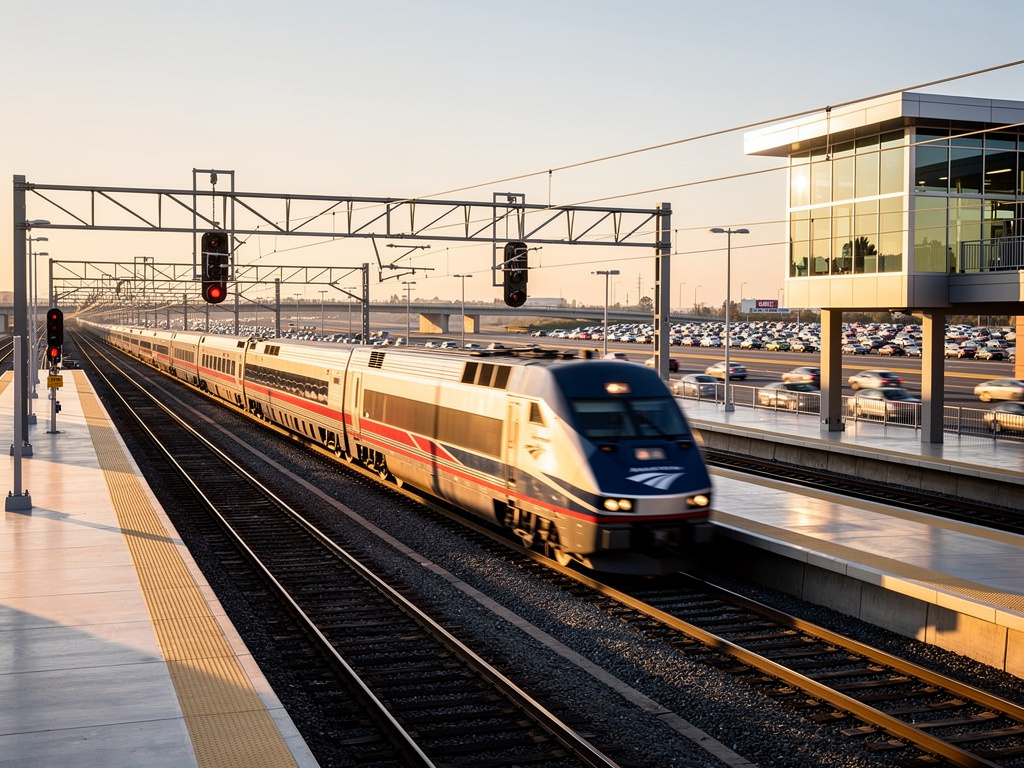
Rails on the Rise: Amtrak’s Unprecedented Surge and the Future of U.S. Passenger Rail
In the early months of 2026, Amtrak’s story is one of remarkable resurgence, with ridership and revenue shattering records amid a broader shift in how Americans travel. As air travel grapples with congestion and environmental concerns, and highways remain clogged, more passengers are turning to trains for their journeys. This trend, fueled by infrastructure investments and changing consumer preferences, positions Amtrak not just as a nostalgic alternative but as a vital component of the nation’s transportation network.
Fiscal year 2025, which ended in September, saw Amtrak carry 34.5 million passengers, a 10% increase from the previous year, according to data from the company’s own reports. Ticket revenue climbed to $2.7 billion, marking another high point. These figures build on a pattern of growth that began post-pandemic, with 2024 already setting benchmarks that were quickly eclipsed. The Northeast Corridor, Amtrak’s busiest route, alone accounted for a significant portion of this uptick, shuttling millions between major cities like Washington, D.C., New York, and Boston.
Beyond the numbers, this boom reflects deeper changes in travel habits. Frustrations with airport security lines, flight delays, and the environmental footprint of flying have pushed many toward rail. Amtrak’s appeal lies in its relative ease: no long security queues, more legroom, and the ability to work or relax en route. As one industry analyst noted, the service is attracting a diverse demographic, from business travelers seeking productivity to families opting for scenic, stress-free trips.
Infrastructure Investments Fueling Growth
Federal funding has played a pivotal role in Amtrak’s revival. The 2021 Bipartisan Infrastructure Law injected billions into rail projects, enabling upgrades to tracks, stations, and rolling stock. This has translated into faster, more reliable service on key routes. For instance, improvements along the Northeast Corridor have reduced travel times and increased frequency, making trains a competitive option against short-haul flights.
Amtrak’s leadership has emphasized customer experience as a cornerstone of this strategy. Newer trains with enhanced amenities, such as Wi-Fi, comfortable seating, and onboard dining, have drawn praise. In a recent article from Business Insider, experts highlighted how these upgrades are resonating with millennials and Gen Z travelers, who prioritize sustainability and convenience over speed alone.
Moreover, expansions into underserved areas are broadening Amtrak’s reach. Proposals for new routes, as outlined in Federal Railroad Administration studies, could connect millions more Americans to the rail system. Posts on X from users like transportation enthusiasts underscore this excitement, with many sharing stories of rediscovering train travel’s charm amid rising fuel costs and traffic woes.
Challenges Amid the Boom
Yet, Amtrak’s success is not without hurdles. The company continues to face equipment shortages, with an aging fleet leading to occasional delays and cancellations. In 2025, mechanical issues disrupted services on several long-distance routes, prompting apologies from Amtrak and frustration among passengers. Despite record revenues, operational profitability remains a goal, with the service still reliant on government subsidies to cover losses on less-trafficked lines.
Critics point to the need for more aggressive modernization. While high-speed rail dreams persist—evident in California’s ongoing project—Amtrak’s average speeds lag behind international counterparts. A report from Railway Supply details how investments are crucial for sustaining growth, warning that without them, demand could outstrip capacity.
On the financial front, Amtrak’s adjusted earnings show promise, but the path to self-sufficiency is steep. The company aims to break even by 2028, a target supported by rising ticket sales but challenged by rising costs for maintenance and labor. Industry insiders note that balancing affordability with revenue generation will be key, especially as fares inch upward to fund improvements.
Shifting Travel Preferences
The surge in ridership also mirrors broader societal shifts. Environmental awareness has made trains an attractive low-carbon option compared to cars or planes. Amtrak’s marketing campaigns highlight this, promoting routes like the Empire Builder through picturesque national parks as eco-friendly adventures. Social media buzz, including X posts celebrating scenic journeys, amplifies this narrative, turning passengers into advocates.
Business travel is another growth area. With remote work normalizing hybrid arrangements, executives are choosing trains for regional meetings, valuing the productive downtime. Data from Amtrak’s media releases, such as the FY25 year-end report on Amtrak Media, shows a spike in Acela service usage, the high-speed offering in the Northeast, where business-class ridership jumped significantly.
Families and leisure travelers are flocking to Amtrak too. The avoidance of highway driving, especially during peak seasons, has boosted long-distance services. One X user described a cross-country trip on the Southwest Chief as a revelation, preferring the relaxed pace over the hassles of air travel. This sentiment echoes in travel publications, where Amtrak is praised for fostering a sense of community aboard its trains.
Economic Impacts and Regional Benefits
Amtrak’s growth reverberates through local economies. Stations in smaller towns see increased foot traffic, benefiting nearby businesses. In places like Albuquerque or Fargo, train arrivals bring tourists who spend on hotels, restaurants, and attractions. Economic studies suggest that every dollar invested in rail yields multiples in regional development, a point reinforced in analyses from sources like The Travel.
Urban centers reap even greater rewards. The Northeast Corridor’s vitality supports commerce between economic hubs, easing pressure on overcrowded airports. As Amtrak expands, it could alleviate congestion in growing metros, where public transit integration—such as seamless connections to subways or buses—enhances overall mobility.
Looking ahead, partnerships with states are expanding. Initiatives like Virginia’s investment in additional services have doubled ridership on some lines. Similar efforts in the Midwest and West Coast aim to replicate this success, potentially transforming intercity travel patterns across the country.
Technological Advancements on the Horizon
Innovation is set to propel Amtrak further. Plans for new rolling stock, including Airo trains expected in 2026, promise modern features like accessibility enhancements and energy efficiency. These developments, detailed in Amtrak’s strategic outlines, address past criticisms of outdated equipment.
Digital tools are also transforming the passenger experience. Mobile apps for booking and real-time updates have streamlined operations, reducing no-shows and improving satisfaction. Insights from TravelPulse indicate that tech-savvy integrations, such as contactless payments and virtual assistants, are drawing younger demographics.
Sustainability efforts include electrification projects, aiming to cut emissions. With climate goals in mind, Amtrak is exploring renewable energy for its operations, aligning with national policies to green the transportation sector.
Policy and Funding Dynamics
Government support remains crucial. The Biden-era infrastructure bill’s legacy continues, but future administrations could alter priorities. Advocacy groups like the High Speed Rail Alliance, in their 2026 outlooks available on High Speed Rail Alliance, call for sustained funding to realize ambitious projects, including high-speed corridors.
Debates over subsidies persist, with some arguing for privatization to spur efficiency. However, Amtrak’s quasi-public status allows it to serve unprofitable routes that connect rural areas, a social good that pure market forces might neglect.
International comparisons highlight opportunities. While Europe’s high-speed networks inspire envy, Amtrak’s focus on incremental improvements—faster trains on existing tracks—offers a pragmatic path forward.
Passenger Stories and Cultural Shift
Personal anecdotes illuminate Amtrak’s appeal. Travelers recount forming connections in dining cars or gazing at landscapes from observation lounges. X posts from 2026 capture this enthusiasm, with users sharing photos of journeys through the Rockies or along the Pacific Coast, emphasizing the romance of rail.
This cultural revival is evident in media portrayals, from documentaries to social media influencers promoting train travel. As flying becomes more cumbersome with regulations and fees, Amtrak positions itself as a civilized alternative.
Demographic data shows broadening appeal: older riders for comfort, younger for sustainability. Families appreciate child-friendly policies, while solo travelers value safety and solitude.
Forecasting the Next Phase
Projections for 2026 suggest continued momentum. With new equipment rolling out and routes expanding, ridership could hit 37 million. Revenue growth might accelerate if economic conditions favor leisure travel.
Challenges like labor shortages or supply chain issues could temper progress, but Amtrak’s adaptive strategies—such as dynamic pricing—aim to mitigate them.
Ultimately, Amtrak’s trajectory signals a renaissance in American rail, blending tradition with modernity to meet evolving demands. As the nation invests in connectivity, trains may reclaim their place as the backbone of intercity movement, promising a more integrated and sustainable future for travel.


 WebProNews is an iEntry Publication