
Tim Ellis and Elizabeth Rutledge sat down in a sunlit room on the French Riviera last week. The NFL’s chief marketing officer and his counterpart at American Express didn’t waste time on pleasantries. They had come to Cannes Lions to explain a partnership that replaces three decades of Visa dominance with something more targeted. More experiential. And, they insist, better for the fan.
The deal, first announced in late March, positions Amex as the league’s official payments partner starting with the 2026 season. Reuters reported that Amex cardholders will gain early access to tickets, including for the 2026 Rams-49ers matchup in Melbourne. Priority lanes at stadiums. Lounges. On-site offers. The kind of perks that turn casual viewers into loyal spenders.
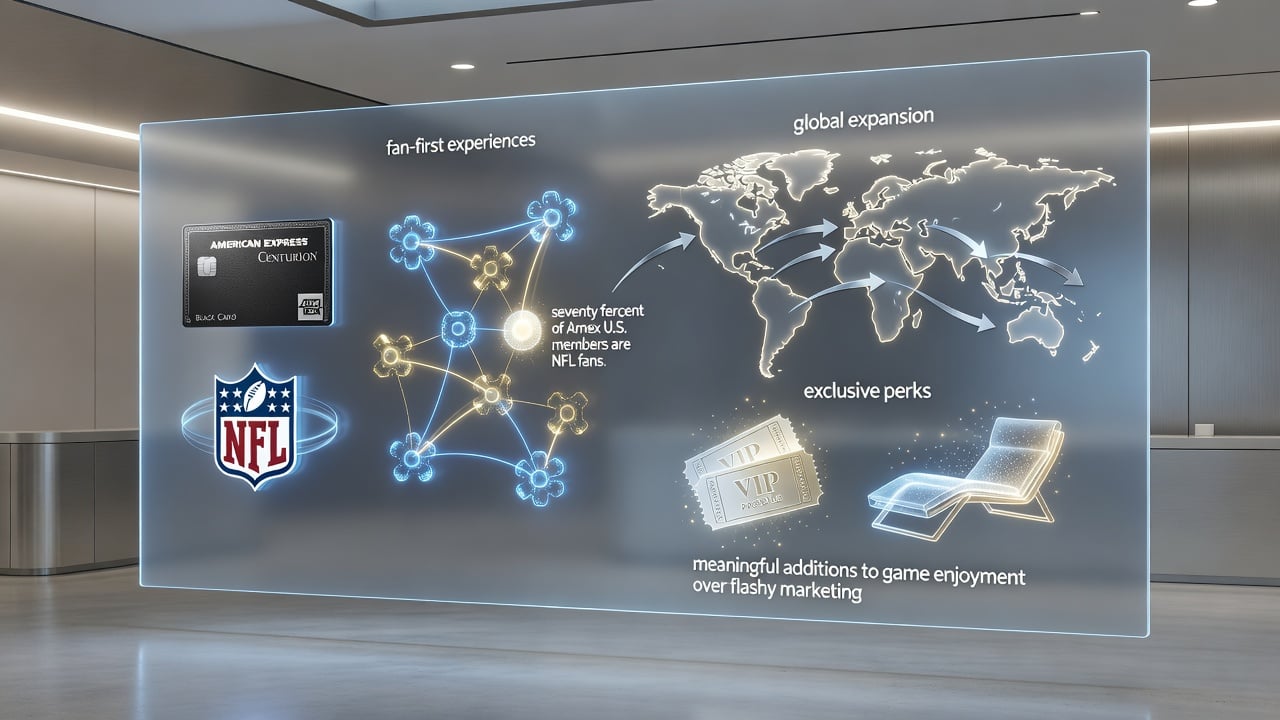
Ellis didn’t hesitate when asked about the foundation of any tie-up. “Any time we look at a potential partnership, we always think, of course, of the fan first — is this going to be a meaningful addition to their enjoyment of the game?” He paused. Let the question hang. Then added that the value flows both ways. A fan who also holds an Amex card receives experiences he called best in class.
Rutledge nodded along in the Business Insider interview conducted at the festival. She dropped a telling statistic. Seventy percent of Amex’s U.S. members count themselves as NFL fans. That overlap isn’t coincidence. It’s the reason the two organizations found each other after Visa’s long run ended in March 2026.
But the conversation quickly shifted beyond domestic numbers. The NFL wants to grow its audience abroad. Amex already operates in dozens of countries with a reputation for premium service. “We have a global footprint, and we’re so excited in partnership with Tim and the team to enable that expansion that I know the NFL is focused on, as are we,” Rutledge said. The alignment feels almost too neat. One brand hungry for international reach. Another with the infrastructure and the affluent customers to make introductions.
Nothing about this arrangement emerged overnight. The NFL put out a broad request for proposals in 2025 that covered the entire financial services category. What had been one bulky sponsorship with Visa splintered into three. Amex took payments and cards. U.S. Bank claimed retail banking and wealth management. PayPal secured peer-to-peer transfers. Sports Business Journal noted the league multiplied its return from the original deal by a factor of three to four. Financial services remain the biggest sponsorship bucket in the NFL. New fintech players have made the category competitive and, in the words of league watchers, more vibrant than it had been in years.
Amex didn’t enter the conversation cold. The company already holds team-level deals with the Atlanta Falcons, New York Giants, Jets, and Miami Dolphins. Those relationships gave both sides confidence that the larger partnership could work. Activation began before the 2026 draft. Amex created fan zones, offered priority access, and tested retail promotions inside venues. Card members responded. Early data suggested higher engagement at points of sale where the blue box appeared.
Ellis has spent his tenure at the NFL pushing international growth while protecting the domestic product. Forbes named him to its 2025 list of the world’s most influential CMOs, citing his oversight of brand strategy, fan engagement, content, and expansion efforts. He knows the risks of pushing too hard overseas. Cultural differences. Time zone barriers. Different payment habits. Yet the data keeps pointing one direction. NFL viewership outside the U.S. continues to climb. Games played in London, Munich, and now Melbourne draw bigger crowds each year.
Rutledge brings a different perspective. She has spent more than 30 years at American Express. Her track record includes steering the brand through shifts in consumer spending, luxury travel recovery after the pandemic, and an increased focus on experiences over possessions. She earned recognition as a Forbes influential CMO, Adweek Marketing Vanguard, and Fast Company honoree in recent years. At Cannes, she spoke like someone who has seen marketing fads come and go. This partnership, she implied, avoids the trap of chasing relevance. It starts with overlap that already exists.
Consider the planned NFL Extra Points Amex card, set to launch later in 2026 through Comenity Capital Bank. It will reward purchases and experiences tied to the league. The name alone signals intent. Extra points. A football term repurposed for loyalty. Small details like that reveal how both organizations think. They want language that feels native to the sport rather than imposed from a corporate deck.
Critics might wonder whether payments and football truly belong together. After all, most fans buy tickets, merchandise, and concessions through apps or stadium kiosks without much thought to the underlying card network. But that’s precisely the point. The transaction becomes invisible when it works. The value shows up elsewhere. In the presale window that opens 48 hours before the general public. In the lounge that serves better food and offers shade on a hot September afternoon. In the international broadcast that reaches new viewers because Amex helped underwrite promotion in key markets.
And the numbers support the logic. Amex reports that its cardholders spend more on experiences than the average consumer. They attend concerts, travel abroad, dine at premium restaurants. Football fits that profile. Especially live games. Especially events that feel exclusive. The NFL, meanwhile, collects detailed data on fan behavior. It knows which segments respond to which offers. Pairing that knowledge with Amex’s membership model creates a feedback loop both sides hope will drive measurable results.
Still, execution matters more than announcements. The NFL has multiple sponsors now in categories that once overlapped. Defining clear lanes without frustrating fans or creating internal confusion will test marketing teams on both ends. Amex must avoid seeming elitist in a sport that prides itself on broad accessibility. The league must ensure that perks enhance the experience rather than segment the audience into haves and have-nots.
Ellis returned to his core test several times during the Cannes conversation. Fan first. Meaningful addition. Those phrases could sound like marketing speak. Yet when he says them, they carry weight. The league has turned down partnerships that looked lucrative on paper because they failed that simple screen. Rutledge appears to share the discipline. American Express has walked away from deals that didn’t align with its membership ethos.
So here they sit. Two CMOs in Cannes. One representing a league that dominates American culture and wants the world. The other leading a payments brand that trades on status and service. Their handshake, captured in photos circulating from the festival, symbolizes more than a sponsorship swap. It marks a moment when sports and financial services decided that data, experiences, and global ambition could outweigh the comfort of old arrangements.
Whether the partnership delivers on its promises won’t be clear for seasons. Early indicators look promising. Ticket presales for international games moved quickly. Draft activations drew crowds. Member feedback, according to both organizations, skews positive. But sustained success requires constant attention. New activations each year. Fresh content that feels organic. Technology that makes payments faster without drawing attention to itself.
Back in the interview room, the discussion circled back to enjoyment. The game itself. The moments that keep people coming back. Ellis and Rutledge seem to understand that no amount of clever marketing replaces the product on the field. Their job is to remove friction around it. To make attendance easier for some, more rewarding for others, and more visible to audiences who have yet to discover American football.
They left Cannes with plenty of handshakes and a few new ideas. The real work starts now. In stadiums across America and stadiums yet to be built in cities that barely know the sport. Fans will judge the results one transaction, one experience, one memorable Sunday at a time. So far, the two brands appear aligned on what matters most. The fan. The game. And the value that connects them.


 WebProNews is an iEntry Publication