
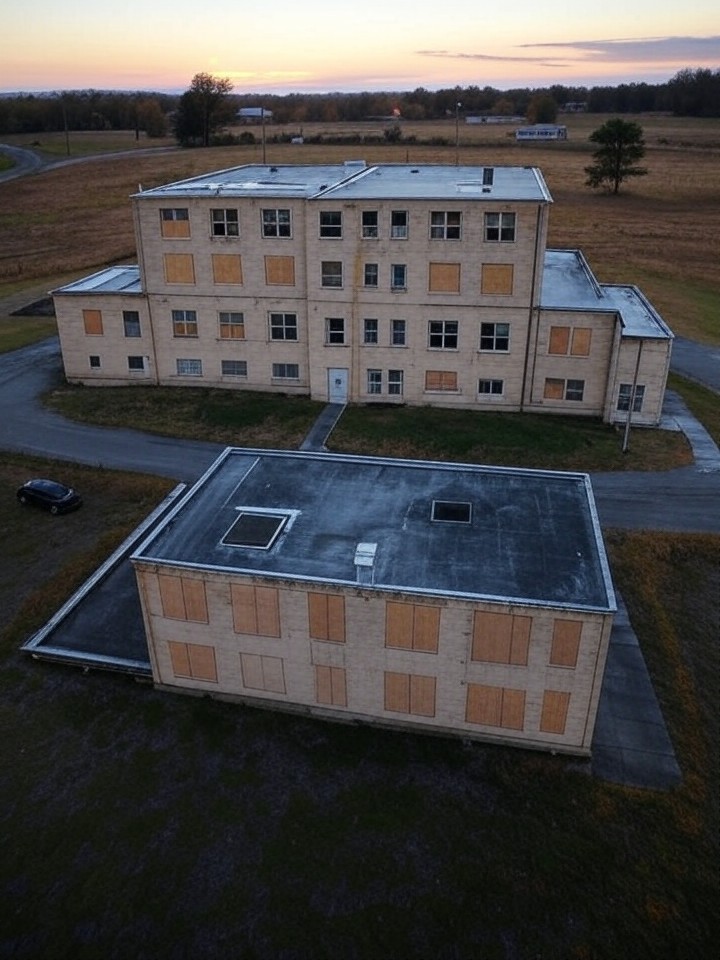
Vanishing Lifelines: The Crisis Engulfing America’s Rural Hospitals
In the heart of America’s countryside, where vast farmlands stretch under endless skies and small towns cling to traditions of self-reliance, a quiet catastrophe is unfolding. Hospitals that have long served as the backbone of community health are shutting their doors at an unprecedented rate, leaving millions without immediate access to emergency care, maternity services, or even basic medical attention. This isn’t just a story of financial distress; it’s a profound shift in how healthcare reaches the nation’s most isolated populations, exacerbated by policy decisions, economic pressures, and demographic changes. As of early 2026, the toll is stark: hundreds of rural hospitals have closed since 2005, with many more teetering on the brink, according to recent analyses.
The numbers paint a grim picture. From 2005 to 2023 alone, 146 rural hospitals either closed entirely or converted to facilities without inpatient services, as detailed in a report from the Economic Research Service. But the pace has accelerated. In 2025, at least five closures were documented, and projections for 2026 suggest even more are imminent, driven by factors like declining patient volumes and insufficient reimbursements. Communities in states like Texas, Kansas, and Missouri are hit hardest, where the absence of these facilities means residents must travel hours for treatment, turning minor ailments into life-threatening ordeals.
Take, for instance, the case of Elgin, North Dakota. A local hospital there, on the verge of shutdown due to mounting debts, has become a flashpoint for legislative action. A bill proposed in a special session could provide a lifeline, highlighting how state-level interventions are increasingly the last resort for these beleaguered institutions. Yet, such stories are becoming all too common, as rural America grapples with a healthcare void that threatens not just health outcomes but entire local economies.
Financial Strains and Policy Pitfalls
At the core of this crisis are deep-seated financial woes. Rural hospitals often operate on razor-thin margins, serving populations with higher rates of uninsured or underinsured patients. A key culprit is the reimbursement structure from programs like Medicare and Medicaid, which frequently fall short of covering actual costs. According to a 2025 report by Chartis, unsustainable rates are pushing facilities toward instability, with many unable to invest in necessary upgrades or staff retention.
Compounding this are broader policy decisions. The refusal by some states to expand Medicaid under the Affordable Care Act has left a disproportionate impact on rural areas. Data from older analyses, echoed in current discussions, show that 75% of rural hospital closures occur in non-expansion states, as noted in posts on X from healthcare advocates. Recent federal cuts, including those outlined in the One Big Beautiful Bill Act (H.R. 1), are projected to strip $50.4 billion from rural Medicaid spending over the next decade, per the American Hospital Association. This legislation could result in 1.8 million rural residents losing coverage by 2034, further eroding the patient base that sustains these hospitals.
Moreover, economic fluctuations hit rural areas harder. Smaller facilities lack the scale of urban counterparts, making them vulnerable to drops in occupancy or shifts in population. The COVID-19 pandemic amplified these issues, but recovery has been uneven. As one expert from Boston University’s School of Public Health explained in a 2025 article, the loss of a hospital devastates local economies, eliminating jobs and deterring new residents or businesses. Communities face not only health deserts but also economic stagnation, where the closure of a single hospital can ripple into school funding shortfalls and reduced property values.
State-by-State Disparities Exposed
Mapping the closures reveals stark regional differences. Texas leads with the highest number of shuttered rural hospitals, attributed to low Medicaid reimbursements and a steadfast refusal to expand coverage. A recent map published by Business Insider illustrates this vividly, showing clusters of closures in the South and Midwest, where policy choices have amplified vulnerabilities. Kansas follows closely, with 30 hospitals at risk, more than any other state, as highlighted in a study from The Beacon. Missouri isn’t far behind, with 12 facilities on the brink, underscoring how border states share similar challenges.
In contrast, states that embraced Medicaid expansion have fared somewhat better, though not immune. For example, North Dakota’s potential bailout for the Elgin hospital reflects proactive measures, but even there, the threat looms large. Nationwide, 756 rural hospitals are at risk, with over 40% facing immediate closure, according to Becker’s Hospital Review. This data, updated in late 2025, points to a national emergency, where Southern states like Alabama and Georgia report dozens of at-risk facilities, while the Northeast sees fewer due to denser populations and stronger safety nets.
Public sentiment on platforms like X amplifies these concerns. Posts from users, including policymakers like Senator Tammy Duckworth, warn of over 300 hospitals bracing for closure due to federal cuts, emphasizing that even insured patients suffer when facilities vanish. Other X discussions highlight the irony of the world’s richest nation failing to sustain basic healthcare infrastructure, with references to unsustainable reimbursements echoing expert reports. These online conversations reflect growing frustration, as rural residents voice fears of longer travel times for emergencies, potentially increasing mortality rates from conditions like heart attacks or strokes.
Human Toll and Community Resilience
Beyond the statistics, the human impact is profound. In towns where hospitals close, expectant mothers may drive hours for prenatal care, leading to higher rates of complications. Elderly patients, reliant on local services, face isolation, while mental health crises go unaddressed in areas already underserved. A 2025 piece from Boston University’s School of Public Health details how these closures disrupt public health efforts, from vaccination drives to chronic disease management, forcing communities to improvise with telehealth or mobile clinics that often fall short.
Local economies suffer too. Hospitals are major employers in rural areas, and their loss can trigger a domino effect. For instance, in regions hit by closures, pharmacies and suppliers shut down, further isolating communities. Yet, resilience shines through in some stories. Community fundraisers and partnerships with larger health systems have saved a few facilities, though these are stopgap measures. Experts argue for systemic changes, like value-based care models that reward preventive services, but implementation lags in remote areas.
The crisis also intersects with broader demographic trends. Aging populations in rural America increase demand for services, while younger residents migrate to cities, shrinking the tax base. This vicious cycle makes it harder for hospitals to remain viable, as noted in analyses from the Economic Research Service, which link closures to economic vulnerability.
Federal Interventions and Emerging Solutions
Hope flickers in recent federal initiatives. The Centers for Medicare & Medicaid Services announced $50 billion in awards under the Rural Health Transformation Program, aimed at bolstering facilities across all 50 states, as per a HHS press release. This funding could modernize equipment and expand services, potentially staving off some closures. Additionally, private sector efforts, like UnitedHealth Group’s pilot program in four states to halve Medicare Advantage payment times, signal innovative approaches to cash flow issues, detailed in AHA News.
However, critics question if these measures go far enough. The American Hospital Association warns that without addressing root causes like reimbursement shortfalls, the aid is merely palliative. State lawmakers are stepping in, too—Prairie Public reported on North Dakota’s efforts to save the Elgin hospital through targeted legislation, a model that could inspire others. Yet, with 742 hospitals at immediate risk as per X posts citing national reports, the scale demands more.
Innovations like telehealth hubs and community health workers are gaining traction, but they require reliable internet, which many rural areas lack. Partnerships with urban hospitals for specialty care via affiliations offer another path, though transportation barriers persist.
Pathways to Sustainability
Looking ahead, experts advocate for a multifaceted strategy. Enhancing federal support through programs like USDA’s financial aid, as mentioned in the Economic Research Service report, could provide grants for operational improvements. Policy reforms to boost reimbursements and incentivize rural practice for medical professionals are crucial. Some states are experimenting with global budgeting, where hospitals receive fixed payments regardless of patient volume, reducing financial volatility.
Community involvement is key. In Kansas, where risks are highest, local coalitions are lobbying for better funding, drawing from The Beacon’s insights. Similarly, Missouri’s at-risk hospitals are pushing for Medicaid expansion debates, fueled by data from Becker’s Hospital Review.
Ultimately, reversing this trend requires acknowledging rural healthcare as a national priority. As maps from Business Insider and DNYUZ illustrate, the closures aren’t isolated incidents but a widespread erosion of essential services. With millions affected, the stakes couldn’t be higher—ensuring that America’s heartland doesn’t become a healthcare wasteland demands urgent, coordinated action from policymakers, providers, and communities alike. The vanishing lifelines of rural hospitals serve as a stark reminder that health equity must extend beyond city limits, safeguarding the well-being of all Americans.


 WebProNews is an iEntry Publication