
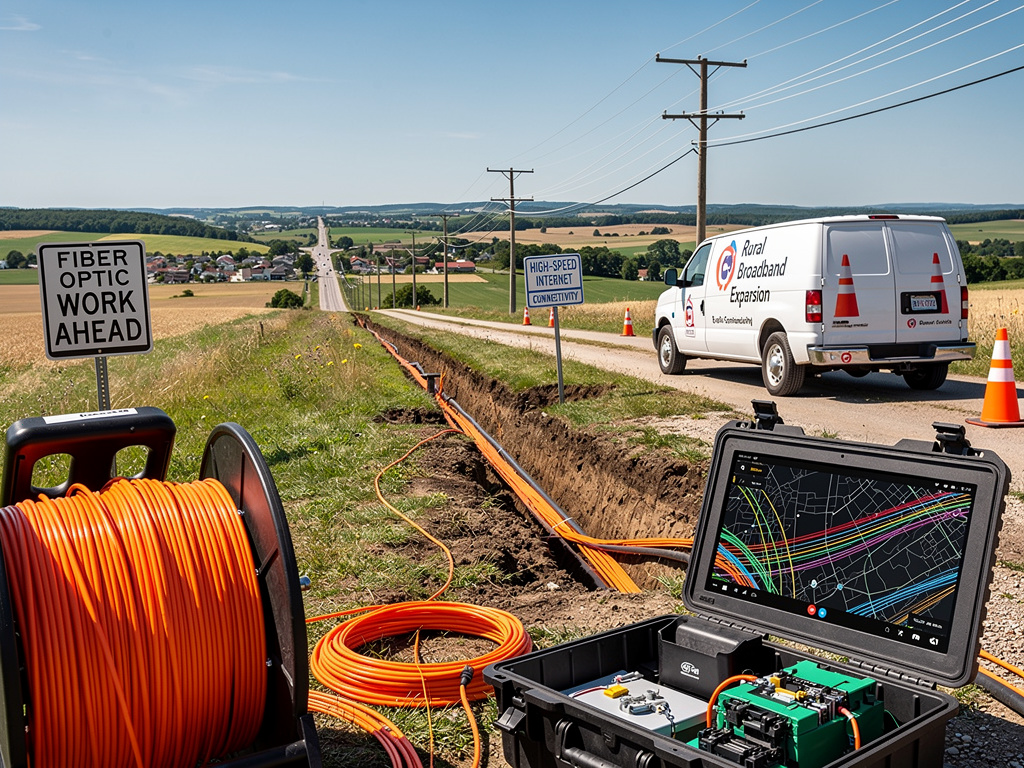
The United States is experiencing an unprecedented surge in broadband infrastructure investment, yet the ambitious plans to wire every corner of the nation are colliding with a decidedly analog problem: there simply aren’t enough trained technicians to do the work. As billions of dollars flow from the Infrastructure Investment and Jobs Act and private sector commitments, the telecommunications industry faces a critical shortage of the specialized laborers needed to install fiber optic cables, splice connections, and maintain the networks that underpin modern digital life.
According to Slashdot, the labor crunch has become so severe that it threatens to derail timelines for rural broadband expansion and urban network upgrades alike. The problem stems from multiple converging factors: an aging workforce reaching retirement, insufficient training programs to replace departing workers, and the physical demands of a job that requires climbing utility poles in extreme weather conditions while handling delicate, highly technical equipment.
Industry executives report that qualified fiber optic technicians can now command premium wages, yet positions remain unfilled for months. The shortage affects every segment of the buildout process, from initial surveying and permitting to the actual installation and final testing of connections. Major telecommunications providers have begun poaching workers from competitors, driving up labor costs and creating a bidding war that smaller regional providers cannot afford to enter.
The Perfect Storm of Workforce Depletion
The telecommunications sector’s workforce challenges didn’t emerge overnight. For decades, the industry relied on a stable cohort of technicians who learned their trade through apprenticeships and on-the-job training. Many of these workers are now in their 50s and 60s, approaching retirement age, and the pipeline of younger workers to replace them has run dry. The physical nature of the work—spending hours outdoors in harsh conditions, working at heights, and maintaining irregular schedules to minimize service disruptions—has made recruitment increasingly difficult in an era when technology jobs are often associated with air-conditioned offices and flexible remote work arrangements.
Community colleges and technical schools that once offered robust telecommunications programs have scaled back or eliminated these courses due to low enrollment and the high cost of maintaining up-to-date equipment for training purposes. The result is a generation gap in the workforce that cannot be quickly bridged. Even when companies invest in training programs, the time required to develop a fully competent fiber optic technician—typically 18 to 24 months—means that relief for current shortages remains years away.
The situation has been exacerbated by the simultaneous demands of multiple infrastructure projects. The push for 5G wireless networks requires extensive fiber backhaul installation, while the federally funded broadband expansion programs are creating unprecedented demand for rural installations. Private equity-backed fiber providers are also racing to build out networks in underserved markets, all competing for the same limited pool of skilled workers. This convergence of demand has created what industry analysts describe as the tightest labor market for telecommunications technicians in modern history.
Economic Ripple Effects Across the Digital Divide
The labor shortage carries significant economic implications that extend far beyond delayed internet installations. Rural communities that were promised high-speed connectivity as part of federal broadband initiatives are seeing project timelines slip by months or even years. Small businesses that planned expansions based on anticipated internet upgrades are left in limbo, unable to compete effectively in an increasingly digital economy. The delays also affect remote work opportunities, telemedicine access, and educational equity—all areas where reliable high-speed internet has become essential infrastructure.
Telecommunications companies are responding to the crisis with various strategies, though none provide immediate solutions. Some major providers have established their own training academies, offering paid apprenticeships and guaranteed employment upon completion. Others are partnering with community colleges to revitalize technical training programs, providing equipment donations and curriculum guidance. A few companies have begun recruiting military veterans, whose technical training and comfort with demanding physical work make them promising candidates for telecommunications careers.
Wage increases have been substantial but haven’t fully solved the recruitment problem. Entry-level fiber optic technicians who might have earned $35,000 annually five years ago can now command starting salaries of $50,000 or more, with experienced technicians earning well into six figures in high-demand markets. Yet even these improved compensation packages struggle to compete with the appeal of software development, cybersecurity, and other technology careers that offer similar or better pay without the physical demands and outdoor work requirements.
Technology and Automation Offer Limited Relief
The telecommunications industry is exploring technological solutions to mitigate the labor shortage, though the physical nature of fiber installation limits the potential for automation. Robotic systems for underground cable installation have shown promise in urban environments with existing conduit infrastructure, but these solutions cannot address the majority of installations that require aerial cable runs, pole replacements, and custom routing through challenging terrain.
Augmented reality systems and AI-assisted diagnostics are helping to make existing workers more efficient. Technicians equipped with AR headsets can receive real-time guidance from remote experts, reducing the need for multiple site visits and accelerating the training process for newer workers. Predictive maintenance algorithms help prioritize repairs and prevent outages, making better use of available labor resources. However, these technological aids cannot eliminate the fundamental need for skilled human workers to physically install and maintain fiber optic networks.
Some companies are experimenting with modular installation techniques that reduce the skill level required for certain tasks, allowing less experienced workers to handle routine installations while reserving highly trained technicians for complex projects and troubleshooting. Pre-terminated fiber assemblies and simplified splicing equipment have made some aspects of installation more accessible, but the core work still requires significant expertise and cannot be fully commoditized.
Policy Implications and Long-Term Solutions
The workforce shortage has prompted calls for policy interventions to address the crisis. Industry groups are lobbying for expanded funding for technical education programs and tax incentives for companies that invest in worker training. Some proposals would create federally funded apprenticeship programs specifically for telecommunications infrastructure, modeled on successful programs in other skilled trades. There are also discussions about streamlining licensing requirements and creating more standardized certification processes that would allow workers to move more easily between states and employers.
Immigration policy has emerged as another potential lever for addressing the shortage. The telecommunications industry has joined other sectors in advocating for visa programs that would allow companies to recruit skilled workers from abroad when domestic labor supplies prove insufficient. However, these proposals face political headwinds and would take years to implement even if approved.
The long-term solution likely requires a fundamental shift in how society values and promotes skilled trades. For decades, educational policy has emphasized four-year college degrees as the primary path to economic success, often at the expense of technical and vocational training. The telecommunications labor shortage illustrates the consequences of this approach and highlights the need for a more balanced strategy that recognizes the economic value and career potential of skilled technical work.
Regional Variations and Market Distortions
The impact of the labor shortage varies significantly by geography, creating market distortions that affect service availability and pricing. Urban areas with multiple telecommunications providers can often attract workers through higher wages and better working conditions, leaving rural areas—which were supposed to be the primary beneficiaries of federal broadband funding—struggling to find contractors willing to take on remote projects. Some rural broadband initiatives have seen their budgets consumed by inflated labor costs, reducing the number of households that can be connected with available funding.
Regional telecommunications providers and rural electric cooperatives expanding into broadband service face particular challenges. These smaller organizations lack the resources to compete with major carriers on compensation and benefits, yet they’re responsible for serving the most difficult and least profitable markets. The result is a two-tiered system where well-funded urban and suburban projects move forward while rural initiatives languish, perpetuating rather than closing the digital divide.
Some states have responded with their own initiatives to address the workforce gap. Several have allocated funding for telecommunications training programs at community colleges and technical schools. Others have created grant programs to help smaller providers cover the costs of training new workers. However, these state-level efforts remain fragmented and insufficient to address the scale of the national shortage.
Industry Adaptation and Future Outlook
As the telecommunications industry grapples with these workforce challenges, companies are being forced to rethink their business models and deployment strategies. Some providers are prioritizing projects in areas where they already have workforce capacity, even if those areas weren’t the original focus of their expansion plans. Others are forming partnerships and consortiums to share labor resources and training costs, setting aside competitive concerns in the face of a common challenge.
The crisis has also sparked innovation in project management and scheduling. Companies are using sophisticated workforce management software to optimize technician routing and minimize travel time between job sites. Some are experimenting with longer project timelines that allow for more efficient use of available workers, even if it means slower overall deployment. There’s also growing interest in prefabrication and off-site preparation work that can be done by less specialized workers, reserving field technicians for tasks that absolutely require their expertise.
The labor shortage shows no signs of resolving quickly, and industry analysts predict it will remain a constraining factor on broadband deployment for at least the next five years. The workers currently in training programs won’t reach full productivity for another two to three years, and even optimistic projections suggest the supply of qualified technicians won’t match demand until the late 2020s. This timeline has significant implications for the federal government’s broadband goals and for the millions of Americans still waiting for high-speed internet access.
The telecommunications workforce crisis ultimately reflects broader challenges in American infrastructure development and workforce development. As the nation attempts to modernize its digital infrastructure, it’s discovering that technological ambition must be matched by human capital investment. The billions of dollars allocated for broadband expansion will only achieve their intended impact if there are enough skilled workers to turn plans into reality. Until the industry and policymakers address this fundamental constraint, America’s digital future will remain hostage to a very analog problem: finding enough qualified people willing to climb poles, splice fiber, and build the networks that modern life demands.


 WebProNews is an iEntry Publication