
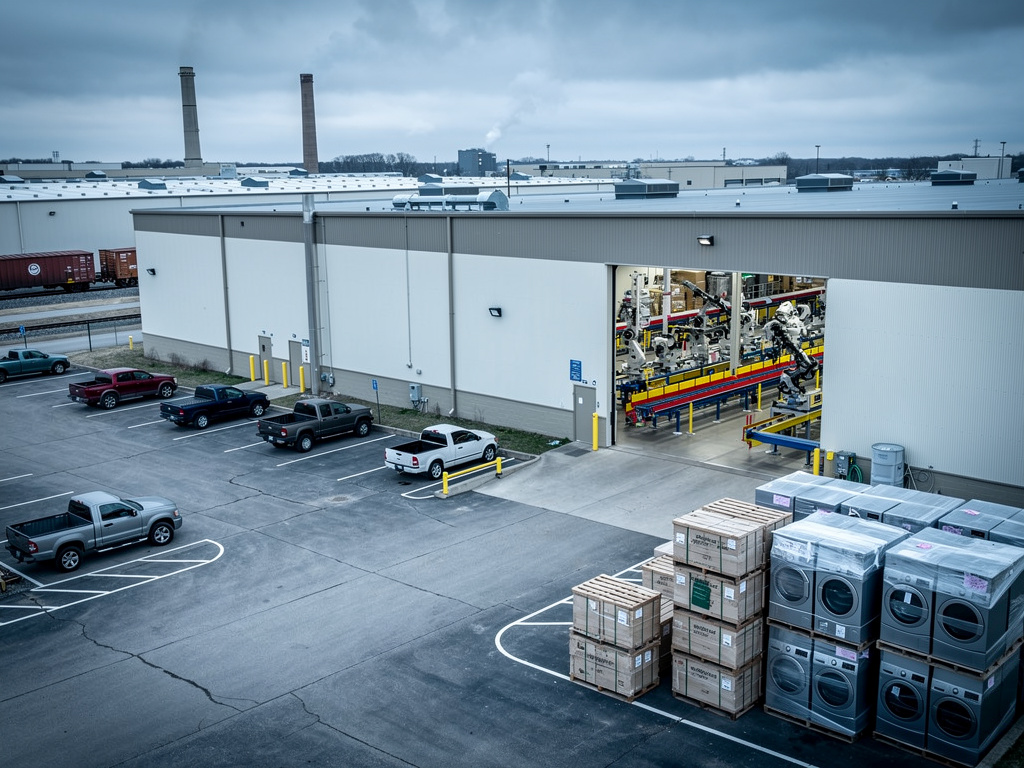
The numbers tell a stubborn story. In April, U.S. manufacturers cut another 2,000 jobs. That loss, modest on its face, erased much of the previous month’s gain and fit a larger pattern of decline that has persisted through policy shifts meant to reverse it.
Figures from the Bureau of Labor Statistics, released in early May, show the sector shed positions even as broader economic signals flashed mixed. Transportation equipment took the hardest hit, down 3,600 jobs. Beverage and tobacco producers lost 2,500 more. Machinery, apparel, paper, and plastics each gave up at least 1,000. Offsetting gains came in chemicals and fabricated metals. Yet the net told of contraction.
One month earlier, the industry had added 15,000 jobs. Year-over-year, the April drop marked a 50 percent larger loss than the same period in 2025. Such volatility masks a deeper trend. Since the start of 2025, manufacturers have eliminated roughly 100,000 positions. Over Mr. Trump’s first year back in office, the toll reached 83,000 according to some tallies. The long arc stretches further: 4.5 million factory jobs gone since 2000.
Tariffs, Trade Wars and Persistent Headwinds
These losses arrive amid aggressive trade measures designed to bring production home. President Trump declared “Liberation Day” with sweeping tariffs, the highest in more than eight decades. He promised they would end the era when “foreign leaders have stolen our jobs, foreign cheaters have ransacked our factories, and foreign scavengers have torn apart our once-beautiful American dream.” Early claims spoke of 10,000 new manufacturing jobs created in weeks. Data told otherwise. The first full month of the second term saw 2,000 positions disappear. Losses followed in most subsequent months.
Economists point to multiple pressures. Tariffs raised costs for imported components that many domestic producers rely on. Small and midsize firms, with thinner margins, felt the squeeze first. Uncertainty from fluctuating policy added hesitation. A Supreme Court decision struck down initial “Liberation Day” tariffs last month. New global rates of 15 percent followed. Companies delayed investment. Some accelerated moves overseas.
Automation compounds the issue. So does the simple math of wages abroad. Global manufacturing employment has risen by 71 million since 2000, led by China, India and Vietnam. The U.S. share of the workforce in factories sits near 8 percent, far below the 38 percent peak of World War II. Output has grown thanks to productivity. Headcount has not. As a New York Times opinion piece observed, “Every President Tries It. It Never Works.” The piece noted that boasted gains under both Trump and Biden administrations often proved fleeting or subject to revision.
Real people absorb the impact. In Amana, Iowa, Whirlpool will lay off 350 workers on March 9 at a plant that once employed 3,000. The site has anchored the local economy for eight decades. Its workforce now stands at 1,300 and could shrink to 500 or 600 without intervention. The company calls the cuts part of a “multi-year modernization plan.” Union leaders disagree. “This is not modernization — this is offshoring of jobs,” said Brian Bryant, international president of the International Association of Machinists. Over 20 years, Whirlpool invested more than a billion dollars in Mexican operations. Exports from there have surged. Kerry Waddell, a 36-year veteran at the plant, described the human cost. “These are employees that spend their money in these communities, they send their kids to the schools there… At this time, they’re getting laid off, they’re losing their health insurance — on March 9, they lose it immediately.” Iowa Republican lawmakers urged Whirlpool to reconsider. They warned the move would “hollow out a community.”
Other cases illustrate the breadth. First Brands Group, an auto components maker, filed for Chapter 11 bankruptcy in September 2025. It began winding down North American operations in January after failing to secure funding. Plants in Illinois, Indiana, Ohio, Texas and Michigan saw hundreds of layoffs. WARN notices went out in February.
Survey data adds color. The Institute for Supply Management’s April report showed the Manufacturing PMI at 52.7 percent, unchanged from March and marking four straight months of expansion. New orders and production held in growth territory. The employment index, however, contracted at 46.4 percent, down from the prior month. Susan Spence, chair of the ISM Manufacturing Business Survey Committee, noted that for every comment on hiring, 1.7 addressed headcount reductions. Only three of the six largest manufacturing industries added workers. Transportation equipment, computers and electronics, and machinery showed employment gains. Sentiment among panelists stayed mixed, with geopolitical tensions and tariffs cited frequently.
But. The sector’s output value has climbed $1.7 trillion nominally over 25 years even as headcount fell sharply. Productivity explains much of the gap. Factories produce more with fewer people. That reality limits the power of any single policy to restore past employment levels. Demographic shifts pull workers toward health care and services, sectors that added jobs steadily while manufacturing stagnated.
Recent coverage reinforces the pattern. A March CBS News report detailed ongoing losses and worker appeals to the White House that went unanswered. Reuters noted factory headcount falling despite promises of a boom, with more than 70,000 jobs gone since April 2025 in one stretch. Manufacturing Dive tracked the February drop of 12,000 positions, concentrated in plastics, rubber and transportation equipment. Progressive Policy Institute analysis put 2025 losses at 108,000. The White House, for its part, highlighted ISM production gains and new orders as evidence of recovery by April.
So what comes next? Tariffs may yet spur some reshoring in protected sectors. Specific investments in chips, defense and energy have created pockets of growth. Yet broad manufacturing employment has now declined for the third straight year. Economists such as Aaron Terrazas at Gusto call it a continuation of long-standing trends that no pivot has reversed. Laura Ullrich at Indeed expects health care to capture most future job gains.
The April job loss of 2,000 jobs may look small against monthly swings. Place it beside decades of erosion and specific community wounds like Amana, and the stakes sharpen. Factories still matter. They pay above-average wages. They anchor towns. Policymakers keep promising their revival. Data keeps showing contraction. The gap between rhetoric and results has rarely been wider.
Additional reporting from recent weeks fills in contours. A February Joint Economic Committee analysis revised losses higher than initial BLS estimates. Supply Chain Brain and Bloomberg pieces tied tariff costs directly to slowed hiring and budget tightening among producers. No single factor explains every cut. The combination proves durable. Presidents from Reagan onward have confronted the same forces. Outcomes have stayed consistent.


 WebProNews is an iEntry Publication