
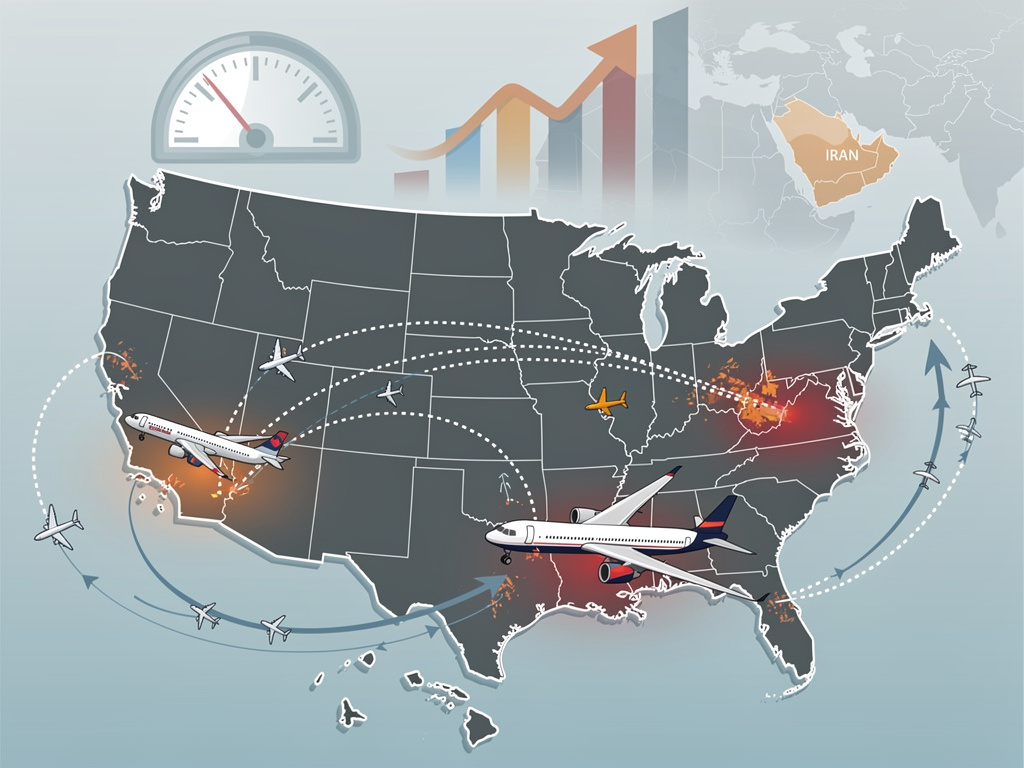
American Airlines has pulled six domestic routes from its summer schedule. The carrier cites elevated jet fuel costs tied to the ongoing conflict with Iran. The suspensions last only two months. Yet they signal deeper pressure across the airline industry.
Service between Los Angeles and Cleveland, Columbus, Pittsburgh and Washington Dulles will stop from Aug. 5 to Oct. 5. Flights from Charlotte to Ontario, Calif., and Sacramento face the same fate. An American spokesperson described the changes as seasonal adjustments to refine capacity plans for the rest of 2026. The airline insists the routes aren’t gone for good.
But the decision comes after months of fuel prices climbing sharply. Filling a wide-body aircraft cost $114,000 in February 2025. That same fill-up now runs $180,000, according to CBS News. Jet fuel makes up 25% to 30% of an airline’s total expenses. When those costs spike, marginal routes turn unprofitable fast.
The trigger sits thousands of miles away. Disruptions in the Middle East, particularly around the Strait of Hormuz, have tightened jet fuel supply and sent refinery margins soaring. Crack spreads in Northwest Europe hit a record above $121 per barrel in March. That compares with about $30 per barrel before the conflict escalated in late February, Reuters reported, citing International Air Transport Association data.
And the pain isn’t limited to one carrier. American already cut its 2026 profit guidance in April. Higher fuel prices were expected to add roughly $4 billion in expenses for the year, according to Skift. Delta Air Lines projected an extra $2 billion hit in its second quarter alone. Industrywide, U.S. airlines face a potential $24 billion increase in fuel bills this year. Offsetting measures may cover only part of it, leaving an $8.4 billion net impact, a Deutsche Bank analysis found via Airlines for America.
Carriers have responded with a mix of tactics. They reduce frequencies on weaker routes. Older, less efficient planes get grounded. Fares rise where demand allows. Yet many airlines hesitate to pass the full cost to passengers. “While jet fuel prices have jumped significantly, and the cost of powering airplanes is at historic highs, airfares have not tracked the same sharp increase because airlines have deployed—and continue to implement—a wide range of options to offset the impact to their customers,” Airlines for America President and CEO Chris Sununu said in May.
American’s move fits this pattern. The affected routes connect its Los Angeles hub to Midwest and East Coast cities. They also trim service from its Charlotte hub to California points. These flights likely operated on thinner margins even before the price surge. Now they don’t justify the burn. The airline has offered affected passengers alternate flights or refunds.
Spot prices tell the story. The Argus U.S. Jet Fuel Index averaged $3.51 per gallon as of early June 2026. Global averages hovered near $142 per barrel recently, though down slightly from peak levels. Still, prices remain far above 2025 averages. Refinery crack spreads remain elevated. Not every airline can hedge its way out. IATA’s head of fuel noted that many carriers lack the financial tools or market access to protect against such swings, per the Reuters story.
This isn’t the first sign of strain. In April, several carriers began trimming schedules as the conflict intensified. Delta dropped its seasonal Los Angeles-to-Anchorage route. Air New Zealand cut about 5% of its flights. European carriers grounded planes and warned of capacity cuts through the busy summer. U.S. airlines removed thousands of flights and millions of seats from May schedules. Projections for June through September show another 9.3 million seats gone from major markets.
The timing adds pressure. Summer travel demand usually peaks. Events like the FIFA World Cup and America 250 celebrations were expected to drive crowds. Instead, higher fares and fewer options could dampen enthusiasm. Airfares rose 14.9% in March compared with the prior year, according to the U.S. Travel Association via Yahoo Finance coverage. More increases may follow.
Yet American stopped short of broader cuts. It continues to add new international routes and focus on stronger domestic markets. The suspensions target specific underperformers. “American has seasonally adjusted service on select routes in August and September as the airline refines its capacity growth for 2026,” the spokesperson told multiple outlets including Fast Company.
Industry watchers see this as a test. Fuel accounts for such a large share of costs that even modest price jumps force hard choices. Older aircraft burn more. Long-haul flights suffer most. Hedging helps some carriers but leaves others exposed when markets move violently.
Passengers on the canceled routes face inconvenience. Many will rebook on other American flights or competitors. Some receive refunds. The airline says it will work to minimize disruption. Still, the episode highlights how geopolitical events half a world away reshape summer travel plans in the U.S.
Prices could ease if tensions cool and the Strait of Hormuz reopens. Recovery won’t happen overnight. Inventories remain tight. Refineries need time to adjust. Airlines have already baked higher costs into their planning. Capacity reductions announced now will shape operations through fall and possibly into next year.
American’s decision, while limited, joins a growing list of adjustments. Delta, United and others trim where yields don’t cover the fuel bill. The industry eats some of the increase to protect demand. But margins compress. Guidance gets cut. And seasonal routes that once seemed viable suddenly look expendable.
Executives have warned for months. Delta CEO Ed Bastian called it a test for the industry back in April. United’s Scott Kirby suggested fares might need to rise as much as 20% in some cases. Those predictions play out now in real schedule changes and passenger notifications.
What happens next depends on fuel markets and geopolitics. For now, American has drawn a line. Six routes. Two months. A clear message that no flight is sacred when costs climb this fast. Travelers planning late-summer trips from Los Angeles or Charlotte should check their itineraries. The network just got a little smaller.


 WebProNews is an iEntry Publication