
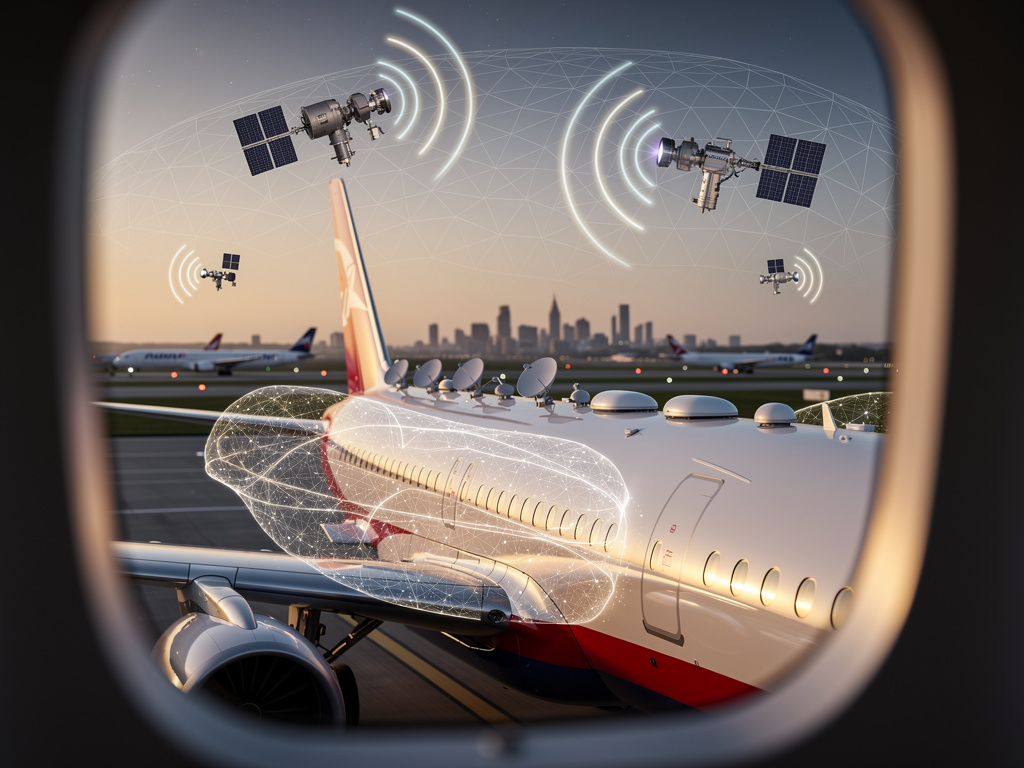
Soaring Connections: How American Airlines and AT&T Are Redefining In-Flight Wi-Fi
In the competitive world of commercial aviation, where passenger loyalty hinges on conveniences like seamless connectivity, American Airlines has made a significant move. Starting this month, the carrier is rolling out free high-speed Wi-Fi sponsored by AT&T, targeting members of its AAdvantage loyalty program. This initiative, announced amid growing demands for better in-flight experiences, positions American as a late but ambitious entrant in the free Wi-Fi race dominated by rivals like Delta and United.
The partnership with AT&T, a telecommunications giant, aims to equip more than 2 million flights annually with complimentary satellite-based internet. According to details from American Airlines’ official newsroom, the service will be available on a vast majority of the fleet, marking one of the most extensive rollouts in the industry. This isn’t just about keeping passengers entertained; it’s a strategic play to boost customer retention in an era where connectivity is as essential as legroom.
For industry observers, this development underscores a shift in how airlines monetize ancillary services. Historically, in-flight Wi-Fi has been a revenue stream, with fees often deterring casual users. Now, by making it free for loyalty members, American is betting on increased program enrollments and deeper engagement, potentially offsetting costs through sponsorships like AT&T’s.
The Mechanics of Mid-Air Connectivity
Delving into the technical backbone, the Wi-Fi system relies on satellite technology, promising speeds that rival ground-based broadband. Sources from AT&T’s press release highlight how this collaboration leverages advanced satellite networks to deliver reliable service even over oceans and remote areas. Unlike older air-to-ground systems, satellite connectivity ensures consistent performance, a critical factor for business travelers who rely on video calls and cloud access.
Implementation won’t happen overnight. The rollout is phased, with the entire fleet expected to be operational by spring 2026, as reported in The Verge. This gradual approach allows for testing and optimization, minimizing disruptions. American’s fleet, one of the largest globally, includes a mix of narrow-body and wide-body aircraft, each requiring tailored installations.
From an insider perspective, the sponsorship model is intriguing. AT&T isn’t just footing the bill; it’s integrating branding opportunities, such as login portals featuring promotions. This could open doors for targeted advertising, a revenue angle that airlines have only begun to explore in the digital space.
Loyalty Programs Take Flight
Eligibility is tied to AAdvantage membership, a program with millions of participants. As noted in USA Today, non-members can sign up for free before their flight to access the perk, potentially swelling the ranks of American’s loyalty base. This tactic mirrors strategies by competitors, where free Wi-Fi serves as a gateway to premium services like upgrades and points accumulation.
Comparisons to Delta’s partnership with T-Mobile, which offers free Wi-Fi to all passengers since 2023, are inevitable. American’s version is more restrictive, limited to loyalty members, but it covers a broader fleet. Industry analysts point out that this selectivity could enhance perceived value for frequent flyers, fostering brand loyalty in a market where switching costs are low.
Moreover, the AT&T sponsorship transcends carrier exclusivity. Posts on X indicate that the service is available regardless of a passenger’s wireless provider, a detail that broadens appeal and avoids alienating non-AT&T customers. This inclusivity is a smart move, ensuring the partnership doesn’t inadvertently push users toward competitors.
Industry Ripples and Competitive Pressures
The announcement has stirred reactions across the sector. Rivals like Southwest and JetBlue are accelerating their own connectivity plans, with some eyeing satellite partnerships similar to American’s. For instance, recent developments show JetBlue aligning with Amazon’s Project Kuiper for future in-flight internet, signaling a wave of innovation driven by passenger expectations.
Financially, the deal’s implications are profound. Airlines have long grappled with the high costs of Wi-Fi infrastructure, often passing them to consumers. By securing AT&T as a sponsor, American mitigates these expenses while enhancing its value proposition. Estimates suggest that in-flight connectivity could generate indirect revenues through increased bookings and partnerships, though exact figures remain proprietary.
From a regulatory standpoint, the Federal Aviation Administration’s guidelines on satellite communications play a role. Ensuring interference-free operations is paramount, and American’s phased rollout allows compliance checks. Insiders note that this collaboration could set precedents for how telecoms and airlines integrate services, potentially influencing global standards.
Passenger Perspectives and Real-World Testing
Early user feedback, gleaned from social media and initial flights, paints a promising picture. Travelers report smoother streaming and faster downloads compared to previous paid options. However, challenges like bandwidth throttling during peak times could emerge as more users log on, a common issue in shared networks.
For business professionals, this means uninterrupted productivity at 35,000 feet. Imagine closing deals via Zoom without lag or accessing corporate intranets seamlessly. Such capabilities could sway corporate travel departments, which often prioritize connectivity in vendor selections.
On the consumer side, families and leisure travelers benefit from free entertainment options, reducing the need for downloaded content. This aligns with broader trends where digital nomadism blurs work and travel, demanding robust airborne networks.
Technological Underpinnings and Future Horizons
At the core of this service is ViaSat technology, which American has utilized in prior Wi-Fi upgrades. Historical context from older partnerships, like the 2016 deal mentioned in posts on X, shows a evolution toward faster, more reliable systems. AT&T’s involvement now amplifies this with its expertise in 5G and beyond, potentially paving the way for integrated mobile-Wi-Fi handoffs.
Looking ahead, expansions could include international routes, where satellite coverage is even more crucial. American’s global alliances, such as with oneworld partners, might extend these benefits, creating a networked ecosystem of connected flights.
Challenges remain, including cybersecurity. With more devices connecting mid-flight, protecting against hacks is vital. Airlines and providers like AT&T are investing in encrypted protocols to safeguard data, an area of growing concern as cyber threats evolve.
Economic Impacts and Sponsorship Dynamics
Economically, this partnership bolsters both companies. AT&T gains visibility among high-value travelers, potentially driving subscriptions. For American, it’s a differentiator in a post-pandemic recovery phase, where passenger volumes are rebounding but competition is fierce.
Industry data suggests that free Wi-Fi correlates with higher satisfaction scores, influencing repeat business. Surveys from aviation consultancies indicate that connectivity ranks among top priorities, often ahead of meal services.
The sponsorship model could inspire similar deals elsewhere. Imagine Coca-Cola branding in-flight refreshments or tech firms sponsoring power outlets. This blurring of lines between aviation and consumer brands opens new revenue streams.
Global Context and Adoption Trends
Globally, airlines like Emirates and Singapore Airlines have long offered superior connectivity, pressuring U.S. carriers to catch up. American’s move narrows this gap, especially on transatlantic and transpacific routes.
Adoption rates will be key metrics. If AAdvantage sign-ups surge, it validates the strategy. Early indicators from the launch week show positive buzz, with social media abuzz about hassle-free connections.
For insiders, the real story is in the data analytics. Airlines can now glean insights from Wi-Fi usage, tailoring services like personalized ads or route optimizations based on passenger behaviors.
Sustainability and Operational Efficiencies
An often-overlooked aspect is sustainability. Satellite Wi-Fi requires onboard equipment that adds weight, potentially increasing fuel consumption. However, advancements in lightweight antennas mitigate this, aligning with American’s green initiatives.
Operationally, ground crews face new tasks in maintaining these systems. Training programs are underway, ensuring minimal downtime. This investment in human capital underscores the long-term commitment to connectivity.
As the rollout progresses, expect iterative improvements based on feedback. American has a history of refining services post-launch, and this will likely follow suit.
Strategic Alliances and Market Positioning
Strategically, this alliance with AT&T strengthens American’s position against low-cost carriers that skimp on amenities. By elevating the in-flight experience, it appeals to premium segments without alienating budget travelers who can join AAdvantage at no cost.
Market positioning wise, it’s a response to consumer advocacy for better value. Groups pushing for transparent pricing applaud the shift away from hidden fees.
In the broader telecom-airline nexus, this could foster more collaborations, like bundled travel and data plans, enhancing customer ecosystems.
Voices from the Field and Expert Insights
Experts like those quoted in One Mile at a Time emphasize the competitive edge. “This is a game-changer for loyalty,” one analyst notes, highlighting retention benefits.
Passenger anecdotes from X posts reveal excitement, with users planning trips around the free access. Such sentiment drives word-of-mouth marketing, amplifying the launch’s impact.
For AT&T, it’s an extension of its connectivity ethos, from ground networks to skies, solidifying its role in ubiquitous access.
Looking Beyond the Horizon
As we peer into the future, integrations with emerging tech like AR for in-flight entertainment or AI-driven bandwidth allocation could emerge. American and AT&T are well-positioned to lead.
Ultimately, this partnership exemplifies how innovation meets necessity, transforming air travel into a truly connected journey. With the skies now a domain of seamless digital interaction, the bar for aviation excellence has been raised.


 WebProNews is an iEntry Publication