
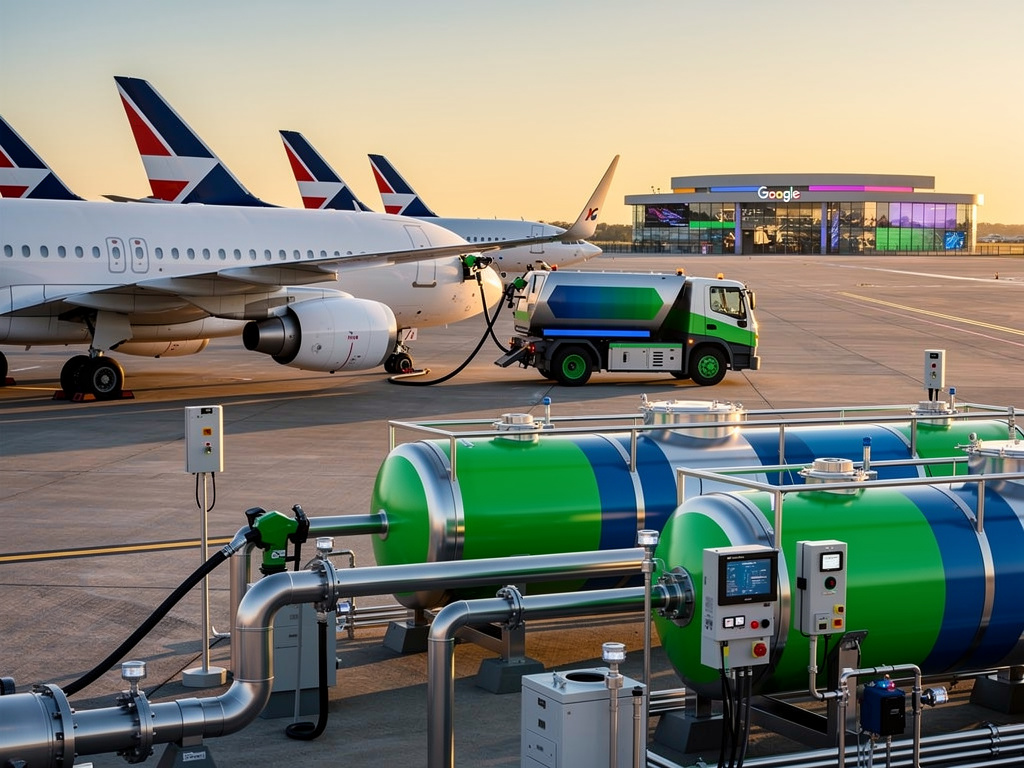
American Airlines has committed to purchasing 100 million gallons of sustainable aviation fuel over a five-year period through a new agreement that marks one of the largest corporate offtake deals for the alternative fuel in the industry. The partnership, announced in coordination with Google, focuses on supporting the development and scaling of sustainable aviation fuel production while addressing the environmental impact of commercial air travel. This initiative aligns with broader efforts by both companies to reduce carbon emissions across their operations and supply chains.
Sustainable aviation fuel, often referred to as SAF, represents a key pathway for lowering the carbon footprint of flights. Unlike traditional jet fuel derived from petroleum, SAF can be produced from various renewable sources including agricultural waste, used cooking oil, municipal solid waste, and even carbon captured directly from the air. When blended with conventional fuel, it can reduce lifecycle greenhouse gas emissions by up to 80 percent depending on the production method and feedstock. The Google blog post detailing the American Airlines agreement highlights how this purchase will help stimulate supply in a market where SAF currently accounts for less than 0.1 percent of global jet fuel consumption.
The five-year contract between American Airlines and energy producers will facilitate the delivery of SAF for use at key airports across the United States. This volume represents a significant step for the airline, which operates one of the largest fleets in the world and consumes billions of gallons of fuel annually. By securing this supply, American Airlines aims to incorporate SAF into regular operations rather than treating it as an occasional demonstration project. The agreement also includes provisions for tracking and verifying the environmental attributes of the fuel through established certification standards.
Google’s involvement in the deal stems from its own sustainability goals and its position as a major corporate purchaser of aviation services. The company has set ambitious targets to achieve net-zero emissions across its operations by 2030, including those related to business travel and employee commuting. By facilitating connections between airlines and fuel producers, Google is helping create demand signals that encourage investment in SAF production facilities. The Google sustainability blog explains that the partnership builds on previous SAF purchases the company has made and reflects a strategy of using corporate buying power to accelerate the availability of lower-carbon fuels.
Production of sustainable aviation fuel remains expensive compared to conventional alternatives, often costing two to four times more depending on the technology pathway. This price differential has slowed adoption despite growing interest from airlines and corporate customers. The American Airlines agreement helps address this challenge by providing long-term purchase commitments that give producers greater certainty for securing financing and building facilities. Several refineries and conversion plants are currently under development in the United States, and deals like this one contribute to the business case for bringing them online.
The environmental benefits of SAF extend beyond direct emissions reductions from combustion. Because many production pathways use waste materials or agricultural residues, they can also help address waste management issues and support rural economies. For instance, fuels derived from used cooking oil divert material that might otherwise end up in landfills, while those made from energy crops can create new markets for farmers. However, careful attention must be paid to ensure that feedstock sourcing does not create unintended consequences such as competition with food production or pressure on natural habitats.
American Airlines has established a dedicated sustainability team that works across the organization to identify opportunities for emissions reductions. The airline has already implemented numerous initiatives including fleet modernization, improved operational efficiency, and investments in carbon removal projects. Adding substantial volumes of SAF to its fuel mix represents another important component of its overall climate strategy. The carrier has joined various industry groups working to advance SAF development, including the SAF Coalition and participation in research consortia focused on next-generation production technologies.
The Google partnership extends beyond simply purchasing fuel. The two organizations plan to collaborate on data sharing and analysis to better understand the full environmental impacts of different fuel pathways. This includes examining the complete lifecycle emissions from feedstock collection through refining and ultimate combustion in aircraft engines. Such transparency helps ensure that claimed reductions are accurate and verifiable. Both companies have committed to public reporting on the progress of the agreement and its contribution to their respective emissions reduction targets.
Scaling sustainable aviation fuel production to meaningful levels will require coordinated action across multiple sectors. Policymakers have begun implementing supportive measures including tax credits, blending mandates, and research funding. The Inflation Reduction Act in the United States introduced production tax credits specifically designed to make SAF more competitive with conventional fuel. These incentives, combined with corporate offtake agreements, are beginning to move the needle on investment decisions for new facilities.
Challenges remain in expanding the supply chain for SAF. Current global production capacity sits at roughly 50 million gallons per year, a tiny fraction of the 100 billion gallons of jet fuel consumed annually by commercial aviation worldwide. Experts suggest that achieving net-zero goals for the industry by 2050 will require hundreds of billions of gallons of SAF annually. This scale-up demands massive capital investment, technological innovation, and supportive policy frameworks maintained over decades.
American Airlines has emphasized that sustainable aviation fuel forms just one element of a comprehensive approach to reducing its climate impact. The airline continues to invest in more fuel-efficient aircraft, with newer models offering 15 to 20 percent better fuel economy than previous generations. Operational improvements such as optimized flight routing, reduced taxi times, and weight reduction programs also contribute meaningful savings. Additionally, the carrier has expanded its use of ground power at gates to minimize the use of auxiliary power units that burn jet fuel while aircraft are parked.
Corporate customers like Google play an increasingly important role in driving demand for sustainable aviation options. Many large organizations now include aviation emissions in their scope 3 reporting and seek ways to address them. Some companies have begun incorporating SAF into their travel policies or offering employees the option to support its use on business trips. The visibility provided by high-profile partnerships helps educate consumers and other businesses about the potential for lower-carbon air travel.
The agreement between American Airlines and its fuel suppliers, facilitated through Google’s involvement, includes mechanisms for ensuring additionality. This means the purchases should lead to new SAF production rather than simply redirecting existing supplies. Both organizations have committed to working with independent verifiers to confirm that the environmental benefits meet recognized standards such as those established by the Roundtable on Sustainable Biomaterials or the International Civil Aviation Organization.
Looking ahead, technological advances may further improve the efficiency and cost-effectiveness of SAF production. Electrofuels, also known as e-fuels, represent one promising pathway that uses renewable electricity to synthesize jet fuel from carbon dioxide and water. While currently more expensive than other SAF options, e-fuels could eventually provide a fully circular solution with near-zero net emissions. Investments in these emerging technologies complement the more established pathways being supported through current purchase agreements.
The American Airlines commitment demonstrates how large buyers can help create stable markets for sustainable products. By signing a multi-year contract for 100 million gallons, the airline provides the type of demand certainty that project developers need to move forward with construction. This approach mirrors successful strategies used in other sectors such as renewable electricity, where long-term power purchase agreements helped drive down costs and expand capacity.
Both American Airlines and Google have pledged to share lessons learned from this initiative with other organizations considering similar steps. The companies believe that transparent reporting about the challenges and successes of incorporating SAF into regular operations will help accelerate adoption across the industry. This includes documenting the logistical requirements for handling different fuel blends, training requirements for ground crews, and methods for accurately tracking emissions benefits.
Sustainable aviation fuel alone cannot solve the climate challenges facing commercial air travel. Continued progress in aircraft design, air traffic management, and alternative propulsion systems will all be necessary. However, SAF offers the advantage of being compatible with existing aircraft and fuel infrastructure, making it one of the more readily deployable solutions in the near term. The 100 million gallon commitment from American Airlines represents a meaningful increase in demand that should encourage further investment in production capacity.
As more airlines and corporate customers enter into similar agreements, the economics of SAF production are expected to improve through economies of scale and technological learning. Current projections suggest that costs could decline substantially over the next decade if production volumes increase as anticipated. Policy support will remain important during this transition period to bridge the remaining price gap and ensure that early movers are not placed at a competitive disadvantage.
The partnership between American Airlines and Google illustrates how different industries can work together to address shared environmental challenges. Aviation and technology companies both rely heavily on global connectivity, and both face pressure to reduce their carbon footprints. By combining their purchasing power and expertise, they can help build the supply chains necessary for a lower-emissions future in air travel. This collaboration sets an example for other organizations seeking to make meaningful progress on their sustainability objectives while maintaining the benefits that aviation provides to society and the global economy.


 WebProNews is an iEntry Publication