
StackWarp Exposed: AMD’s Latest CPU Vulnerability and the Race to Patch It
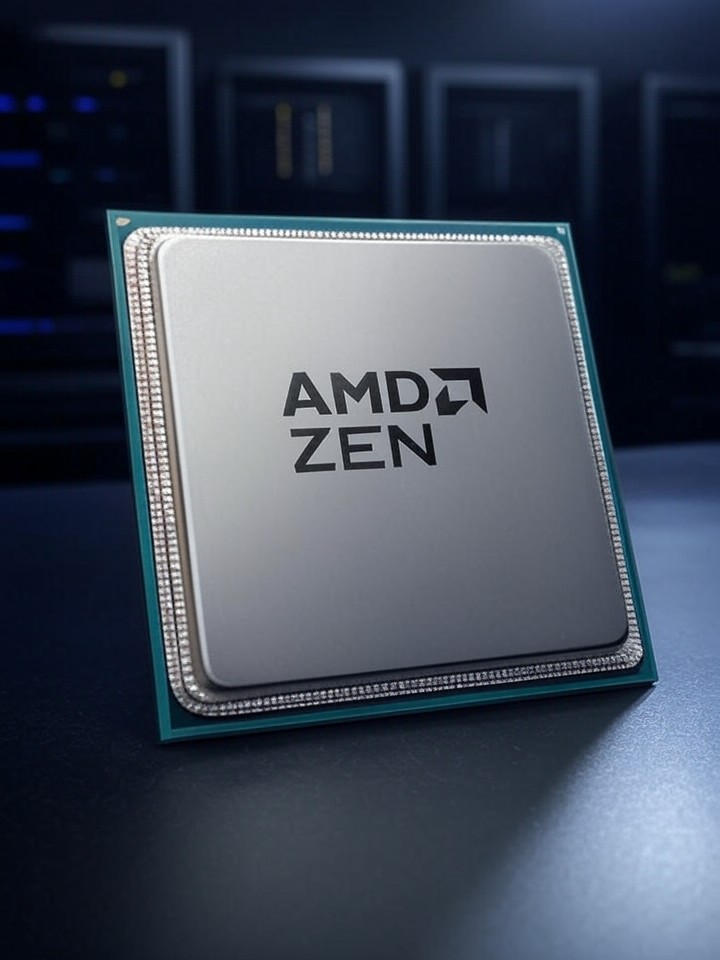
In the ever-evolving world of cybersecurity, a new threat has emerged that could undermine the trust in confidential computing environments powered by AMD processors. Researchers from Germany’s CISPA Helmholtz Center for Information Security have uncovered a hardware vulnerability dubbed StackWarp, which affects AMD’s Zen 1 through Zen 5 CPUs. This flaw allows malicious actors to manipulate the processor’s stack tracking, potentially breaching the protections of secure virtual machines (VMs) and exposing sensitive data like private keys.
The discovery, detailed in a recent report, highlights how attackers with control over a host system could exploit this issue to alter program flow or access confidential information within protected VMs. In one demonstrated scenario, the researchers reconstructed an RSA-2048 private key, while in another, they bypassed security measures to execute code with elevated privileges. This isn’t just theoretical; it’s a practical risk for cloud providers and enterprises relying on AMD’s Secure Encrypted Virtualization (SEV) technology.
StackWarp stems from a synchronization bug in AMD’s stack engine, a performance-enhancing feature designed to optimize stack operations. By flipping a single bit, attackers can disrupt the stack pointer’s integrity, leading to control-flow hijacking or data leaks. The vulnerability is particularly concerning because it impacts all generations of Zen processors, from consumer Ryzen chips to enterprise EPYC models.
Unpacking the Technical Intricacies of StackWarp
To understand StackWarp’s mechanics, it’s essential to delve into how AMD CPUs handle stack operations. The stack engine predicts and tracks changes to the stack pointer, reducing the need for explicit register updates. However, the CISPA team found that under specific conditions—such as interrupts or exceptions—the engine fails to properly synchronize, creating a window for exploitation.
In their experiments, the researchers showed that a malicious hypervisor could inject faults into a guest VM’s execution, manipulating the stack to redirect control flow or extract memory contents. This breaks the confidentiality and integrity guarantees of AMD’s SEV-SNP (Secure Nested Paging), a feature meant to protect VMs from even the host operator.
AMD has responded swiftly, assigning the flaw a low severity score due to the requirement for administrative access on the host. They’ve released microcode patches to mitigate the issue, urging users to update their systems. According to TechRadar, the vulnerability also puts motherboards from brands like Gigabyte, MSI, ASUS, and ASRock at risk, tying into broader UEFI firmware concerns.
The broader implications extend to cloud computing, where multi-tenant environments are common. Providers using AMD hardware for confidential VMs must now reassess their security postures. Posts on X (formerly Twitter) from cybersecurity experts, such as Ruiyi Zhang, emphasize that the flaw was disclosed to AMD in March 2025, with patches available since the embargo lifted.
Zhang’s post details how StackWarp enables deterministic manipulation of VM stack pointers, allowing remote code execution (RCE) and privilege escalation. This aligns with reports from other sources, painting a picture of a vulnerability that, while not easily exploitable remotely, poses significant insider threats.
Comparisons to past CPU flaws like Spectre and Meltdown are inevitable. Those earlier vulnerabilities exploited speculative execution to leak data across security boundaries. StackWarp, however, targets the stack management specifically, making it a novel attack vector in the realm of hardware security.
AMD’s Track Record and Response Strategies
AMD’s history with security issues provides context for this latest revelation. In 2024, the “SinkClose” flaw affected processors dating back to 2006, enabling deep-system malware that’s hard to detect or remove. As reported by ZDNET, it primarily threatened servers and data centers rather than consumer PCs.
More recently, in February 2025, AMD issued bulletins like AMD-SB-4008, addressing vulnerabilities in the Secure Processor and platform components. These were mitigated through firmware updates, a pattern repeated with StackWarp. The company’s Product Security Incident Response Team (PSIRT) plays a central role, collaborating with researchers and vendors to tackle such issues.
In the case of StackWarp, AMD’s official stance, as per their resources page, underscores the importance of timely updates. They’ve provided Platform Initialization (PI) firmware packages to OEMs, ensuring that mitigations can be rolled out efficiently. However, the effectiveness depends on end-users and administrators applying these patches promptly.
Industry insiders note that while AMD rates StackWarp as low severity, the potential for data spills in virtualized environments elevates its real-world impact. A post on X from Cyber Kendra warns of the flaw’s ability to hijack encrypted VMs, crediting Zhang for the details and urging immediate action.
This isn’t isolated; earlier in 2025, AMD confirmed vulnerabilities across Zen 1 to 5 processors, as covered by TweakTown. That disclosure affected a wide range of CPUs, highlighting ongoing challenges in hardware design.
Furthermore, transient scheduler attacks disclosed in July 2025 by The Hacker News exposed sensitive data risks in Ryzen and EPYC models, adding to the narrative of persistent security hurdles for AMD.
The Ripple Effects on Cloud Providers and Enterprises
For cloud service providers, StackWarp represents a potential chink in the armor of confidential computing. Technologies like AMD SEV are marketed as secure havens for sensitive workloads, but flaws like this erode confidence. Enterprises running virtualized infrastructures must now prioritize firmware updates to safeguard against insider threats or compromised hosts.
The vulnerability’s demonstration of reconstructing private keys underscores the stakes: cryptographic material is the lifeblood of secure communications and data protection. If attackers can extract such keys from supposedly isolated VMs, the fallout could include data breaches, financial losses, and regulatory scrutiny.
Mitigation strategies extend beyond patches. Best practices include isolating critical workloads, monitoring hypervisor activity, and employing additional layers of encryption. AMD’s bulletins, such as AMD-SB-7033 on microcode signature verification, emphasize the need for robust verification processes to prevent malicious patches.
Recent news from Tom’s Hardware highlights how a motherboard flaw led to game cheats in titles like Valorant, prompting BIOS updates. This illustrates the interconnectedness of hardware, firmware, and software security.
On X, discussions around StackWarp reflect growing concern. TechRadar itself posted about the low severity but stressed updating now, linking to their in-depth coverage. Such sentiment underscores the community’s push for vigilance.
In parallel, Microsoft’s January 2026 Patch Tuesday addressed 114 flaws, including zero-days, as per SecurityOnline, reminding us that software updates are crucial alongside hardware fixes.
Lessons from Past Vulnerabilities and Future Defenses
Looking back, AMD’s challenges mirror those faced by Intel, with flaws like the 2019 side-channel attacks leaking data from CPU buffers, as noted in historical X posts from experts like Kim Zetter. These precedents inform current responses, emphasizing rapid disclosure and patching.
Another X post from 2020 by Alyssa Milburn detailed Intel CPU leaks via instructions like CPUID, showing cross-core risks. While AMD-specific, StackWarp fits into this pattern of microarchitectural vulnerabilities.
In 2025, a proof-of-concept ransomware exploiting AMD Zen flaws was discussed on X by Pirat_Nation, bypassing traditional security at the hardware level. This highlights the evolving threat from sophisticated malware leveraging CPU weaknesses.
To counter these, AMD continues to invest in secure design. Their PSIRT, detailed on AMD’s product security page, fosters collaboration with the security community.
Researchers like those at CISPA are pivotal, often identifying issues before widespread exploitation. The StackWarp paper, expected to be presented at conferences, will likely spur further analysis and defenses.
For industry professionals, the key takeaway is proactive security hygiene: regular updates, threat modeling for virtual environments, and diversification of hardware to mitigate single-vendor risks.
Navigating the Path Forward in Hardware Security
As we move deeper into 2026, the tech industry must grapple with the reality that no processor is immune to flaws. StackWarp joins a lineage of vulnerabilities that challenge the foundations of secure computing, from SinkClose to transient attacks.
Enterprises should audit their AMD-based systems, ensuring firmware is current. Cloud operators, in particular, need to verify SEV implementations post-patch.
Ultimately, this incident reinforces the need for layered security approaches, combining hardware mitigations with software safeguards and vigilant monitoring. By learning from StackWarp, the sector can strengthen its defenses against tomorrow’s threats.
The ongoing dialogue on platforms like X, with posts from figures like Scott Manley on Intel flaws and Jake Williams on AMD secure boot bypasses, keeps the community informed and responsive.
AMD’s commitment to addressing these issues, as seen in bulletins like AMD-SB-5001 for embedded processors, shows a dedication to improvement.
In the end, while StackWarp may not be catastrophic for all users, it serves as a stark reminder of the complexities in modern CPU design and the perpetual arms race between innovators and adversaries.


 WebProNews is an iEntry Publication