
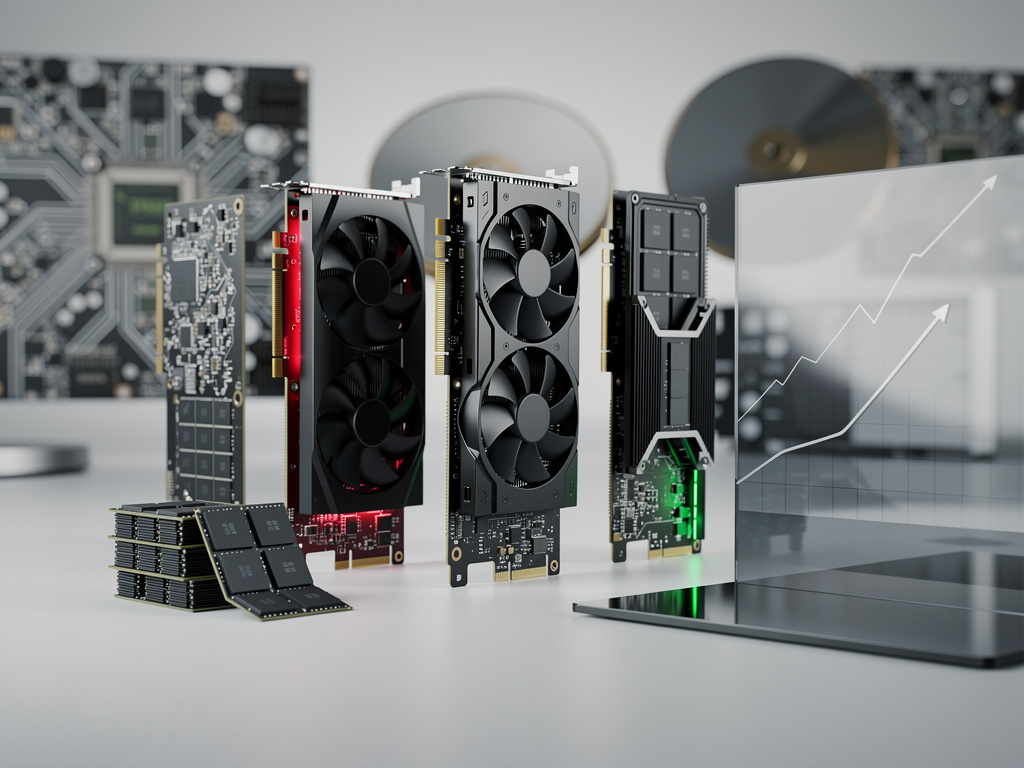
The graphics card market faces another potential upheaval as AMD’s board partners contemplate raising prices on existing GPU models while simultaneously considering the elimination of 16GB memory configurations from their product lineups. This strategic shift, mirroring tactics previously employed by Nvidia, signals a fundamental transformation in how manufacturers approach memory capacity and pricing in the discrete graphics card segment.
According to recent industry reporting from TechRadar, multiple sources within the supply chain suggest that AMD’s add-in board (AIB) partners are actively discussing price adjustments that could impact consumers shopping for mid-range and high-end graphics solutions. The timing of these deliberations comes as the industry grapples with shifting demand patterns, component costs, and competitive pressures that have reshaped the GPU market over the past several quarters.
The potential abandonment of 16GB configurations represents a particularly significant departure from AMD’s historical positioning. While Nvidia has largely moved away from offering 16GB variants in certain product segments, AMD has maintained this memory tier as a differentiating factor, particularly in cards targeting content creators and enthusiasts who benefit from additional VRAM for complex workloads. The reported shift suggests AMD’s partners may be reassessing the commercial viability of these configurations amid changing market dynamics.
Memory Configurations Under Scrutiny as Manufacturing Economics Shift
The decision to potentially phase out 16GB models stems from multiple converging factors within the semiconductor and graphics card manufacturing ecosystem. Board partners face increasing pressure from memory pricing fluctuations, with GDDR6 and GDDR6X modules representing a substantial portion of total bill-of-materials costs for graphics cards. Industry analysts have noted that the premium charged for 16GB configurations often fails to generate proportional margins for manufacturers, particularly when competing against Nvidia’s streamlined product stack.
Manufacturing complexity adds another dimension to this strategic consideration. Producing multiple memory configurations for the same GPU die requires separate production runs, distinct inventory management systems, and differentiated marketing approaches. For AMD’s partners, who typically operate with tighter margins than Nvidia’s board partners due to competitive market positioning, the operational overhead of maintaining diverse SKU portfolios has become increasingly burdensome.
Price Increases Reflect Broader Industry Cost Pressures
The rumored price hikes extend beyond simple memory configuration changes, reflecting broader cost pressures throughout the graphics card supply chain. Component shortages, while less severe than during the pandemic era, continue to affect specific parts of the manufacturing process. Advanced packaging technologies, power delivery components, and high-quality PCB materials have all experienced cost increases that manufacturers are finding difficult to absorb without passing through to end consumers.
Currency fluctuations have compounded these challenges, particularly for manufacturers operating across multiple geographic regions. The strengthening dollar against various Asian currencies has created margin compression for companies manufacturing in Taiwan, China, and other regional hubs. These macroeconomic factors, combined with persistent inflation in logistics and shipping costs, have created a perfect storm that makes price stability increasingly difficult to maintain.
Competitive Dynamics Force Strategic Recalibration
AMD’s board partners operate in an intensely competitive environment where Nvidia commands approximately 88% of the discrete graphics card market according to recent quarterly data. This market dominance gives Nvidia and its partners significant pricing power, allowing them to establish market norms that smaller competitors must either match or differentiate against. When Nvidia moved away from certain memory configurations, it effectively reset consumer expectations for what constitutes standard offerings at various price points.
The strategic calculus for AMD’s partners involves balancing differentiation against operational efficiency. While offering 16GB configurations could theoretically provide a competitive advantage, the reality of consumer purchasing behavior suggests that price often trumps memory capacity for the majority of buyers. Market research indicates that most consumers in the mid-range segment prioritize raw performance metrics and price-to-performance ratios over absolute memory capacity, particularly for gaming-focused applications where 12GB has become the de facto standard.
Impact on Content Creation and Professional Workflows
The potential elimination of 16GB consumer graphics cards carries particular significance for content creators, 3D artists, and professionals who rely on discrete GPUs for non-gaming workloads. These users frequently encounter memory limitations when working with high-resolution textures, complex 3D scenes, or simultaneous application workloads that benefit from additional VRAM headroom. The shift toward 12GB maximum configurations in consumer cards could force these users toward more expensive professional-grade solutions or compromise their workflow efficiency.
Video editors working with 4K and 8K footage represent another user segment potentially affected by this transition. While many editing applications can function within 12GB constraints, the additional memory overhead provided by 16GB configurations offers meaningful benefits for timeline scrubbing, effects rendering, and multi-stream playback. The removal of these options from the consumer market segment could widen the gap between enthusiast and professional product tiers, potentially forcing users to make significant budget increases to access necessary memory capacities.
Market Timing and Next-Generation Product Cycles
The timing of these potential changes coincides with the industry’s transition toward next-generation architectures. AMD’s upcoming RDNA 4 architecture and Nvidia’s rumored RTX 50-series products will establish new baselines for performance, efficiency, and memory configurations. Board partners may be using this transitional period to rationalize current-generation product lines, clearing inventory and simplifying SKU portfolios before new launches require renewed manufacturing complexity.
Historical patterns suggest that manufacturers often implement price adjustments and product line simplifications in the quarters preceding major architectural transitions. This approach allows companies to maximize revenue from existing inventory while creating clear product differentiation between outgoing and incoming generations. The reported considerations by AMD’s partners align with these established industry practices, suggesting coordinated planning around upcoming product refresh cycles.
Consumer Response and Market Resistance
Enthusiast communities and hardware forums have responded to these rumors with significant skepticism and concern. Many consumers view the potential elimination of 16GB configurations as artificial product segmentation designed to push buyers toward more expensive tiers without corresponding performance improvements. This perception of value erosion has generated substantial discussion across social media platforms and specialized hardware communities, with some users threatening to extend current GPU lifecycles rather than accept what they perceive as diminished value propositions.
The broader consumer electronics market has demonstrated increasing price sensitivity following several years of elevated graphics card pricing. While the cryptocurrency mining boom has largely subsided, removing one of the primary drivers of inflated GPU prices, consumers remain cautious about price increases that appear disconnected from tangible performance or feature improvements. This market sentiment creates challenges for manufacturers attempting to implement price adjustments, even when those adjustments reflect legitimate cost pressures.
Supply Chain Realities and Manufacturing Constraints
Behind the strategic considerations lie fundamental supply chain realities that constrain manufacturer flexibility. TSMC’s advanced manufacturing nodes, which produce the GPU dies for both AMD and Nvidia, operate at capacity constraints that influence wafer allocation and production scheduling. Board partners must navigate these constraints while managing their own assembly operations, quality control processes, and distribution networks. The complexity of coordinating these elements across multiple product configurations creates operational challenges that simpler product portfolios can alleviate.
Memory procurement represents another critical supply chain consideration. GDDR6X memory, used in higher-end graphics cards, comes from a limited supplier base with production capacity that fluctuates based on demand from multiple industries. Securing consistent memory supplies for multiple configuration variants requires sophisticated procurement strategies and often involves volume commitments that smaller board partners struggle to meet. Consolidating around fewer memory configurations can improve procurement efficiency and reduce supply chain risk.
Long-Term Implications for GPU Market Structure
The potential changes under consideration by AMD’s board partners reflect broader structural shifts in the discrete graphics card market. As GPU manufacturing becomes increasingly concentrated among a small number of foundries using cutting-edge process nodes, the economics of product diversification have fundamentally changed. The days of extensive product portfolios with numerous memory and clock speed variants may be giving way to more streamlined offerings that prioritize manufacturing efficiency over configuration variety.
This evolution carries implications for consumer choice and market competition. Reduced configuration diversity could limit options for users with specific needs while potentially simplifying the purchasing decision process for mainstream buyers. The net effect on market health remains uncertain, dependent on whether manufacturers use streamlined portfolios to improve value propositions or simply to enhance margins without corresponding consumer benefits. As the industry continues evolving, the balance between operational efficiency and consumer choice will remain a central tension shaping product strategy and market dynamics.


 WebProNews is an iEntry Publication