
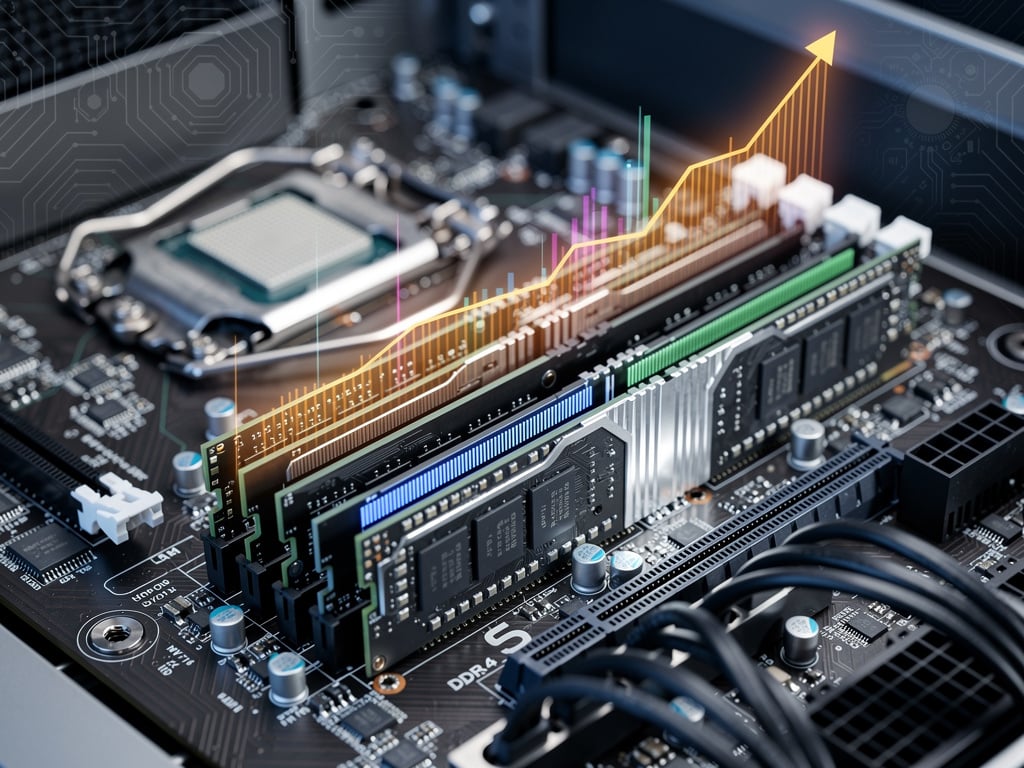
AMD executive Joe Macri recently shared a sobering forecast about the memory market that has left many system builders feeling discouraged. According to the veteran engineer, DDR5 RAM pricing will not return to what most consumers would consider normal levels until 2028. The statement carries extra weight because it comes from someone deeply involved in the development of next-generation platforms at one of the two companies that essentially control the CPU market.
The comment highlights a growing disconnect between industry projections and the actual experience of PC enthusiasts who have watched memory prices behave in unpredictable ways for years. While manufacturers continue to promise that increased production and maturing technology will drive costs down, the timeline keeps stretching further into the future. Many analysts initially expected DDR5 to reach price parity with DDR4 sometime in 2024 or 2025. Those expectations have been repeatedly pushed back, and now the 2028 marker feels particularly distant.
Current market conditions help explain why this prediction carries credibility. DDR5 modules still command a significant premium over their DDR4 counterparts despite being available for more than three years. High-end kits with fast timings and large capacities can cost two to three times what comparable DDR4 memory sold for at its peak. Even mainstream options remain noticeably more expensive than many buyers anticipated at this stage of the product cycle. Supply chain issues, increased manufacturing complexity, and strong demand from both consumer and enterprise segments have all contributed to keeping prices elevated.
The manufacturing process for DDR5 presents genuine technical challenges that affect cost. These modules operate at higher frequencies with tighter tolerances than previous generations. The on-die error correction and power management features that enable this performance add layers of complexity to the production process. Chipmakers must also contend with the need for more advanced silicon processes to achieve the densities and speeds that marketing materials highlight. Each of these factors translates directly into higher production costs that get passed along to consumers.
Server and data center demand further complicates the pricing picture. Major cloud providers and artificial intelligence companies have developed an almost insatiable appetite for memory. Training large language models and running complex inference workloads requires enormous amounts of high-speed RAM. This enterprise demand often takes priority over consumer needs because of the much larger order volumes and higher margins involved. As long as these sectors continue expanding rapidly, consumer DDR5 pricing may remain suppressed regardless of overall production increases.
Industry observers have pointed out that memory pricing rarely follows a smooth downward curve. Instead, it tends to move in cycles driven by capacity additions from major manufacturers. When new fabrication facilities come online, they can flood the market with supply and drive prices down sharply. However, these facilities represent massive capital investments, and companies remain cautious about overbuilding capacity after painful experiences with previous boom-and-bust cycles in the DRAM industry.
The current situation differs from past transitions in several meaningful ways. DDR5 represents more than just an incremental speed increase. The standard introduces fundamental architectural changes including different voltage rails, on-module voltage regulation, and entirely new signaling methods. These changes required substantial retooling of production lines and testing equipment. The learning curve associated with these modifications has proven steeper than many anticipated, slowing the rate at which costs could decline.
Consumer behavior also plays a role in maintaining higher prices. Many PC builders have chosen to remain on DDR4 platforms longer than originally expected. Intel’s decision to support both DDR4 and DDR5 on certain motherboard chipsets gave users a genuine choice, and a significant percentage opted for the more affordable option. This slower adoption rate meant that DDR5 production volumes grew more gradually than manufacturers had planned, limiting the economies of scale that typically drive prices lower.
AMD’s own platform strategy reflects some of these market realities. The company has maintained support for DDR5 across its recent processor generations while gradually improving memory compatibility and performance. However, the high cost of populating systems with adequate DDR5 has likely influenced purchasing decisions for many potential customers. Gamers and content creators in particular have expressed frustration about the premium required for what often amounts to modest real-world performance gains in many applications.
The broader economic context cannot be ignored either. Global inflation, supply chain disruptions, and geopolitical tensions have affected virtually every component in the PC supply chain. Memory manufacturers face the same pressures from energy costs, raw materials, and labor that impact other industries. These external factors make it difficult to achieve the rapid cost reductions that characterized earlier memory transitions.
Looking ahead, several developments could potentially accelerate price normalization or further delay it. On the positive side, major manufacturers including Samsung, SK Hynix, and Micron have announced plans for expanded production capacity over the coming years. New process nodes specifically optimized for DDR5 should help reduce costs per bit. Additionally, competition from alternative memory technologies and packaging methods might eventually force more aggressive pricing strategies.
However, countervailing pressures exist as well. The continued expansion of artificial intelligence infrastructure seems likely to absorb much of the new capacity that comes online. If data center demand grows faster than production capacity, consumer prices may remain stubbornly high. There is also the question of what “normal” pricing actually means in this context. Many consumers still reference DDR4 prices from 2020 or 2021 as their benchmark, but those periods represented unusually favorable market conditions that may not return.
The semiconductor industry has historically demonstrated remarkable ability to solve technical problems and reduce costs over time. Yet the timelines for these improvements have grown longer as the underlying physics becomes more challenging. Each new memory generation requires exponentially greater investment in research and development. The returns on these investments must be recouped through pricing that reflects the increased complexity.
For PC builders, these realities mean making difficult decisions about when to upgrade and what specifications to choose. Those who need maximum performance today may have little choice but to pay current DDR5 prices. Others might decide to extend the life of their existing DDR4 systems or look for good deals on previous-generation components. The situation creates a fragmented market where different user groups face very different cost considerations.
Memory pricing also affects the broader technology industry in ways that extend beyond individual purchasing decisions. Higher component costs can delay corporate refresh cycles and influence enterprise buying patterns. Schools and small businesses may postpone technology upgrades when memory represents a disproportionately large part of system costs. These ripple effects can slow the overall pace of computing advancement across multiple sectors.
The technical advantages of DDR5 remain substantial despite the pricing challenges. Higher bandwidth, improved power efficiency, and greater capacity per module all provide genuine benefits for specific workloads. Applications that involve large datasets, complex calculations, or high-resolution content creation can leverage these capabilities effectively. The question is whether the performance gains justify the current cost premium for most users.
As the industry moves toward DDR5 becoming the default choice, several factors will determine how quickly prices approach more reasonable levels. Increased competition among memory manufacturers could help drive costs down. Improvements in yields and manufacturing efficiency should gradually reduce production expenses. Consumer pressure and media attention might encourage more transparent communication about expected pricing trends.
The 2028 timeline suggested by the AMD executive represents a conservative estimate based on current trends and known production schedules. Whether actual prices normalize sooner or later will depend on numerous variables that remain difficult to predict with precision. What seems clear is that the memory market has entered a period where rapid price declines cannot be taken for granted.
System builders would be wise to monitor memory pricing closely and consider their upgrade timing carefully. Those with functional DDR4 systems may find that waiting until 2026 or 2027 provides the best balance of cost and performance. Others building new high-end systems might need to budget accordingly for current DDR5 pricing while hoping for improvements over the next few years.
The situation serves as a reminder that technology advancement does not always follow a straight path of continuous improvement in both performance and affordability. Sometimes the gains in capability come with temporary cost increases that test consumer patience. The memory industry appears to be in one of those phases now, with the promise of eventual relief still several years away according to those closest to the manufacturing side of the business.
Market dynamics will ultimately determine when DDR5 reaches pricing levels that feel fair to most consumers. Until then, the comments from industry leaders like Joe Macri provide valuable context for understanding why prices have not fallen as quickly as many had hoped. The prediction may disappoint enthusiasts eager for more affordable high-performance memory, but it also reflects the complex realities of modern semiconductor manufacturing and global demand patterns that show no signs of easing.
For now, buyers must weigh their specific needs against current market conditions and make informed decisions based on actual performance requirements rather than wishful thinking about future price drops. The road to affordable DDR5 appears longer than previously anticipated, but the technology’s advantages ensure it will eventually become the standard choice across most PC segments. The question that remains is exactly when that transition will occur at price points that satisfy the majority of users.


 WebProNews is an iEntry Publication