
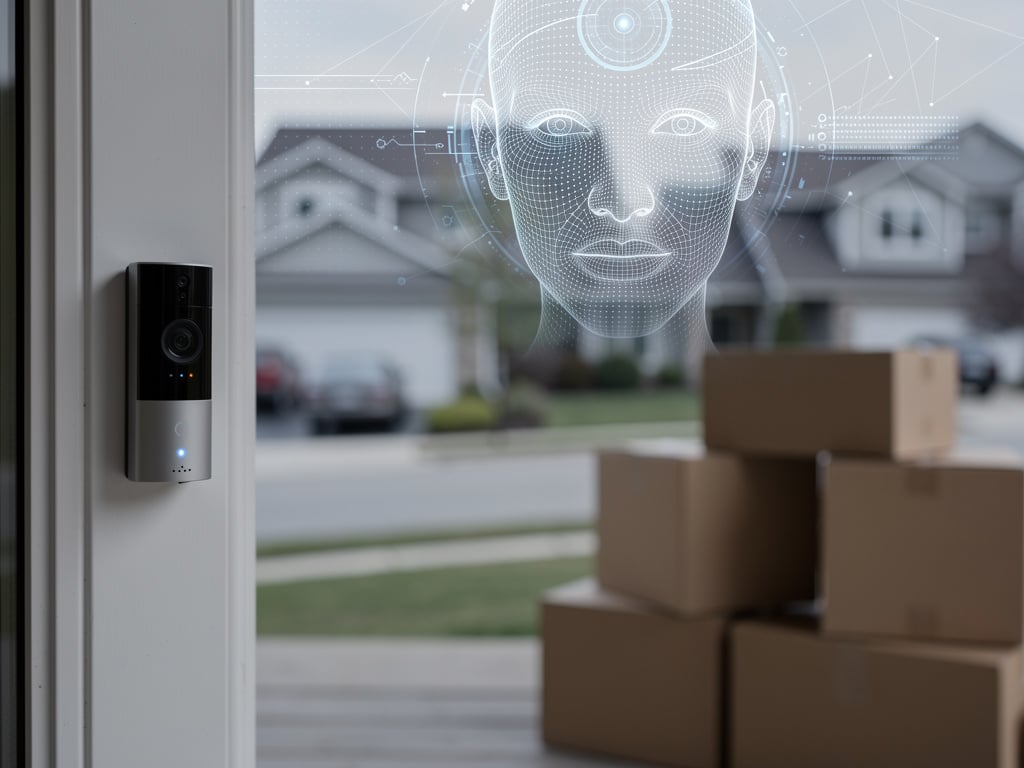
Charles Sigwalt walked past doorbell cameras at the homes of friends and family in Virginia. He never gave permission for any of it. Yet those devices captured his face. They stored it. And they did so using Amazon’s facial recognition technology.
Now Sigwalt is the lead plaintiff in a proposed class-action lawsuit filed Monday in federal court in Seattle. The suit accuses Amazon of privacy violations through Ring’s “Familiar Faces” feature. It seeks at least $5 million in damages. And it claims millions of other Americans have suffered the same fate.
“Those affected did not consent to have their privacy rights violated at the entrance way,” the complaint states. Millions of other Americans passed by a Ring security camera and unknowingly had their facial recognition information collected. Short. Direct. And central to the case.
The feature works like this. Ring customers can opt in. The system then uses artificial intelligence to learn and remember the faces of people who frequently appear. A notification might say “Dad is at the door” instead of a generic alert. Sounds convenient for the owner. But the people whose faces get scanned? They have no say. No notice. No chance to refuse.
Sigwalt’s experience mirrors what privacy advocates warned about when Ring announced Familiar Faces last September. The company launched it in December despite criticism from groups like the Electronic Frontier Foundation and Sen. Ed Markey, a Massachusetts Democrat. EFF laid out the legal risks months earlier, arguing the tool could violate biometric privacy laws in multiple states by collecting faceprints from bystanders without consent.
But Amazon pushed ahead. The company has said face data is encrypted and never shared. Unidentified faces get deleted after 30 days. Yet the lawsuit contends that doesn’t fix the core problem. Non-users never agreed to any of this processing in the first place.
This isn’t Amazon’s first brush with privacy trouble over Ring. In 2023 the company settled with the Federal Trade Commission for $5.8 million. Regulators accused Ring employees and contractors of improperly viewing customer videos. Every worker had access. No real limits. The FTC forced changes. Amazon paid up. But the pattern of concerns continues.
Ring, which Amazon bought for $1 billion in 2018, built its business on home security. Police partnerships followed. Neighbors app requests for footage. Data sharing that raised alarms. Sen. Markey pressed the company in 2022 over those law enforcement ties. Familiar Faces adds another layer. One that turns private doorbells into potential nodes in a broader surveillance network.
But here’s where it gets complicated. The camera owner consents. The visitor does not. That asymmetry sits at the heart of the complaint. Courts have seen similar cases before. Google paid $1.375 billion in Texas over Nest cameras capturing faces without permission. Meta settled for hundreds of millions in Illinois and Texas for tagging photos. Biometric data is different. You can’t change your face like a password.
The proposed class could be massive. Anyone who walked past a Ring camera with the feature enabled might qualify. Delivery drivers. Neighbors. Pedestrians. The suit alleges the practice affects people across the country. Yet enforcement varies by state. Some require explicit opt-in for biometrics. Others leave it to regulators. Amazon reportedly avoids rolling out the feature in places like Illinois, Texas and Portland, Ore., where laws bite hardest.
Amazon declined to comment on the litigation. No immediate statement. No defense filed yet. The case must first clear the hurdle of class certification. Procedural steps remain. But the filing alone spotlights ongoing tensions between convenience, security and individual rights.
Critics argue facial recognition in consumer devices risks mission creep. What starts as naming family members could expand. Lost pet searches using Ring footage sparked backlash earlier this year. The company pulled a planned partnership with Flock Safety after public outcry. That network fed data to police and immigration authorities. Jamie Siminoff, Ring’s founder, later described the extra workload such deals create.
Still, demand for these tools grows. Homeowners want useful alerts. Businesses seek identification at entrances. The technology improves. Accuracy rises. But consent lags behind. And once biometric templates exist, they last. Breaches expose something permanent.
Sigwalt’s suit doesn’t just target one incident. It paints a picture of widespread, unknowing collection. “Millions of other Americans” carries weight. If certified, discovery could reveal internal documents on how many faces Ring stores. How long. For what exact purposes.
Privacy laws evolve too. Washington state strengthened its rules in 2023, allowing individuals to sue. More than a dozen states now have comprehensive data protection statutes. They treat biometrics as sensitive. They demand purpose and consent. Yet loopholes persist. Many rely on agency enforcement rather than private rights of action.
The Ring lawsuit arrives as regulators and lawmakers scrutinize AI. Facial recognition sits in the crosshairs. Accuracy gaps hit certain demographics harder. Error rates for darker skin tones. Potential for misuse in emotion detection or profiling. EFF warned of these pitfalls last fall. The company acknowledged legal exposure by limiting availability.
So far no response from Amazon beyond its prior statements on encryption and deletion policies. That silence leaves questions hanging. Does opt-in by the camera owner satisfy obligations to everyone else in frame? Can a company claim deletion after 30 days when the initial capture itself lacked permission?
Industry watchers expect more suits. Similar complaints have hit other platforms. The stakes climb with each deployment. Billions of cameras. Trillions of frames. Facial data accumulates quietly in the background.
Sigwalt seeks to represent all those affected. At minimum $5 million for the class. Potentially more depending on how courts calculate harms. The case could drag on for years. Settlements often follow. Changes get made. Yet the fundamental debate endures.
Convenience for some. Exposure for many. Amazon built an empire on devices that watch homes. Now those same devices watch the watchers. The lawsuit tests whether that watching requires broader agreement. Courts will decide. Lawmakers may weigh in. And millions of faces already captured wait in the system. Unknowing. Unconsenting. Stored.
Privacy Reckoning for Biometric Tools
Previous Ring controversies set the stage. The 2023 FTC settlement exposed lax internal controls. Employee access ran unchecked. Customer videos became fair game. Amazon agreed to delete improperly held footage and build better safeguards. But trust eroded. Partnerships with police added fuel. Requests for footage bypassed warrants in some cases before policy shifts.
Familiar Faces revives those fears in new form. It doesn’t just record video. It analyzes. It identifies. It builds profiles. For the homeowner this means smarter notifications. For the public it means involuntary enrollment in someone else’s database. The EFF called this out clearly. Biometric collection from bystanders raises distinct legal issues under state laws. Consent can’t realistically be obtained from every passerby.
Recent coverage echoes these points. Reuters detailed the filing hours after it landed, quoting the complaint directly and noting Amazon’s no-comment stance. TechCrunch connected it to earlier pushback against the feature’s rollout. Both highlight the same asymmetry: owner consent versus public exposure.
Outcomes remain uncertain. Amazon might argue the feature is optional, data is minimized, and users control it. Plaintiffs will counter that third parties bear the burden without choice. Precedents from Google and Meta suggest companies pay when non-users get scanned. Billions in prior settlements signal the financial risk.
For now the complaint stands as the latest signal. Consumer hardware increasingly carries surveillance power. Companies race to add AI. Privacy rules scramble to catch up. Sigwalt’s case may not end the debate. But it forces another round of examination. On consent. On data rights. On what it means when your face enters a stranger’s smart home system without you ever knowing.


 WebProNews is an iEntry Publication