
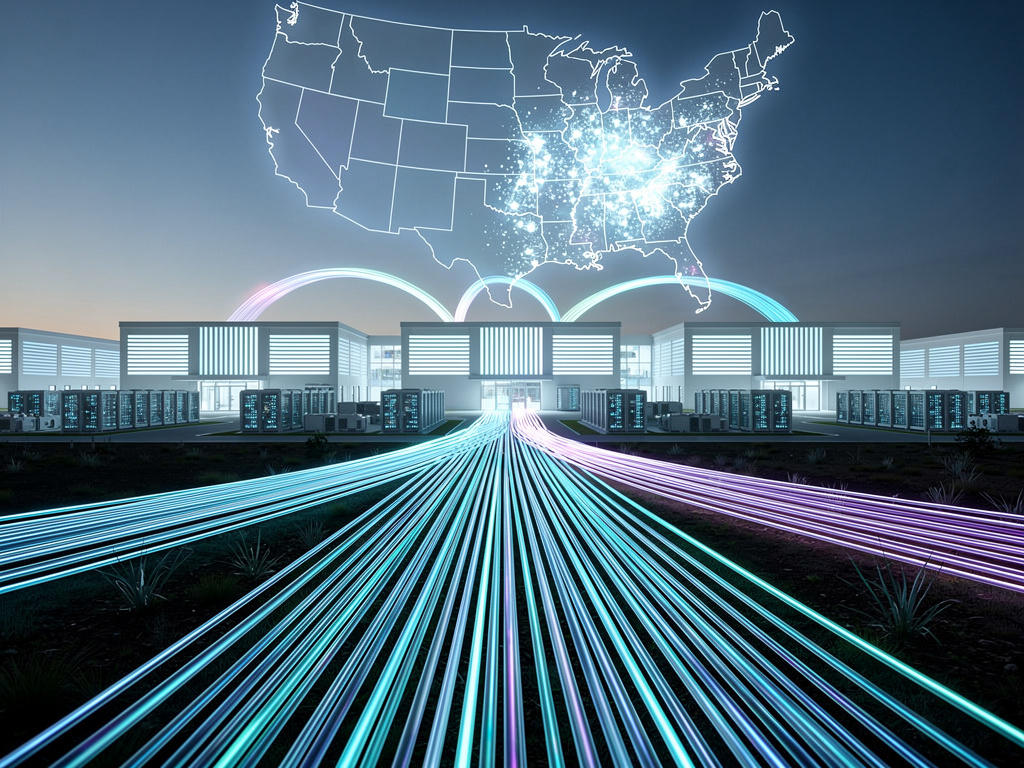
Amazon has struck a multi-billion-dollar agreement with Corning to secure the optical fiber, cable and connectivity gear that will wire its swelling fleet of U.S. data centers. The pact, announced Monday, underscores how hyperscalers now treat decades-old materials suppliers as strategic partners in the artificial intelligence buildout. Shares of Corning jumped as much as 9% in early trading.
The deal calls for Corning to ramp up production at facilities across North Carolina. It will create 1,000 new manufacturing jobs there, plus hundreds of construction positions tied to the expansions. Amazon described the investment as a way to strengthen domestic supply chains for the infrastructure powering its cloud and AI ambitions. The Wall Street Journal first detailed the job-creation elements and North Carolina focus.
But this isn’t an isolated transaction. Over the past year Corning has signed similar pacts with other tech giants chasing ever-greater computing scale. In January Meta committed to pay up to $6 billion through 2030 for fiber-optic cable to support its AI data centers, according to CNBC. That agreement turned the Hickory, North Carolina, plant into what executives called the world’s largest fiber-optic cable facility once completed.
Then in May Nvidia said it would invest up to $3.2 billion in Corning. The chipmaker also agreed to a separate multi-billion-dollar prepayment. Together those funds will bankroll three new factories in North Carolina and Texas devoted entirely to optical products for AI clusters. Industrial Sage reported the facilities are expected to generate thousands of jobs while expanding U.S. capacity tenfold in key categories.
Corning’s transformation traces back decades. The company invented optical fiber in 1970. For years the business served telecom carriers during earlier network booms. Demand waxed and waned with capital spending cycles. Now AI training clusters consume bandwidth at unprecedented rates. A single rack can require miles of copper cabling that consumes massive power. Replace much of that with glass fiber and you slash energy use while boosting speed and density.
Analysts have taken notice. “They were in the right place at the right time,” Susquehanna’s Mehdi Hosseini told The Wall Street Journal last year. He argued Corning has essentially monopolized the specialized fiber used in AI applications because its formulations deliver higher capacity at lower total cost.
The Optical Communications segment now drives much of Corning’s growth. Recent quarterly results showed that business expanding 35% year over year while other units such as Gorilla Glass grew far more modestly. Overall the company has added roughly $90 billion in market capitalization since late 2023, climbing from about $23 billion to more than $113 billion. Fiber optics account for a disproportionate share of that rerating.
And the momentum keeps building. Corning also works with Broadcom on co-packaged optics technology. That approach integrates lasers and switches directly with silicon to cut latency and power draw even further. Early deployments target switches running at 51.2 terabits per second. Such advances matter when hyperscalers talk about clusters measured in gigawatts rather than megawatts.
Amazon’s latest move fits a clear pattern. The company already poured more than $10 billion into North Carolina for data center and related infrastructure. This fiber deal layers on top, locking in supply for future expansions while supporting local employment. Reuters noted the agreement specifically targets optical fiber and connectivity products used in data centers. Reuters highlighted how the pact arrives amid softer demand for consumer electronics that had weighed on Corning’s display glass business.
Executives on both sides struck an optimistic tone. Corning Chief Executive Wendell Weeks has repeatedly described these hyperscaler commitments as validation of long-term research bets. In the Meta announcement he called the expansion a significant milestone for American manufacturing. Similar language appears in Monday’s release. The subtext is clear: policy makers want onshoring of critical tech supply chains, and fiber qualifies.
Not every analyst expects the surge to last forever. Fiber demand could moderate once current data center waves finish construction. Yet most forecasts point higher. AI models continue to scale. Inference workloads multiply. Networking remains a bottleneck. Glass simply transmits photons more efficiently than copper carries electrons over distance.
Corning isn’t the only player. Competitors exist in Asia and Europe. But few match the U.S. manufacturing footprint or the depth of co-development relationships with chip designers and cloud operators. That matters as Washington eyes subsidies and tariffs aimed at securing domestic production.
The stock reaction Monday reflected the market’s read. Corning shares had already more than doubled in the past year before this news. Another 7% to 9% pop signals investors see these deals as durable revenue streams rather than one-off wins. Optical Communications could soon rival or surpass the company’s legacy display business in importance.
Look closer at the numbers. Meta’s $6 billion commitment runs through 2030. Nvidia’s equity stake plus prepayments suggest comparable scale. Amazon’s figure remains undisclosed beyond the “multi-billion” label, yet the job creation and capacity additions imply comparable magnitude. Add them up and Corning has secured tens of billions in forward visibility from the biggest names in tech.
That visibility matters for a company whose history includes Pyrex cookware and Gorilla Glass for smartphones. The pivot to AI infrastructure didn’t happen overnight. It required steady investment through lean years when fiber demand lagged. Now those bets pay off as data centers sprout across the Southeast and Midwest.
Future upside may come from adjacent areas. Corning has expanded into glass substrates for advanced semiconductor packaging. AMD and Amazon Web Services have accelerated timelines for adopting such technology to challenge Nvidia’s dominance, TweakTown reported last year. If those substrates gain traction inside AI accelerators themselves, another growth vector opens.
For now the focus stays on fiber. Hyperscalers need miles upon miles of it to connect thousands of GPUs without melting the power grid. Corning’s formulations allow tighter bends, higher density and lower attenuation. The performance edge compounds at scale.
So the 175-year-old glassmaker finds itself at the center of one of the largest capital spending cycles in technology history. Amazon’s agreement is only the latest chapter. More will follow as Google, Microsoft and others secure their own supply. The race for AI supremacy now runs through Hickory and other factory towns that once seemed far removed from Silicon Valley.
Investors will watch upcoming earnings for order backlog details and margin trends in the optical unit. Executives have guided for continued strong growth. So far the hyperscalers keep signing bigger checks. The fiber keeps flowing. And the data centers keep rising.


 WebProNews is an iEntry Publication