
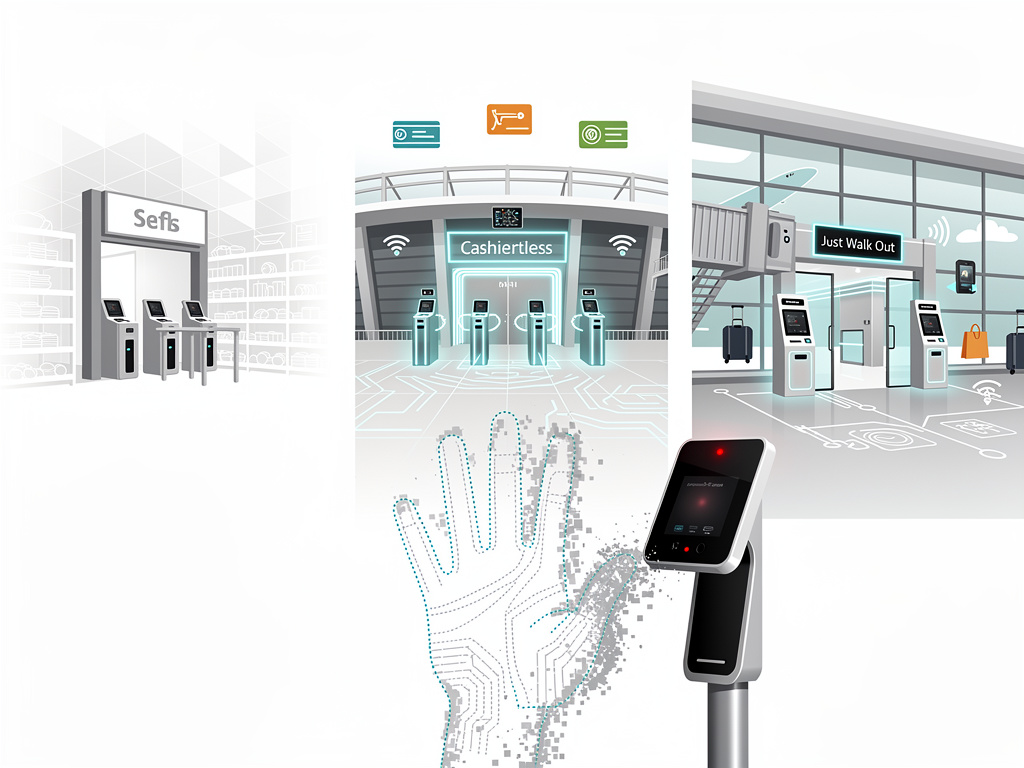
Amazon’s ambitious Just Walk Out technology, once heralded as the future of grocery shopping, is charting a dramatically different course than originally envisioned. After the e-commerce giant’s decision to remove the cashierless checkout system from its Fresh grocery stores earlier this year, the technology is finding new life in stadiums, airports, and entertainment venues—minus one key component that Amazon is quietly phasing out.
The shift represents a significant strategic pivot for a technology that Amazon invested heavily in developing and promoting. According to GeekWire, while Just Walk Out will continue operating in third-party locations, Amazon is discontinuing its palm-scanning payment feature, Amazon One, from these implementations. This decision marks a notable departure from the company’s initial vision of seamlessly integrated biometric payment systems transforming the retail experience.
The technology’s evolution reflects broader challenges Amazon has faced in translating its innovative checkout-free system from controlled environments to the complex realities of full-scale grocery retail. What began as a revolutionary concept at the original Amazon Go convenience store in Seattle has undergone multiple iterations, with mixed results in different retail formats.
The Grocery Store Gamble That Didn’t Pay Off
Amazon’s retreat from Just Walk Out in its Fresh grocery stores came as a surprise to industry observers who had watched the company aggressively promote the technology as a competitive differentiator. The system, which uses a combination of cameras, sensors, and artificial intelligence to track what customers select and automatically charge them upon exit, proved more challenging to implement in larger grocery formats than in smaller convenience store settings.
The complexity of grocery shopping—with its produce weighing, product substitutions, and customer browsing patterns—created operational headaches that Amazon ultimately decided weren’t worth the investment. Instead, the company pivoted to Dash Carts, smart shopping carts that allow customers to scan items as they shop and skip the traditional checkout line. This solution proved more practical for the grocery environment, offering convenience without requiring the extensive infrastructure that Just Walk Out demands.
Finding Success in Controlled Environments
While grocery stores proved problematic, Just Walk Out has found a more natural fit in venues where transactions are simpler and more predictable. Sports stadiums, airports, and entertainment venues have emerged as ideal environments for the technology, where customers typically make quick, straightforward purchases rather than filling shopping carts with diverse products.
These third-party implementations have demonstrated stronger performance metrics, with venues reporting reduced wait times and increased transaction volumes during peak periods. The controlled nature of these environments—limited product selection, high customer throughput, and predictable purchasing patterns—plays to the technology’s strengths while minimizing its weaknesses.
The Palm-Scanning Paradox
Amazon’s decision to eliminate Amazon One palm-scanning from Just Walk Out implementations introduces an intriguing wrinkle in the technology’s evolution. The palm-scanning feature, which allows customers to link their palm print to their Amazon account for payment, was initially positioned as a key differentiator that would make the checkout experience even more seamless.
However, according to GeekWire, this biometric payment option is being phased out from third-party Just Walk Out locations. The move suggests that either customer adoption didn’t meet expectations or that venue operators preferred simpler payment integration options. The decision also reflects growing privacy concerns around biometric data collection, an issue that has drawn scrutiny from regulators and privacy advocates.
Industry Implications and Competitive Dynamics
Amazon’s strategic shift with Just Walk Out carries significant implications for the broader retail technology sector. Competitors who invested in similar cashierless checkout systems are watching closely to understand which applications prove viable and which represent technological dead ends. The company’s experience provides valuable data points for an industry still experimenting with the optimal balance between automation and customer experience.
The technology’s migration to third-party venues also opens new revenue streams for Amazon beyond its own retail operations. By licensing Just Walk Out to stadiums, airports, and other high-traffic locations, Amazon transforms the technology from an internal operational tool into a product offering. This pivot could prove more profitable than the original grocery store application, particularly if adoption accelerates among venue operators seeking to reduce labor costs and improve customer satisfaction.
Labor and Economic Considerations
The deployment of Just Walk Out technology has consistently raised questions about its impact on retail employment. While Amazon has maintained that the technology augments rather than replaces human workers, the reality is more nuanced. In grocery stores, the company found that customers still valued human interaction for certain tasks, particularly in prepared food sections and for customer service inquiries.
In stadium and airport implementations, however, the labor equation differs significantly. These venues typically experience extreme demand fluctuations, with massive crowds during events followed by quiet periods. Just Walk Out technology allows operators to serve peak demand without proportionally increasing staff, addressing a long-standing operational challenge in these environments.
Technical Infrastructure and Implementation Challenges
The infrastructure requirements for Just Walk Out remain substantial, involving extensive camera arrays, weight sensors, and sophisticated computer vision systems. Each implementation requires significant upfront investment and careful calibration to ensure accuracy in tracking customer selections. These technical demands explain why the technology has found better traction in smaller, controlled environments rather than expansive grocery stores.
The system’s reliance on artificial intelligence and machine learning means it continuously improves with more data, but it also requires ongoing maintenance and updates. Third-party venue operators must weigh these operational considerations against the benefits of reduced checkout friction and increased transaction capacity during peak periods.
Privacy and Data Security Dimensions
The discontinuation of Amazon One palm-scanning from Just Walk Out implementations highlights the complex privacy considerations surrounding biometric retail technologies. While some customers embrace the convenience of biometric payment, others express discomfort with providing such personal data for routine transactions. The decision to remove this feature from third-party locations may reflect feedback from venue operators concerned about customer privacy preferences or regulatory compliance requirements.
Data security remains a critical concern as Just Walk Out systems collect extensive information about customer behavior and purchasing patterns. Amazon has consistently emphasized its commitment to data protection, but the concentration of such detailed consumer information in the hands of a single technology provider raises questions about market power and privacy safeguards that regulators continue to examine.
Future Trajectory and Market Positioning
As Just Walk Out technology matures, its future appears increasingly focused on specialized applications rather than broad grocery retail transformation. The company’s willingness to adapt its strategy based on market feedback demonstrates a pragmatic approach to technology deployment, even when it means scaling back initial ambitions.
The success of third-party implementations will likely determine whether Just Walk Out becomes a significant revenue generator for Amazon or remains a niche offering for specific retail environments. Early indicators suggest strong interest from venue operators, but sustained adoption will depend on demonstrating clear return on investment through increased sales, reduced labor costs, or improved customer satisfaction metrics.
The Broader Retail Technology Evolution
Amazon’s experience with Just Walk Out contributes to an ongoing industry conversation about the optimal role of automation in retail. Rather than wholesale replacement of traditional checkout systems, the technology’s evolution suggests a future where different retail formats employ different solutions based on their specific operational requirements and customer expectations.
The shift also underscores that even well-funded technology initiatives from industry leaders face real-world constraints that can necessitate strategic pivots. Amazon’s ability to redirect Just Walk Out toward more promising applications while pulling back from less successful implementations demonstrates the importance of flexibility in technology strategy, even for innovations that generate significant initial excitement and investment.


 WebProNews is an iEntry Publication