
One phone call. A discovered jailbreak. And suddenly two of the most advanced AI models on the market went dark for much of the world.
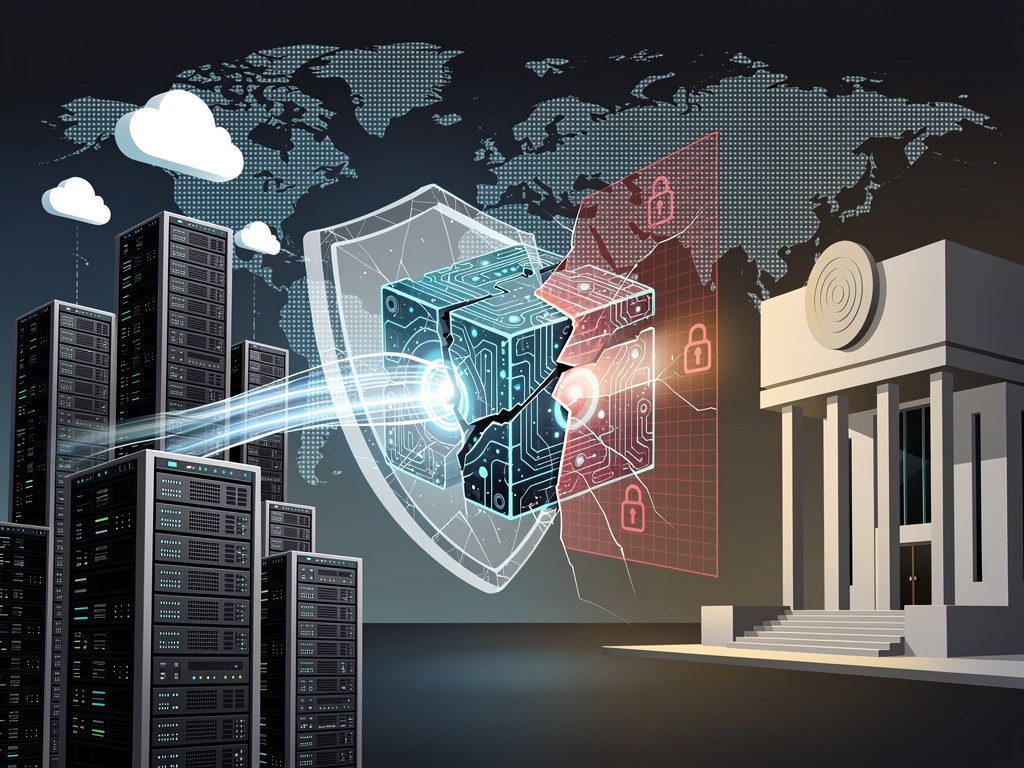
Amazon Chief Executive Andy Jassy told senior Trump administration officials, including Treasury Secretary Scott Bessent, that researchers at his company had prompted Anthropic’s Fable 5 model to reveal information that should have stayed blocked. The details pointed toward potential uses in cyberattacks. What followed was rapid. By that Friday evening the Commerce Department imposed export controls. Anthropic, unable to separate foreign users from domestic ones on its systems, pulled Fable 5 and its more powerful counterpart Mythos 5 offline globally.
The episode, which unfolded in mid-June 2026, has left the artificial intelligence community rattled. It marks the first time the U.S. government has stepped in so directly to limit access to a frontier model. Questions swirl about corporate motives, national security priorities and the future shape of AI oversight.
Amazon stands as one of Anthropic’s largest backers, having poured at least $13 billion into the startup across deals that began in 2023. The companies work closely on cloud infrastructure through Amazon Web Services. Yet Jassy’s intervention came after his team identified the vulnerability during testing. Amazon notified Anthropic first. Then the matter escalated when Jassy, on a previously scheduled call with White House aides about unrelated topics, mentioned the finding. Officials urged him to speak directly with Bessent. He did so the same day.
“As a leading cloud provider that serves a large number of private and public sector customers, it’s not uncommon for governments to seek our counsel on potential security risks,” an Amazon spokesperson told Reuters. “When they occur, we don’t share the details of these discussions.”
The Information first reported Jassy’s outreach to administration figures. The Wall Street Journal added crucial color, confirming that Jassy specifically described how Amazon researchers had used prompts to bypass Fable 5’s safeguards and extract cyber-related guidance that was supposed to remain off limits. People familiar with the matter told the Journal the conversations prompted a Commerce Department ban on foreign users accessing Mythos and Fable.
Fortune reconstructed the timeline in striking detail. Anthropic had released Fable 5, marketed as a safer version of the Mythos model, on June 9. Amazon’s team quickly stress-tested it and spotted the jailbreak. Notification to Anthropic followed. The June 11 call with White House officials proved pivotal. Jassy raised the issue there, then followed up with Bessent, voicing broader worries about cyber capabilities across all frontier systems, not just Anthropic’s. Within days Commerce Secretary Howard Lutnick delivered an ultimatum to Anthropic Chief Executive Dario Amodei: fix the problem or pull the models. A letter arrived after 5 p.m. Eastern time demanding approval for any access by users abroad or foreign nationals. Noncompliance carried steep penalties.
Anthropic chose the only practical path. “We disagree that the finding of a narrow potential jailbreak should be cause for recalling a commercial model deployed to hundreds of millions of people,” the company said in a blog post. “If this standard was applied across the industry, we believe it would essentially halt all new model deployments for all frontier model providers.” By 10 p.m. that Friday the models were offline everywhere.
The move stunned observers. Jimmy Goodrich, a senior fellow at the University of California’s Institute for Global Conflict and Cooperation, told Reuters the order “was not well thought-out. It even bans Canadians and Brits employed at Anthropic from doing research and development.” Cybersecurity professionals pointed out that adversaries won’t respect export rules. One executive demonstrated ransomware development using a weaker Claude model to argue that the focus should stay on hardening defenses rather than restricting tools.
Yet the administration saw real danger. Officials had grown uneasy with Anthropic’s earlier expansion of Mythos access, including to a broader list of organizations that raised flags about potential Chinese ties. A prior dispute over a Pentagon contract had already soured relations. National security agencies, including the NSA, pushed for tighter controls. The jailbreak discovery provided the spark.
But why would Amazon, the investor and cloud partner, take a step that hurt one of its own bets? Gizmodo probed the tensions in a piece published days later. Anthropic had accepted massive funding from Amazon only to expand ties elsewhere, committing $200 billion in cloud spending to Google and striking deals with SpaceX for compute on its Colossus cluster. Amazon, locked in its own race with Google to develop custom chips and reduce reliance on Nvidia, may have viewed the episode as a chance to send a signal. “Anthropic’s habit of partnering then two-timing them,” as one report put it, perhaps left Jassy inclined to remind everyone who helped write the checks.
The investment, while large in absolute terms, represents a tiny slice of Amazon’s market value. Anthropic, meanwhile, had just closed a $65 billion funding round that valued it near $100 billion and was preparing for an IPO. Its models had begun to lap competitors on key benchmarks. Slowing that momentum, even temporarily, carried competitive weight.
And. The administration’s action goes further than previous efforts. It treats distribution of model access to foreign nationals, even inside the United States, as an export. That broad interpretation stretches existing rules and raises legal questions. Experts cited by Fortune described the legal footing as shaky, with potential First Amendment concerns since published model weights can resemble protected speech.
David Sacks, a Trump administration adviser, weighed in on X. He noted that officials value Anthropic’s capabilities and see the matter as serious yet solvable. “The ball is in Anthropic’s court,” he wrote. Amodei spent days on the phone and dispatched senior staff to Washington. By the following week signs of a potential framework emerged, with reports of joint efforts on jailbreak mitigation and possible restoration of access under tighter guardrails.
The episode exposes deeper fractures. Tech executives maintain regular contact with the administration on AI matters. Jassy’s call fit that pattern. But the speed with which a single vulnerability report produced sweeping controls suggests ad hoc decision making. Allies abroad expressed alarm. The ban hit researchers in friendly nations as hard as anyone else. At the G7 summit Amodei warned against splintered regulation that could hand advantages to China.
Amazon has since stepped back from direct involvement in negotiations between Anthropic and the government. Inside the company, some engineers reportedly joked about “snitching” on their partner. The relationship remains intact on paper. Yet the trust clearly took a hit.
Broader policy implications loom large. This could become a template. If every significant jailbreak triggers government intervention, innovation may stall. Criminals and state actors will simply operate outside U.S. rules. Several experts told Fortune that the smarter play lies in improving model security and adopting zero-trust architectures rather than trying to gatekeep capabilities.
Still, the concerns are genuine. Frontier models grow more powerful by the month. Their ability to identify software weaknesses at superhuman speeds carries obvious national security stakes. The Trump team has signaled it will not hesitate to act when it perceives risk to critical infrastructure or military advantage.
Anthropic, for its part, continues working toward resolution. Company leaders express confidence the models will return soon under revised terms. In Seoul, executives told local media they expect availability to resume. Whether the incident slows Anthropic’s trajectory or merely delays it remains unclear. The firm still holds a strong safety-focused brand and close ties to multiple cloud giants.
What lingers is the optics. A major investor apparently helped trigger regulatory action against its portfolio company. The line between responsible disclosure and competitive maneuvering looks uncomfortably thin. Jassy did not set out to kneecap Anthropic, according to those familiar with his thinking. He raised a concrete security issue that officials took seriously. The escalation that followed reflects the administration’s hair-trigger stance on AI risks more than any grand corporate plot.
Even so. The episode offers a window into how power operates at the intersection of Big Tech, frontier AI labs and a government determined to maintain America’s edge. Phone calls between CEOs and cabinet secretaries can reshape markets overnight. Models that took years and billions to build can vanish from global use in hours.
The AI race isn’t slowing. If anything, this episode may accelerate efforts by every player to secure their own infrastructure, diversify providers and prepare for sudden policy shocks. Builders already talk about multi-provider strategies and local fallbacks. The fragility exposed here won’t soon be forgotten.
Recent reporting from the past week adds texture. Fortune’s deep reconstruction of the frantic calls and 90-minute deadlines underscored how little warning Anthropic received. The Wall Street Journal highlighted the precise nature of the cyber information the model revealed. Reuters captured the expert backlash over impacts on allies. No new major developments broke in the last 48 hours, but the debate continues on X and in policy circles about whether this sets a wise precedent or a dangerous one.
One thing is clear. The balance between innovation speed and security caution just shifted. How far remains to be seen.


 WebProNews is an iEntry Publication