
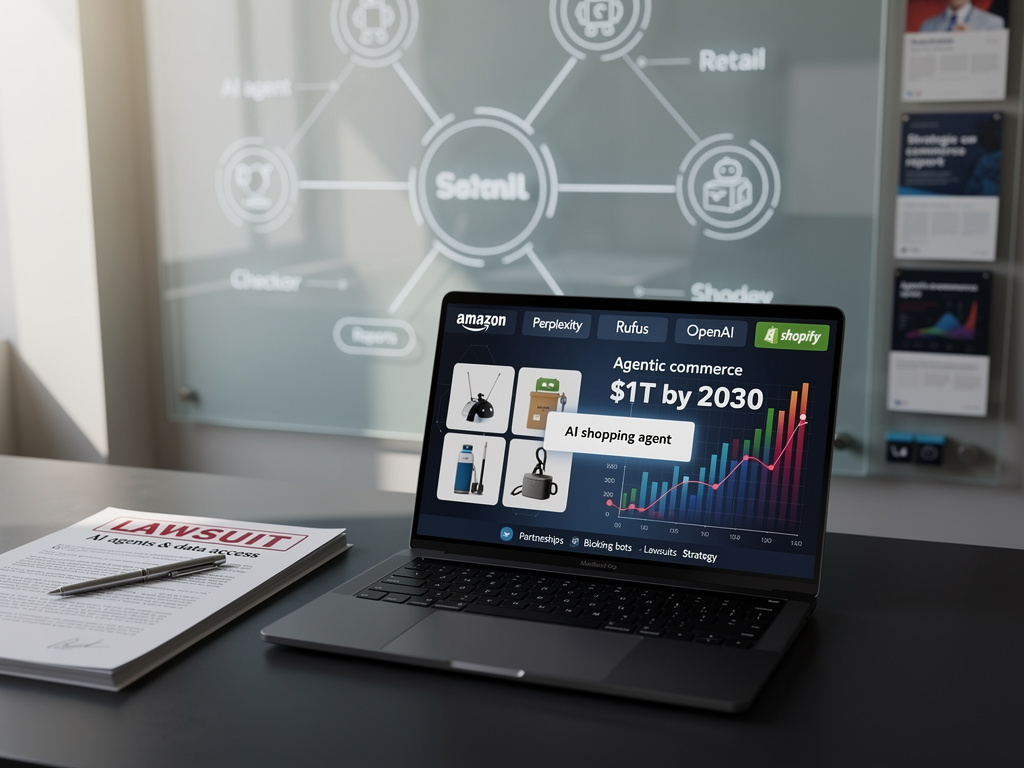
Amazon.com Inc. confronts a pivotal crossroads in the evolution of online retail: resist the rise of artificial intelligence shopping agents encroaching on its dominance or embrace partnerships that could redefine commerce. CEO Andy Jassy has signaled a shift from confrontation to collaboration, amid lawsuits, bot blocks and booming agentic tools from rivals like OpenAI and Perplexity. A recent job posting for a corporate development leader focused on ‘agentic commerce’ hints at Amazon’s strategic pivot, as detailed in a CNBC report.
AI agents—autonomous programs that scour the web, compare prices and execute purchases—threaten to bypass traditional retail sites. McKinsey projects these tools could drive $1 trillion in U.S. retail revenue by 2030. Amazon, with its 38% share of U.S. e-commerce, risks ceding control as consumers turn to chatbots for seamless buying experiences.
Initially defensive, Amazon updated its website code to bar 47 external bots, including those from major AI players, per its robots.txt file. In November, it sued Perplexity AI, accusing the startup’s Comet browser agent of covertly scraping data and accessing customer accounts without permission, as reported by Reuters and The Guardian.
From Lawsuits to Handshakes
Jassy’s June remarks to employees foresaw AI agents infiltrating shopping and beyond. By October’s earnings call, he revealed talks with third-party providers, expecting partnerships. This evolution mirrors a broader industry tension, with Morgan Stanley forecasting AI agents adding $115 billion to U.S. e-commerce by 2030, as noted in analyst reports cited by CNBC.
Forrester analyst Sucharita Kodali warns that retailers using external agents like ChatGPT’s Instant Checkout pay fees per transaction, eroding margins: ‘Retailers risk relinquishing transactions on their site to pay a toll on someone else’s highway.’ OpenAI collects a ‘small fee’ on such deals, per its disclosures.
Competitors like Walmart and Shopify adopt ‘frenemy’ tactics. Shopify CEO Tobi Lütke posted on X his excitement for agentic commerce, touting infrastructure for a ‘cambrian explosion of creativity in shopping.’ Walmart partners with OpenAI while developing in-house tools.
Homegrown Defenses Evolve
Amazon counters with Rufus, launched in February 2024, now enhanced to auto-buy items for Prime members at target prices and suggest web-wide products. A new ‘Buy For Me’ agent tests purchases from rival sites within Amazon’s app. Subsidiaries like Zappos and Shopbop lack bot blocks, suggesting controlled experimentation, according to e-commerce expert Scot Wingo of ReFiBuy, as interviewed by CNBC.
Yet agents falter in practice. Wingo’s tests of Perplexity’s Instant Buy yielded errors on in-stock Abercrombie sweaters; ChatGPT misidentified a Breville espresso maker as a garden rake. Traffic from AI chatbots to retail sites surges holiday-season, but Google search outperforms in conversions, per recent studies.
Morgan Stanley analysts predict nearly half of U.S. shoppers will use agents by 2030, with 40-50% already employing AI for research. AWS blogs highlight agents navigating multiple marketplaces for optimal deals based on price, quality and preferences, as in their November post.
Rivals Accelerate the Race
OpenAI’s September Instant Checkout limits to single items from Walmart, Shopify, Target and Etsy, excluding loyalty perks. Perplexity faces Amazon’s wrath but pushes ‘Instant Buy.’ Google’s tools and Microsoft’s integrations add pressure. GeekWire details how these agents research, compare and buy, questioning control in its December analysis.
Retail Dive recaps 2025’s AI milestones: agentic implementations in supply chains and consumer interfaces from SAP, Blue Yonder and Google. The Business of Fashion, in its State of Fashion 2026 with McKinsey, notes a growing consumer shift to AI for discovery and purchase, urging brand readiness via their report.
McKinsey’s October insight describes agentic commerce enabling hyperpersonalized, autonomous transactions, transforming retail in its analysis. World Economic Forum tracks monthly AI shopping risks and governance in November.
Strategic Guardrails Emerge
Shopify and Walmart set agent access rules, allowing catalog browsing but guarding reviews and rankings—Amazon’s prized assets, per Wingo. Amazon’s job posting seeks partnerships expertise, signaling openness. Jassy’s X posts highlight Rufus betas analyzing reviews and seller tools via agentic AI.
Sourcing Journal reviews 2025 agentic AI rewiring retail internals and consumer faces. Fortune covers holiday AI tools from ChatGPT, Perplexity, Google, Walmart and Amazon, noting glitches in its November piece. Reuters reports retailers optimizing for AI visibility beyond human traffic.
Jordan Berke of Tomorrow calls it Amazon’s ‘leader’s dilemma’: vast market share means most to lose. As agents mature, Amazon weighs blocking valuable data against collaboration revenues.
Projections and Pitfalls Ahead
By 2030, agents could handle mid-journey purchases, per Morgan Stanley. Current glitches underscore nascency, but improvements loom. Amazon’s Rufus now crafts custom guides, rivaling OpenAI’s tools. Subsidiaries test waters safely.
Industry insiders watch Amazon’s next moves: full platform access with safeguards or sustained defense? Jassy’s vision positions Amazon Q and Rufus as work and shopping staples, per his X announcements. Partnerships could unlock agentic growth while protecting core data.


 WebProNews is an iEntry Publication