
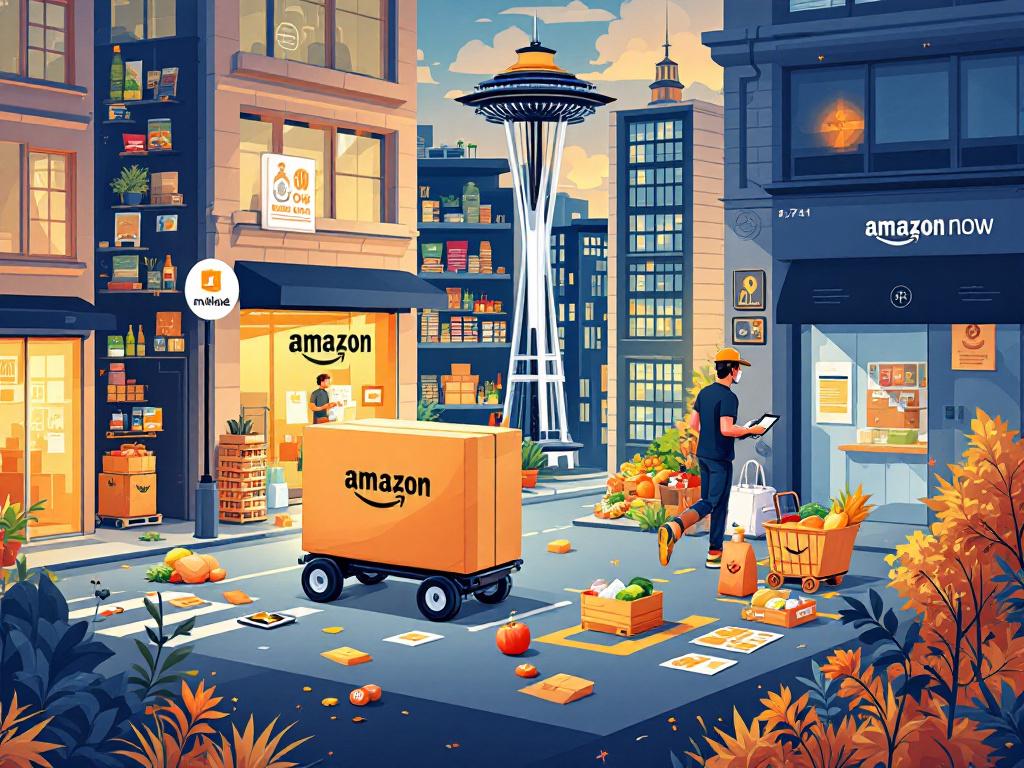
Amazon’s Sprint to the Doorstep: Revolutionizing Retail with 30-Minute Deliveries
Amazon.com Inc. has launched a bold new initiative that could redefine the speed of e-commerce, testing ultra-fast deliveries promising to bring household essentials and groceries to customers’ doors in 30 minutes or less. The pilot program, rolling out in select neighborhoods of Seattle and Philadelphia, marks a significant escalation in the company’s efforts to dominate the rapid-delivery segment. According to reports from TechCrunch, this move positions Amazon to directly challenge established players like DoorDash, Uber Eats, and Instacart, which have long held sway in the on-demand delivery arena.
The service, dubbed “Amazon Now,” focuses on a curated selection of everyday items, including fresh produce, over-the-counter medications, toiletries, and snacks. This isn’t Amazon’s first foray into speedy shipping—Prime members already enjoy same-day or next-day options—but the 30-minute window represents a quantum leap, leveraging micro-fulfillment centers strategically placed in urban areas. In Seattle, for instance, Amazon has repurposed a former Amazon Fresh Pickup site in the Ballard neighborhood, as detailed in coverage from GeekWire. These hubs allow for quick picking, packing, and dispatching, minimizing the time from order to delivery.
Industry observers note that this test comes at a pivotal moment for retail, as consumers increasingly demand immediacy in their shopping experiences. Amazon’s push aligns with broader trends in quick commerce, where speed is becoming a key differentiator. The company’s announcement follows a surge in demand for ultra-rapid services, particularly in densely populated cities where logistics can be optimized for efficiency.
The Infrastructure Behind the Speed
To achieve such rapid turnaround, Amazon is investing heavily in a network of small-scale warehouses, often referred to as micro-fulfillment centers. These facilities are designed to stock high-demand items and are located close to customer clusters, reducing travel time for delivery personnel. Recent updates from KIRO 7 News Seattle highlight that the assortment includes staples like milk, eggs, produce, toothpaste, cosmetics, paper goods, and seasonal items, ensuring broad appeal without overwhelming inventory complexity.
This infrastructure buildout isn’t happening in isolation. Amazon has been opening similar centers at a rapid clip, with reports indicating expansions in other markets like Bengaluru, Delhi, and Mumbai for even faster 10-minute deliveries, as per The Times of India. While the U.S. pilot starts at 30 minutes, it signals potential for further acceleration as the company refines its operations. Delivery will likely rely on a mix of gig workers, electric vehicles, and possibly drones in the future, building on Amazon’s decade-long experimentation with aerial delivery, which began with CEO Jeff Bezos’s 2013 announcement of Prime Air.
Investor interest has spiked with this development. Stock analysis from Benzinga suggests that the ultra-fast push could bolster Amazon’s market position amid robust holiday spending, potentially increasing order frequency by 20% to 30%, according to eMarketer estimates referenced in social media discussions on X.
Competitive Pressures and Market Dynamics
The timing of Amazon’s test is no coincidence, coinciding with intensified competition in the quick-delivery space. Rivals like Instacart have partnerships with grocers for similar speedy services, while DoorDash expands beyond food into general merchandise. Amazon’s entry could disrupt these models by integrating seamlessly with its vast Prime ecosystem, offering perks like free delivery for members, which might undercut competitors’ fee structures.
In Philadelphia, the rollout targets urban pockets where population density supports quick logistics. Coverage from The Verge emphasizes how this service aims to drop goods at doorsteps with minimal delay, potentially reshaping consumer habits around impulse purchases. For instance, forgetting an ingredient mid-cooking could soon be resolved in half an hour, blurring the lines between online and in-store shopping.
Moreover, this initiative reflects Amazon’s response to global quick-commerce booms. Posts on X from users like Ravisutanjani discuss Amazon’s plans for 15-minute deliveries in India, challenging local players such as Blinkit and Zepto. Such international expansions provide valuable data that could inform U.S. refinements, ensuring the 30-minute model scales effectively.
Economic Implications for Retailers and Workers
Beyond competition, Amazon’s ultra-fast delivery test carries broader economic ramifications. For retailers, partnering with or competing against Amazon could mean adapting to a world where speed trumps selection in certain categories. Smaller grocers might feel the pinch as consumers opt for convenience over traditional shopping trips, potentially accelerating the shift toward hybrid retail models.
On the labor front, the service will create demand for delivery drivers and warehouse staff, but it also raises questions about working conditions in high-pressure, time-sensitive environments. Amazon has faced scrutiny over warehouse safety and gig worker compensation in the past, and this new velocity could amplify those concerns. Insights from Reuters note the company’s doubling down on domestic growth, which might involve hiring sprees but also automation to handle the volume.
Financially, the investment in micro-fulfillment isn’t cheap. Amazon’s capital expenditures have ballooned in recent years, with logistics forming a core part of its strategy. Benzinga reports highlight how this could drive revenue growth, especially as online holiday spending surges, positioning Amazon to capture a larger share of the $100 billion-plus quick-delivery market.
Technological Innovations Driving Efficiency
At the heart of Amazon’s 30-minute promise lies advanced technology. Machine learning algorithms predict demand, optimizing stock levels in micro-centers to avoid shortages. Real-time tracking via apps ensures transparency, while route optimization software minimizes delivery times. This tech stack builds on Amazon’s existing prowess in AI and robotics, as seen in its automated warehouses.
Looking ahead, integration with emerging tech like autonomous vehicles could further slash times. Although drone deliveries, as teased in older X posts referencing Bezos’s 2013 vision, are now operational in select areas via Prime Air, their role in urban 30-minute services remains exploratory. TechCrunch details how this test enhances Amazon’s competitive edge against food-focused apps, potentially expanding to more categories.
Consumer feedback will be crucial. Early adopters in Seattle and Philadelphia might praise the convenience, but challenges like traffic congestion or weather could test the model’s reliability. X posts from users express excitement, with some noting how 10-minute deliveries in India have shifted mindsets toward instant gratification.
Regulatory and Environmental Considerations
As Amazon ramps up, regulatory hurdles loom. Urban deliveries increase vehicle traffic, prompting concerns over emissions and congestion. Cities like Seattle have strict environmental standards, and Amazon’s shift toward electric fleets, as mentioned in various reports, could mitigate backlash. However, scaling nationwide might invite antitrust scrutiny, given Amazon’s market dominance.
Environmentally, the push for speed must balance with sustainability. Micro-fulfillment reduces long-haul shipping, potentially lowering carbon footprints compared to traditional e-commerce. Yet, the proliferation of short trips could offset gains unless green practices are prioritized. Reuters coverage underscores Amazon’s focus on essentials, which might encourage more efficient ordering patterns.
For industry insiders, this test signals a maturation of e-commerce logistics. By mastering ultra-fast delivery, Amazon could set new standards, forcing peers to accelerate or innovate differently. GeekWire’s reporting on the Ballard hub illustrates how repurposing existing assets keeps costs down while speeding deployment.
Strategic Outlook and Future Expansions
Strategically, Amazon’s move fortifies its moat in retail. With Prime membership exceeding 200 million globally, bundling ultra-fast options could boost retention and spending. Analysts predict that success in Seattle and Philadelphia could lead to rollouts in other major cities like New York or Los Angeles by mid-2026.
Comparisons to international efforts are instructive. The Times of India notes Amazon’s aggressive buildout in India, opening two micro-centers daily to meet 10-minute demands. Lessons from these markets, such as handling high-density urban logistics, will likely inform U.S. strategies, potentially shortening the 30-minute benchmark over time.
Investor sentiment, as captured in Benzinga, remains bullish, with the delivery push viewed as a counter to economic headwinds. Social media buzz on X amplifies this, with posts highlighting how long-term thinking, echoing Bezos’s drone ambitions, continues to drive Amazon’s innovations.
Challenges and Opportunities Ahead
Despite the promise, challenges abound. Ensuring product freshness in groceries demands precise temperature controls during rapid transit. Supply chain disruptions, a lingering issue post-pandemic, could hamper reliability. Moreover, pricing the service competitively—likely free for Prime members—must not erode margins in a cost-conscious environment.
Opportunities, however, are vast. By capturing the “forgotten item” market, Amazon could increase basket sizes and frequency. Integration with voice assistants like Alexa might enable seamless ordering, further embedding the service in daily life.
Ultimately, this pilot encapsulates Amazon’s relentless pursuit of customer obsession. As KIRO 7 News Seattle reports, the expansion into ultra-fast realms not only competes with delivery apps but also reimagines retail’s boundaries, promising a future where waiting is obsolete. For industry watchers, monitoring this test’s outcomes will reveal much about the viability of hyper-speed commerce in America’s bustling cities.


 WebProNews is an iEntry Publication