
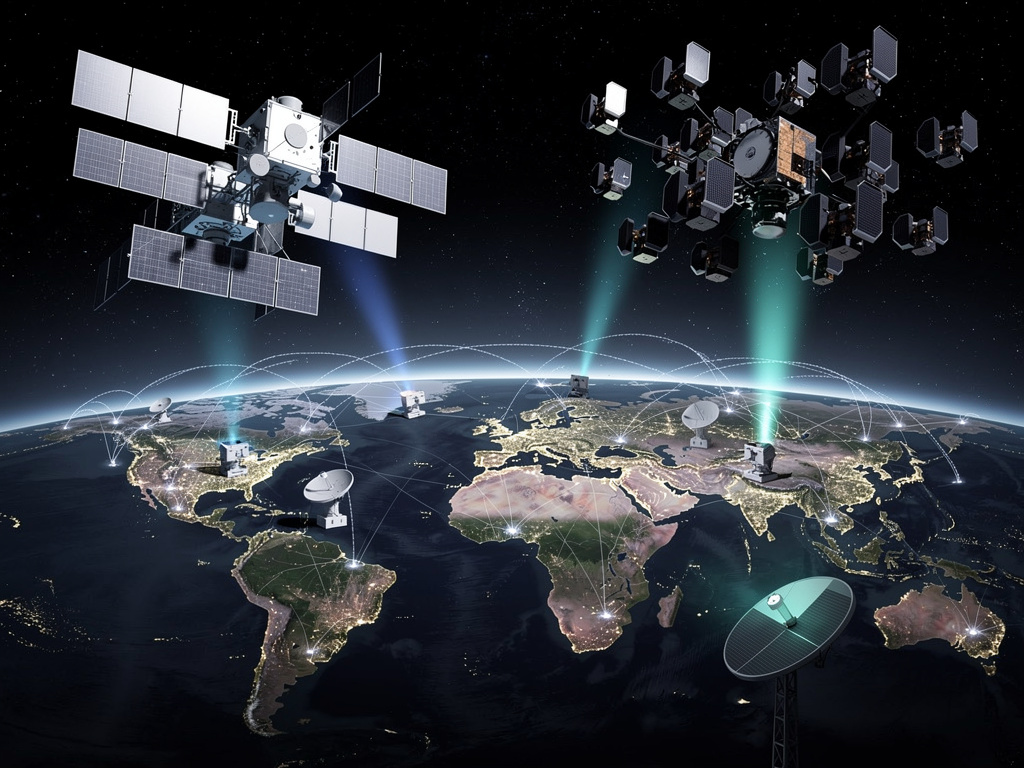
In the rapidly evolving arena of satellite broadband, Amazon has emerged as a formidable challenger to SpaceX’s Starlink, marking a pivotal shift in how global internet access is delivered from orbit. After years of development and regulatory hurdles, Amazon’s initiative, formerly known as Project Kuiper and now rebranded as Amazon Leo, has begun to materialize with tangible hardware and satellite deployments. This move not only intensifies competition in the low-Earth orbit (LEO) sector but also promises to reshape connectivity for underserved regions worldwide.
The catalyst for this surge came in late 2025 when Amazon unveiled its lineup of user terminals, designed to rival Starlink’s ubiquitous dishes. Among them, the Leo Ultra stands out as an enterprise-grade powerhouse, boasting download speeds up to 1 gigabit per second and upload speeds reaching 400 megabits per second. This terminal, measuring about 20 by 30 inches, incorporates custom Amazon silicon and full-duplex phased-array technology, enabling simultaneous uplink and downlink operations—a technical feat that echoes advancements in high-throughput satellite systems.
Drawing from recent announcements, Amazon’s strategy appears laser-focused on both consumer and business markets. The company launched its first batch of 27 production satellites in April 2025, as reported by Reuters, kicking off a constellation aimed at providing broadband to remote and rural areas. Unlike Starlink’s early emphasis on global coverage, Amazon Leo’s initial rollout will exclude northern polar regions, mirroring SpaceX’s phased approach during its nascent stages.
Amazon’s Technological Edge and Challenges
Industry experts are buzzing about the potential disruption. According to a PCMag analysis published on December 20, 2025, Amazon Leo and competitors like AST SpaceMobile are poised to challenge Starlink’s dominance in 2026, though questions linger about their ability to scale rapidly. Four specialists interviewed in the piece expressed cautious optimism, noting that while Amazon’s hardware innovations could carve out market share, SpaceX’s head start—with over 9 million users as of late December 2025—presents a steep climb.
At the heart of Amazon’s offering is its diverse terminal portfolio. Beyond the Ultra model, there’s the compact Nano terminal for portable use and the Pro version for mid-tier applications, as detailed in coverage from Tom’s Hardware. These devices aim to address varying customer needs, from individual households to large enterprises, with weatherproof designs and integrated heat sinks ensuring reliability in harsh environments.
However, challenges abound. Amazon’s constellation is still in its infancy, with only a fraction of the planned 3,000-plus satellites in orbit compared to Starlink’s thousands. Regulatory approvals and spectrum allocation remain hurdles, particularly in international markets. Posts on X from technology influencers highlight sentiment that while Amazon’s entry is exciting, SpaceX’s iterative improvements—like real-time beam switching to navigate obstacles—keep it ahead in user experience.
Strategic Rebranding and Market Positioning
The rebranding from Project Kuiper to Amazon Leo in November 2025 signals a broader commercial push. As CNBC reported on November 24, 2025, Amazon began allowing businesses to test the service, targeting enterprise clients in sectors like logistics and remote operations. This move aligns with Amazon’s ecosystem strengths, potentially integrating Leo with AWS cloud services for seamless data handling.
Comparisons to Starlink are inevitable. Elon Musk’s venture has revolutionized satellite internet, recently celebrating 9 million global users, according to a Yahoo Finance update from December 26, 2025. Starlink’s growth, adding 1 million users in just seven weeks as noted in India Today on December 24, 2025, underscores its market lead. Yet Amazon’s approach emphasizes enterprise-grade reliability, with the Leo Ultra’s 1Gbps speeds surpassing many current Starlink offerings for fixed sites.
On X, discussions among industry watchers reflect mixed views. Some posts praise Amazon’s hardware specs, suggesting it could undercut Starlink on pricing for high-bandwidth needs, while others warn of deployment delays. For instance, sentiment indicates that Amazon’s focus on full-duplex technology might give it an edge in latency-sensitive applications, but scaling to consumer levels will test its infrastructure.
Satellite Deployments and Global Ambitions
Amazon’s satellite launches have been methodical. Following the initial prototypes, the company ramped up with production models, aiming for broader availability in 2026. A Verge article from November 24, 2025, described the Leo Ultra as the “world’s fastest satellite internet antenna,” starting tests for commercial and government clients. This positions Amazon not just as a consumer provider but as a key player in defense and critical infrastructure.
Geographically, the rollout strategy is pragmatic. PCMag’s December 15, 2025, report highlights that first-gen coverage will span most of the globe except polar areas, allowing Amazon to prioritize high-demand equatorial and temperate zones. This mirrors Starlink’s evolution, which initially faced similar limitations before expanding to remote locales like Antarctica.
International expansion adds another layer. Recent news from ABC News on December 24, 2025, notes Bolivia lifting restrictions on satellite providers, enabling services like Starlink and potentially Amazon Leo to upgrade connectivity in the Andes. Such developments open doors for Amazon in emerging markets, where internet penetration remains low, and competition could drive down costs.
Competitive Dynamics and Expert Insights
As 2026 approaches, the rivalry intensifies. PCMag’s December 20, 2025, piece, linked earlier, quotes experts predicting real competition, though they acknowledge Starlink’s entrenched position. One analyst suggested Amazon Leo might capture niche markets like maritime and aviation, where its robust terminals excel.
Technological innovations are key differentiators. Amazon’s use of custom silicon enables efficient power management and signal processing, potentially reducing costs over time. In contrast, Starlink’s recent anomaly with a tumbling satellite, as covered by Tom’s Hardware on December 25, 2025, highlights vulnerabilities in even established constellations, reminding the industry of space’s inherent risks.
X posts from space enthusiasts emphasize broader implications. Discussions point to how Amazon’s entry could spur innovation, such as improved direct-to-device connectivity, where rivals like AST SpaceMobile are also advancing. Sentiment on the platform suggests that while Starlink dominates consumer broadband, Amazon’s enterprise focus might avoid direct clashes initially.
Future Trajectories in Orbital Connectivity
Looking ahead, Amazon’s ambitions extend beyond basic internet. Integration with its e-commerce and cloud empire could create synergies, like real-time inventory tracking in remote warehouses. The Hans India reported on December 24, 2025, that Starlink’s user milestone coincides with potential India launches, a market Amazon eyes aggressively given its retail presence there.
Challenges persist, including orbital debris management and spectrum interference. Industry insiders note that Amazon’s slower pace—launching far fewer satellites than SpaceX—could hinder global parity. Yet, with investments exceeding $10 billion, as inferred from various reports, Amazon is committed long-term.
Expert commentary underscores the sector’s maturation. In the PCMag analysis, one specialist predicted that by 2027, multiple LEO providers could coexist, driving down prices and improving service quality. This evolution benefits consumers, particularly in rural areas where traditional broadband lags.
Innovation and Regulatory Horizons
Amazon’s hardware diversity caters to a spectrum of uses. The Nano terminal’s portability, weighing just 2.2 pounds, targets mobile users, while the Ultra’s pole-mounted design suits fixed installations. Tom’s Hardware detailed these specs, emphasizing how they position Amazon against Starlink’s evolving lineup, including its own high-performance variants.
Regulatory landscapes are shifting favorably. Bolivia’s decree, as per ABC News, exemplifies how governments are embracing satellite tech to bridge digital divides. Amazon could leverage such openings, especially in Latin America and Africa, where Starlink has already gained traction.
On X, recent posts reflect optimism about satellite internet’s future, with users noting Amazon’s potential to offer competitive pricing. One thread discussed how Leo’s 1Gbps capabilities could transform remote work, though concerns about initial coverage gaps temper enthusiasm.
Economic Impacts and Industry Ripple Effects
The economic stakes are high. Starlink’s valuation contributes significantly to SpaceX’s $200 billion-plus worth, while Amazon’s push could bolster its diversification beyond retail. Yahoo Finance’s coverage of Musk’s celebration of 9 million users highlights the revenue potential, with satellite services projected to generate billions annually.
Competition may accelerate technological convergence. Amazon’s full-duplex tech, as explained in The Verge, allows for more efficient spectrum use, potentially setting new standards. This could pressure Starlink to innovate further, benefiting the entire field.
Finally, as Amazon deploys more satellites—aiming for hundreds by mid-2026—the orbital domain will see increased activity. Industry observers anticipate collaborations, perhaps with telecom giants, to enhance direct-to-cell services, expanding access without traditional infrastructure. This ongoing rivalry promises to democratize high-speed internet, transforming how the world connects from the skies.


 WebProNews is an iEntry Publication