
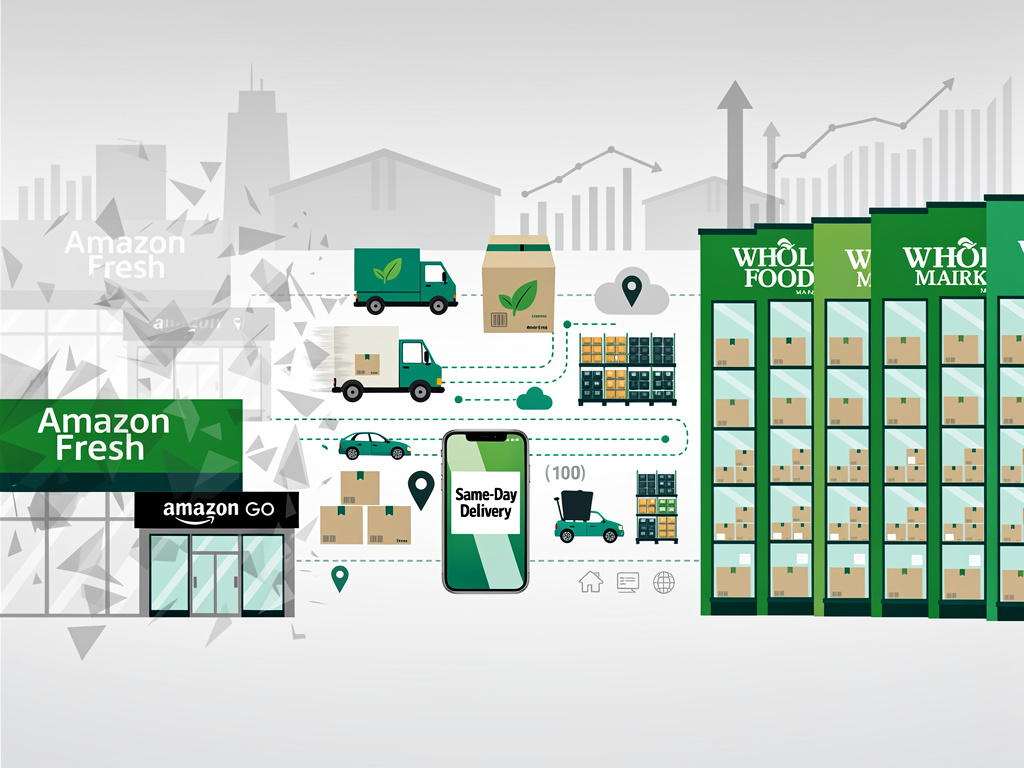
Amazon.com Inc. is shuttering its Amazon Fresh supermarkets and Amazon Go convenience outlets, redirecting resources to bolster Whole Foods Market locations and ramp up same-day grocery delivery. The move, announced January 27, 2026, marks the end of nearly a decade of experimentation with proprietary physical grocery formats that failed to achieve scale.
"After a careful evaluation of the business and how we can best serve customers, we’ve made the difficult decision to close our Amazon Go and Amazon Fresh physical stores, converting various locations into Whole Foods Market stores," the company stated in its official blog post on About Amazon. Approximately 57 Amazon Fresh and 15 Amazon Go stores across the U.S. are affected, according to posts on X from observers like @briefing_block_ citing the announcement.
The decision stems from persistent challenges in crafting a "truly distinctive customer experience with the right economic model needed for large-scale expansion," Amazon explained. Despite "encouraging signals," the formats underperformed amid rising competition and thin margins in physical grocery retail.
End of the Cashierless Era
Amazon Go, launched in 2018 with groundbreaking "Just Walk Out" technology using cameras, sensors, and AI to enable checkout-free shopping, represented Amazon’s bold foray into convenience retail. Yet, the roughly 15 remaining U.S. locations couldn’t justify broader rollout, as noted in X post by @StockStormX: "The cashierless grocery experiment is over." Amazon will continue licensing the tech to third-party retailers and deploying it in its fulfillment centers’ breakrooms.
Amazon Fresh, introduced in 2020 as full-service supermarkets blending online ordering with in-store tech like Dash Carts, peaked at around 58 locations by late 2025 per ScrapeHero data cited in search results. Closures accelerated in 2025, including four Southern California sites in October, signaling mounting losses as reported by Grocery Dive.
This pivot echoes prior retreats, such as the 2025 closure of all 19 U.K. Amazon Fresh stores, with five converted to Whole Foods, as detailed in Chain Store Age.
Whole Foods Takes Center Stage
Whole Foods, acquired for $13.7 billion in 2017, now anchors Amazon’s physical grocery push. The chain plans to open more than 100 new stores over the next few years, including expansions of its smaller "Daily Shop" format, with five additional sites by end-2026 based on "strong performance," per the About Amazon post. Converted Fresh and Go sites will bolster this footprint, providing immediate density in key markets.
CEO Jason Buechel, elevated in January 2025 to oversee Worldwide Grocery including Fresh and Go alongside Whole Foods, gains further control as Amazon integrates operations, according to Grocery Dive. Recent tests like robot-powered micro-fulfillment centers at a Pennsylvania Whole Foods and "store-within-a-store" Amazon sections aim to blend premium organics with everyday essentials.
"Whole Foods Market has always taken pride in offering a wide selection of natural and organic products, but we understand customers appreciate the convenience of one-stop shopping," Buechel said in a related update covered by Forbes.
Delivery Dominance and Online Continuity
Amazon emphasized its online grocery strength, serving over 5,000 U.S. cities with same-day delivery of perishables alongside millions of other items. "Based on strong customer feedback, we plan to expand Same-Day Delivery of fresh groceries to many more communities in 2026," the company said, already reaching 2,300+ areas where fresh foods are top sellers.
The Amazon Fresh online service persists unaffected, allowing bundled shopping with Whole Foods and Amazon.com items. This hybrid model, refined since 2023, supports Prime members’ expectations for speed, as Reuters reported on the delivery push coinciding with store closures.
X reactions highlighted competitive ripples, with @longshorteqt noting it as "incrementally negative for $CART," Instacart’s stock dipping on reduced physical reliance.
Grocery Wars Heat Up
For rivals like Walmart, Kroger, and Costco, Amazon’s refocus signals no retreat from grocery but a sharper weapon: Whole Foods’ premium brand paired with unmatched logistics. Amazon plans "a mass physical store format" alongside expansions, per CNBC, hinting at future concepts beyond organics.
Analysts see this as pruning for profitability. Grocery Dive noted Amazon Fresh’s refreshed designs boosted monthly spend 20% in tests, but scale eluded it. Seeking Alpha framed it as closing stores while "ramping up investment in online grocery delivery to meet growing consumer demand."
On X, @TheBrokeBro pondered: "If Amazon can’t make ‘Amazon-branded grocery’ pencil, is Whole Foods + delivery the only scalable path — or is grocery still a margin trap for everyone?"
Lessons from a Decade of Experimentation
Nearly two decades after entering grocery, Amazon’s path—from Whole Foods buyout to Go’s tech marvels and Fresh’s hybrid stores—reveals hard truths about physical retail. High fixed costs, perishables’ logistics, and shopper habits resisted e-commerce disruption, even with Prime’s 200 million subscribers.
Prior integrations, like 2025 leadership consolidation under Buechel and Project Fusion for unified delivery, set the stage. GeekWire called it Amazon "fine-tuning its grocery strategy," prioritizing proven assets.
StockTwits captured market sentiment: Amazon closing Fresh and Go to focus on Whole Foods growth amid fast-delivery expansions.


 WebProNews is an iEntry Publication