
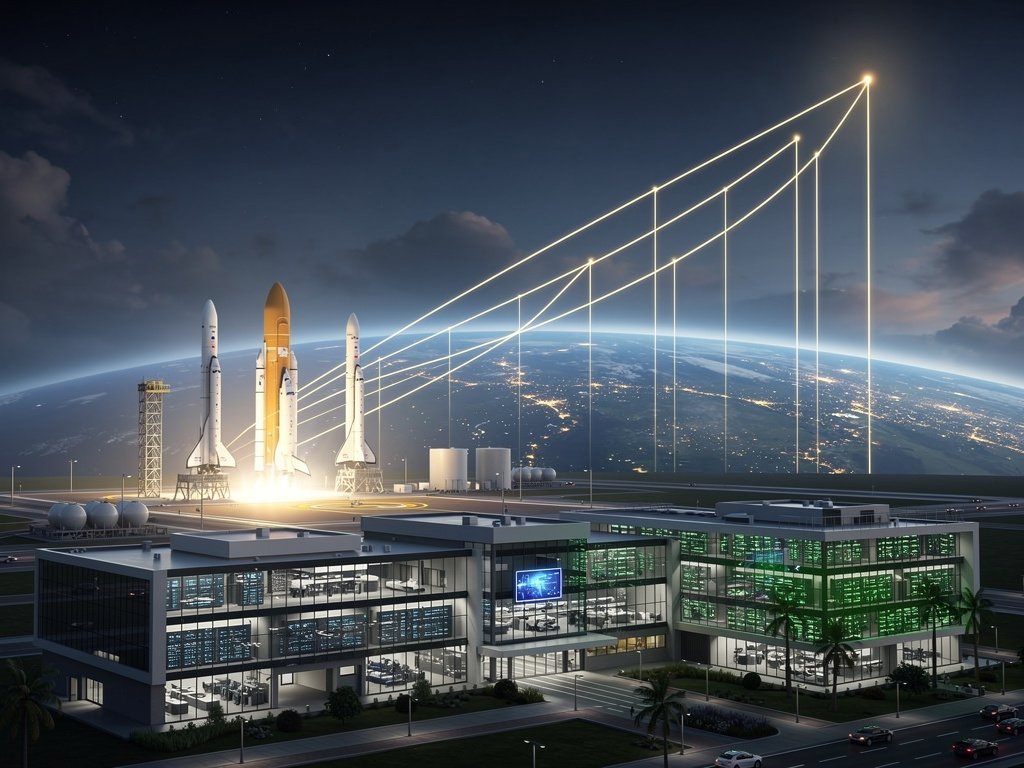
In the high-stakes world of venture capital and space exploration, few bets have paid off as spectacularly as Alphabet Inc.’s early investment in SpaceX. What began as a $900 million infusion into Elon Musk’s ambitious rocket company back in 2015 could soon translate into one of the most lucrative startup windfalls in history, potentially netting Google—Alphabet’s core subsidiary—a staggering $111 billion if SpaceX proceeds with its rumored initial public offering at a $1.5 trillion valuation. This development underscores the transformative power of strategic tech investments, where moonshot ideas can yield astronomical returns.
The story dates to January 2015, when Google, alongside Fidelity Investments, poured $1 billion into SpaceX, securing roughly 10% of the company at a modest $12 billion valuation. At the time, SpaceX was still proving its mettle with reusable rockets, having just achieved its first successful Falcon 9 landing. Google’s stake has since diluted to about 7.4% due to subsequent funding rounds, but the company’s growth trajectory has more than compensated for that. Recent reports indicate that SpaceX is gearing up for an IPO in late 2026, aiming to raise over $30 billion and eclipse Saudi Aramco’s 2019 record as the largest public offering ever.
This potential bonanza for Google highlights how tech giants are increasingly diversifying beyond their core businesses into frontier technologies. Alphabet’s portfolio of “other bets” has long included ventures like Waymo and Verily, but the SpaceX stake stands out for its sheer scale. If the IPO materializes at the reported valuation, Google’s return on investment would represent a roughly 123-fold increase, dwarfing many storied venture successes.
Google’s Calculated Leap into Space
Delving deeper into the origins of this partnership, Google’s 2015 investment wasn’t just financial; it carried strategic undertones. Musk has often spoken of synergies between SpaceX’s Starlink satellite internet constellation and Google’s data-driven empire. Starlink, now a cornerstone of SpaceX’s revenue with millions of subscribers, could integrate with Google’s cloud services or mapping technologies, creating mutual benefits. According to a report from Business Insider, this early bet positioned Google as a key player in the burgeoning space economy, even as it navigated antitrust scrutiny in its search and advertising dominions.
Fast-forward to 2025, and SpaceX’s valuation has skyrocketed. A tender offer earlier this year pegged the company at $350 billion, already making Google’s diluted stake worth around $26 billion. But whispers of a $1.5 trillion IPO valuation—fueled by Starship’s progress and Starlink’s expansion—amplify the upside. Reuters reported that SpaceX is targeting a raise of more than $25 billion in 2026, with sources close to the matter confirming discussions with investors and financial institutions, as detailed in an article from Reuters.
Industry analysts point out that such a valuation isn’t mere hype. SpaceX’s reusable rocket technology has slashed launch costs, capturing a dominant share of the global satellite deployment market. Starlink alone generated billions in revenue last year, positioning SpaceX as a dual-threat in aerospace and telecommunications. For Google, this isn’t just a passive investment; it’s a hedge against disruptions in global connectivity, where satellite networks could complement or even challenge terrestrial broadband.
Valuation Projections and Market Buzz
The buzz around SpaceX’s IPO has intensified in recent weeks, with multiple outlets confirming the timeline. TechCrunch noted that the company aims for a late-2026 listing, potentially raising $30 billion and surpassing Aramco’s record, as outlined in their coverage at TechCrunch. This comes amid SpaceX’s rapid milestones, including crewed missions to the International Space Station and plans for Mars colonization. Elon Musk himself lent credence to these reports, tweeting that coverage of the IPO plans was “accurate,” sparking a flurry of speculation on social platforms.
On X (formerly Twitter), investors and enthusiasts have dissected Google’s windfall. Posts highlight how Alphabet’s unrealized gains from SpaceX contributed significantly to its quarterly earnings, with some estimating that a single quarter’s valuation bump added $8 billion to Google’s net income. This sentiment echoes broader discussions about how tech conglomerates like Alphabet are leveraging private investments to bolster their balance sheets, even as public markets fluctuate.
However, not all projections align perfectly. Yahoo Finance explored scenarios where SpaceX could hit $1.5 trillion by IPO, but cautioned that market conditions and regulatory hurdles might delay it to 2027, as per their analysis at Yahoo Finance. Factors like geopolitical tensions affecting satellite launches or competition from rivals such as Blue Origin could temper enthusiasm. Still, SpaceX’s track record—over 300 successful Falcon launches and a burgeoning defense contract portfolio—bolsters confidence in its lofty ambitions.
Strategic Implications for Alphabet
For Alphabet, the SpaceX stake represents more than just financial gain; it’s a testament to its venture arm’s acumen. GV (formerly Google Ventures) has a history of bold bets, but this one could redefine success metrics. Bloomberg detailed how SpaceX’s management is pursuing the IPO amid a favorable environment for tech listings, with the raise potentially exceeding $30 billion, as reported in Bloomberg. This windfall could fund Alphabet’s AI initiatives or offset losses in moonshot projects.
Insiders note that Google’s involvement extends to technical collaborations. Starlink’s global internet ambitions align with Google’s Project Loon legacy, and potential data-sharing deals could enhance both companies’ AI capabilities. Yet, antitrust watchdogs might scrutinize such ties, especially as Musk’s influence spans multiple industries under the Trump administration’s pro-business stance.
Comparatively, other early SpaceX backers like Founders Fund and Draper Fisher Jurvetson have seen massive returns, but Google’s scale amplifies the impact. If realized, the $111 billion gain would eclipse many corporate acquisitions, providing Alphabet with ammunition for stock buybacks or new investments in quantum computing and biotechnology.
Risks and Uncertainties in the Orbit
Despite the optimism, risks abound. SpaceX’s path to IPO isn’t guaranteed; Musk has historically resisted public markets due to scrutiny over his management style and timelines. CNN Business examined the FAQ surrounding the potential listing, noting that economic downturns or launch failures could derail plans, as discussed in their piece at CNN Business. Moreover, SpaceX’s reliance on government contracts—NASA and the Pentagon account for a significant revenue slice—introduces policy vulnerabilities.
From an investor perspective, pre-IPO exposure remains limited. Yahoo Finance also outlined ways for retail investors to gain indirect stakes through funds holding SpaceX shares, but warned of high fees and illiquidity. On X, users speculate about post-IPO volatility, drawing parallels to Tesla’s wild rides under Musk’s leadership.
Google, meanwhile, must navigate its own challenges. With ongoing lawsuits over monopolistic practices, a massive SpaceX gain could invite questions about diversification strategies. Yet, as Business Insider emphasized, this investment exemplifies how tech titans are betting on the final frontier to sustain growth.
Broader Impacts on Tech Investing
The ripple effects extend to the venture capital ecosystem. SpaceX’s success validates high-risk, high-reward plays in deep tech, encouraging more corporate venturing. Alphabet’s portfolio, including stakes in Anthropic and other AI firms, mirrors this approach. Reuters’ coverage of SpaceX’s investor briefings underscores how the company is positioning itself as a trillion-dollar entity, potentially reshaping indices like the S&P 500 upon listing.
Critics argue that such valuations inflate bubbles, but proponents highlight real innovations: Starlink’s role in disaster response and rural connectivity has tangible societal benefits. For industry insiders, the key takeaway is patience; Google’s decade-long hold demonstrates that enduring volatility can yield outsized rewards.
As SpaceX hurtles toward its public debut, Google’s early faith in Musk’s vision serves as a case study in strategic foresight. Whether the IPO catapults valuations to new heights or faces gravitational pullbacks, this partnership illuminates the intersecting orbits of tech, space, and finance, promising to influence investment strategies for years to come. With Musk affirming the reports’ accuracy via Investing.com at Investing.com, the stage is set for what could be a defining moment in corporate history.


 WebProNews is an iEntry Publication