
Alphabet Inc. holds a commanding edge in artificial intelligence not through flashy model announcements alone. Cash flow. That’s the real weapon. In 2025, the company’s core operations pumped out $165 billion in operating cash flow, a staggering sum that funds relentless AI spending without begging investors or slashing margins. Lawrence Nga laid it bare in The Motley Fool: “Its core businesses generated a mind-blowing $165 billion in operating cash flow in 2025.” Alphabet plans $180 billion in capital expenditures this year alone. Startups dream of such firepower.
And firepower buys time. AI demands endless reinvestment—data centers, chips, compute clusters, model tweaks, global rollouts. Newcomers chase quick wins, burning cash on growth metrics to lure venture capital. Alphabet? It iterates. Experiments. Scales. “Time is to Alphabet’s advantage, a huge luxury that newcomers don’t possess,” Nga wrote. With a $4.1 trillion market cap, 59.68% gross margins, and a 0.25% dividend yield, the company absorbs hits that would sink others.
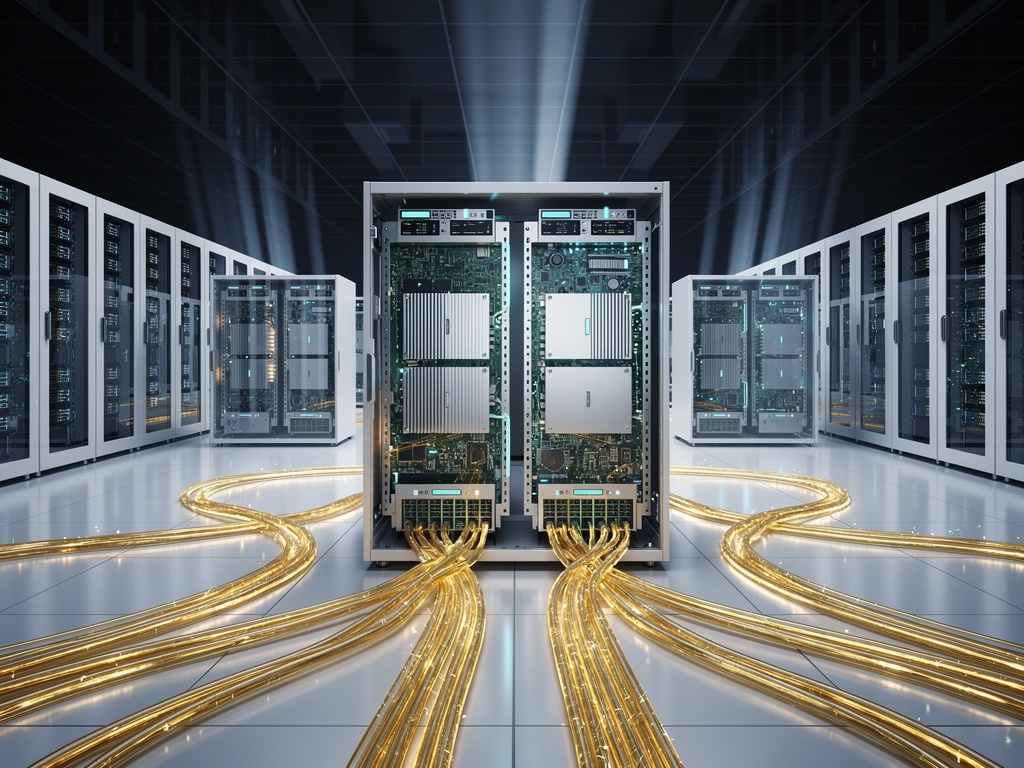
But cash alone doesn’t win races. Hardware does. Enter Google’s Tensor Processing Units, or TPUs. Over a decade in the making, these custom chips power Gemini models internally and via Google Cloud. Rivals lean on Nvidia GPUs; Alphabet controls its stack. At Google Cloud Next on April 22, the company unveiled its eighth-generation TPUs: TPU 8t for training, TPU 8i for inference. The 8t slashes frontier model development from months to weeks, delivering 2.8 times better price-performance than predecessors. TPU 8i handles agentic workloads—those complex, multi-step AI tasks exploding in enterprise.
Performance leaps impress. TPU 8t offers 124% more performance per watt; 8i hits 117%. Bloomberg reported the chips make AI services faster and more efficient, challenging Nvidia as inference demand surges. Google Cloud CEO Thomas Kurian touted them alongside the Gemini Enterprise Agent Platform, a suite for building autonomous AI agents. “This integrated stack powers everything from Gemini Enterprise to the Gemini Enterprise Agent Platform,” per Google’s AI Hypercomputer blog.
Enterprise adoption accelerates. Anthropic, an Alphabet investor, signed for multiple gigawatts of next-gen TPU capacity—up to a million chips. Meta inked a multibillion-dollar deal for Cloud TPUs. Even OpenAI lags in TPU deployment. The Wall Street Journal noted Google’s new inference-focused TPU raises stakes in the chip contest, tailored for querying AI models as agents proliferate. Google also launched a $750 million partner fund to spur corporate AI uptake, per CRN.
Gemini integrates everywhere. Search. Workspace. Android. YouTube. Maps got a Gemini upgrade in March, per Google’s AI updates post. Enterprise market share climbed from 7% in 2023 to 21%, eyeing OpenAI’s lead. X users buzz: “Google has been quietly building the best AI infrastructure stack—custom silicon + model + cloud,” posted @Atrespasser. Another: “92% of internal Google workload runs on TPUs. Gemini trained for 1/3 the cost of ChatGPT,” from @wealthmatica.
Competitors scramble. Microsoft pours billions into OpenAI but ties Copilot to GPT. Amazon pushes its chips. Nvidia dominates GPUs—yet Alphabet’s vertical control—models, silicon, distribution—creates moats. Inference shifts the battlefield; TPUs excel there, per Gartner analyst Chirag Dekate in Mercury News: “In that battleground, Google has an infrastructure advantage.”
Risks linger. Execution stumbles could erode gains. Regulators eye monopolies. But Alphabet’s balance sheet—$165 billion cash flow—buys resilience. Rivals face funding squeezes; Google spends freely. Reuters highlighted Google’s enterprise push: models like Gemini, Veo video, Lyria audio, plus Anthropic’s Claude on Vertex AI. Kurian stressed production-ready agents for business.
So Alphabet endures. Cash funds TPUs. TPUs supercharge Gemini. Gemini embeds in billions of users. The cycle compounds. Startups falter on capital crunches. Google? It outlasts them all.


 WebProNews is an iEntry Publication