
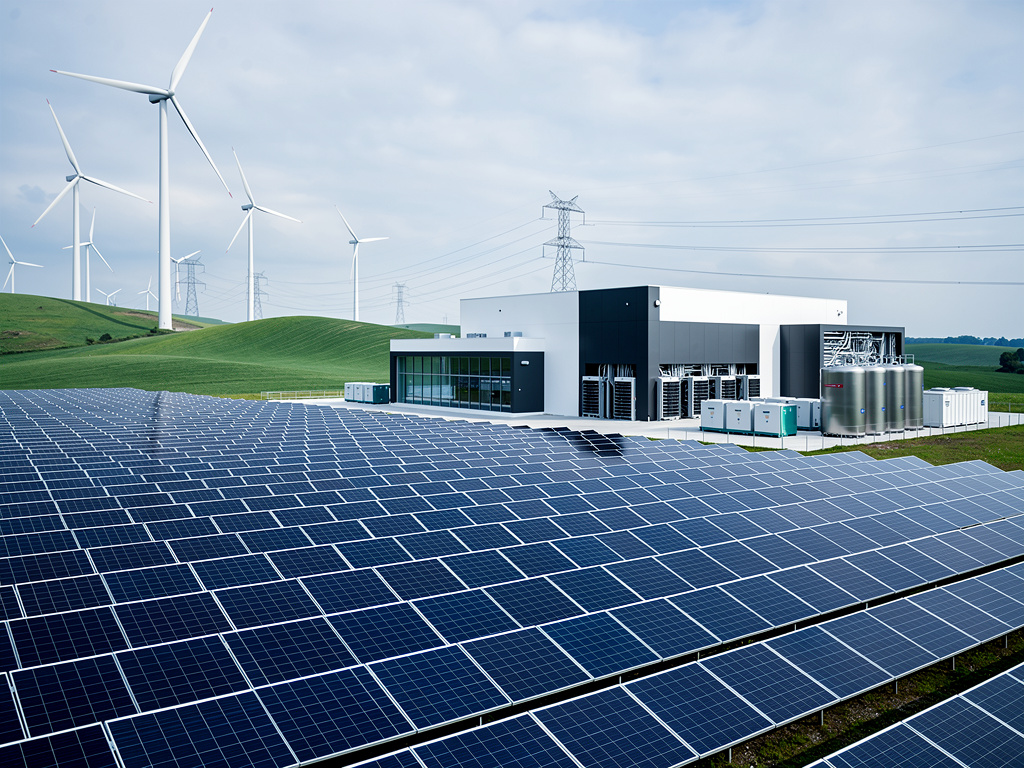
Alphabet’s $4.75 Billion Bet: Acquiring Intersect to Supercharge AI Data Centers
In a move that underscores the escalating race among tech giants to secure energy resources for artificial intelligence, Alphabet Inc., the parent company of Google, announced on Monday its agreement to acquire clean energy developer Intersect Power LLC for $4.75 billion in cash, plus assumed debt. This deal, one of the largest in Alphabet’s history aimed at infrastructure, highlights the growing imperative for Big Tech to control both computing power and the electricity that fuels it. As AI models become more sophisticated and data centers multiply, companies like Alphabet are turning to acquisitions to bypass traditional grid constraints and ensure a steady supply of renewable energy.
Intersect Power, founded in 2016, specializes in developing large-scale solar, wind, and battery storage projects, often integrated with data center operations. The acquisition allows Alphabet to gain immediate access to Intersect’s portfolio of energy and data center projects that are either in development or under construction. According to reports, this will enable Google to accelerate the rollout of new data centers, crucial for powering services like Gemini AI and competing with rivals such as OpenAI and Microsoft. The transaction is expected to close in the first half of 2026, pending regulatory approvals, and Intersect will continue to operate independently under Alphabet’s umbrella.
This isn’t just about buying power plants; it’s a strategic pivot toward vertical integration in the tech industry’s energy supply chain. By owning Intersect, Alphabet can directly manage the generation and distribution of clean energy tailored to its data centers’ voracious needs. Industry observers note that U.S. power grids are straining under the demand from AI-driven computing, with estimates suggesting data centers could consume up to 8% of total U.S. electricity by 2030. Alphabet’s move positions it to mitigate these bottlenecks, potentially setting a precedent for other tech firms.
Strategic Imperatives Driving the Deal
The timing of this acquisition aligns with a broader surge in investments by tech companies into energy infrastructure. For instance, Microsoft has inked deals with nuclear power providers, while Amazon has committed billions to renewable projects. Alphabet’s purchase of Intersect comes amid reports of skyrocketing electricity demands, with some data centers requiring as much power as small cities. As detailed in a recent article from CNBC, Alphabet stated that the deal will “help bring more data center and generation capacity online faster,” addressing the delays often caused by grid connection queues.
Financially, the $4.75 billion price tag reflects the premium placed on ready-to-deploy energy assets. Intersect’s projects include gigawatt-scale solar farms in Texas and California, coupled with advanced battery storage to provide reliable power during peak AI training loads. This acquisition builds on Alphabet’s existing commitments to carbon-free energy, with Google aiming for 24/7 clean power by 2030. By integrating Intersect’s expertise, Alphabet can optimize energy usage, reducing costs and environmental impact while scaling AI operations.
Moreover, the deal signals a shift from partnerships to outright ownership. Previously, Google has collaborated with energy firms, but acquiring Intersect allows for tighter control over project timelines and innovations. Sources indicate that Intersect’s modular data center designs, which co-locate computing facilities with renewable sources, could shave months off development cycles. This approach not only circumvents regulatory hurdles in energy transmission but also enhances efficiency in power delivery.
Market Reactions and Stock Implications
Wall Street responded positively to the announcement, with Alphabet’s shares jumping in after-hours trading. According to The Economic Times, Google’s parent company has seen its stock rise over 60% this year, buoyed by AI advancements and now this infrastructure boost. Analysts view the acquisition as a savvy hedge against rising energy costs, which have become a significant line item for tech firms. One estimate suggests that powering AI could add billions to annual operating expenses without dedicated energy solutions.
Competitors are watching closely. Microsoft’s Azure and Amazon’s AWS have similarly ramped up energy investments, but Alphabet’s move to acquire a full-fledged developer like Intersect sets a new bar. Posts on X (formerly Twitter) from industry watchers highlight sentiment that this deal could trigger a wave of consolidations in the clean energy sector, with users noting the $4.75 billion valuation as a benchmark for future transactions. While not conclusive, these social media discussions underscore the buzz around tech’s energy pivot.
Beyond stock movements, the acquisition raises questions about antitrust scrutiny. Regulators have intensified oversight of Big Tech deals, especially those expanding into critical infrastructure. However, given the focus on clean energy and AI innovation, experts believe the deal may face fewer hurdles than pure tech mergers. Alphabet has emphasized that Intersect will maintain independence, potentially assuaging concerns about market dominance.
Intersect’s Background and Assets
Intersect Power has rapidly grown into a key player in renewable energy, securing over $10 billion in financing for its projects since inception. The company’s portfolio includes the Athos solar projects in California and Texas, which together generate more than 2 gigawatts of power. These assets are particularly valuable for data centers, as they incorporate on-site storage to ensure uninterrupted supply, vital for AI workloads that can’t afford downtime.
A deep look into Intersect’s operations reveals a focus on innovative financing and development models. Backed by investors like TPG Rise Climate and Climate Adaptive Infrastructure, Intersect has pioneered “clean energy campuses” that pair renewables with hyperscale computing. This model attracted Alphabet, which has been partnering with Intersect on data center projects since 2023. The acquisition formalizes and expands this relationship, granting Alphabet control over an additional 3 gigawatts of capacity in the pipeline.
From a technological standpoint, Intersect’s expertise in grid interconnection and permitting will be invaluable. Many data center projects stall due to lengthy approval processes, but Intersect’s track record of navigating these challenges could accelerate Alphabet’s expansion. As reported by Yahoo Finance, the deal encompasses Intersect’s energy and data center projects in various stages, providing a ready pipeline for Google’s AI ambitions.
Broader Industry Shifts and Challenges
This acquisition occurs against a backdrop of intensifying competition in AI infrastructure. Tech firms are collectively investing tens of billions in data centers, with global capacity expected to double by 2028. However, energy availability remains a choke point. In regions like Northern Virginia, home to many data centers, utilities have warned of potential shortages. Alphabet’s strategy with Intersect aims to decentralize power generation, reducing reliance on overburdened grids.
Environmental considerations are also paramount. Alphabet has pledged net-zero emissions by 2030, and acquiring a clean energy firm aligns with this goal. Intersect’s projects emphasize solar and wind, with minimal carbon footprint compared to fossil fuels. Yet, critics point out that the sheer scale of data center energy use could offset some green gains, prompting calls for more efficient AI algorithms.
Labor and community impacts add another layer. Intersect employs hundreds in project development and construction, and the acquisition could create jobs in renewable sectors. However, local opposition to data centers—due to water usage and noise—has grown, as seen in protests in several states. Alphabet will need to address these concerns to smoothly integrate Intersect’s assets.
Future Prospects and Competitive Edge
Looking ahead, the Intersect acquisition could redefine how tech companies approach infrastructure. By owning energy production, Alphabet gains a competitive edge in cost control and innovation speed. For example, integrating AI optimization into energy management could lead to smarter grids within data centers, a potential differentiator against peers.
Analysts from Bloomberg describe this as one of Alphabet’s largest deals to expand its AI footprint, potentially influencing stock valuations long-term. If successful, it might encourage similar moves, such as Amazon acquiring wind farm operators or Meta investing in hydro projects.
On X, discussions among tech enthusiasts and investors reflect optimism, with posts praising the deal’s foresight in an AI-dominated future. While these are anecdotal, they mirror broader market enthusiasm. Regulatory green lights aside, the integration of Intersect could propel Alphabet’s AI services, from search enhancements to cloud computing, by ensuring robust, sustainable power.
Innovation at the Intersection of Tech and Energy
Delving deeper, Intersect’s technological innovations include advanced battery systems that store excess renewable energy for peak demand. This is crucial for AI training, which often runs continuously and spikes power needs. Alphabet plans to leverage this for its global data center network, potentially exporting the model to Europe and Asia where energy constraints are acute.
Financial details from the deal, as covered by The New York Times, highlight how the acquisition aids Google’s AI infrastructure buildup. With rivals like OpenAI rolling out energy-intensive models, Alphabet’s move ensures it won’t be left behind.
Moreover, this deal spotlights the convergence of tech and energy sectors. Intersect’s CEO, Sheldon Kimber, has emphasized sustainable development, which resonates with Alphabet’s ethos. Post-acquisition, collaborations could yield breakthroughs in energy-efficient computing, benefiting the industry at large.
Potential Risks and Mitigation Strategies
No major deal is without risks. Energy markets are volatile, with fluctuating costs for materials like solar panels. Alphabet must navigate these, possibly through hedging or diversified sourcing. Additionally, integrating Intersect’s team and operations requires careful management to avoid disruptions.
Geopolitical factors, such as trade tensions affecting supply chains, pose threats. Yet, Alphabet’s global reach provides buffers. As noted in Reuters, tech giants are spending billions on AI capacity, making such risks part of the high-stakes game.
Community engagement will be key. Alphabet has faced backlash over data center expansions; proactive measures, like investing in local renewables, could mitigate this. Overall, the acquisition positions Alphabet as a leader in sustainable AI growth.
Economic Ripple Effects and Long-Term Vision
Economically, the deal injects capital into the clean energy space, potentially spurring innovation and job creation. Intersect’s projects in underserved areas could boost regional economies, aligning with federal incentives like the Inflation Reduction Act.
For Alphabet, this is about long-term vision: building an ecosystem where AI and energy are seamlessly intertwined. As AI evolves, demand for specialized infrastructure will grow, and owning key pieces gives Alphabet an advantage.
In wrapping up this analysis, the Intersect acquisition not only bolsters Alphabet’s capabilities but also signals a new era where tech companies become energy powerhouses. With careful execution, it could redefine industry standards for years to come.


 WebProNews is an iEntry Publication