
Alphabet’s Bold Bet on Energy Autonomy: Snapping Up Intersect to Power the AI Boom
In a move that underscores the escalating race among tech giants to secure reliable power for artificial intelligence operations, Alphabet Inc., the parent company of Google, has agreed to acquire clean-energy developer Intersect Power LLC for $4.75 billion in cash, plus the assumption of existing debt. Announced on December 22, 2025, this deal represents one of Alphabet’s largest investments in infrastructure, aimed at accelerating the rollout of data centers amid surging demand for AI computing. By integrating Intersect’s portfolio of solar, battery storage, and data center projects, Alphabet seeks to circumvent bottlenecks in the U.S. electrical grid, which has struggled to keep pace with the voracious energy needs of generative AI technologies.
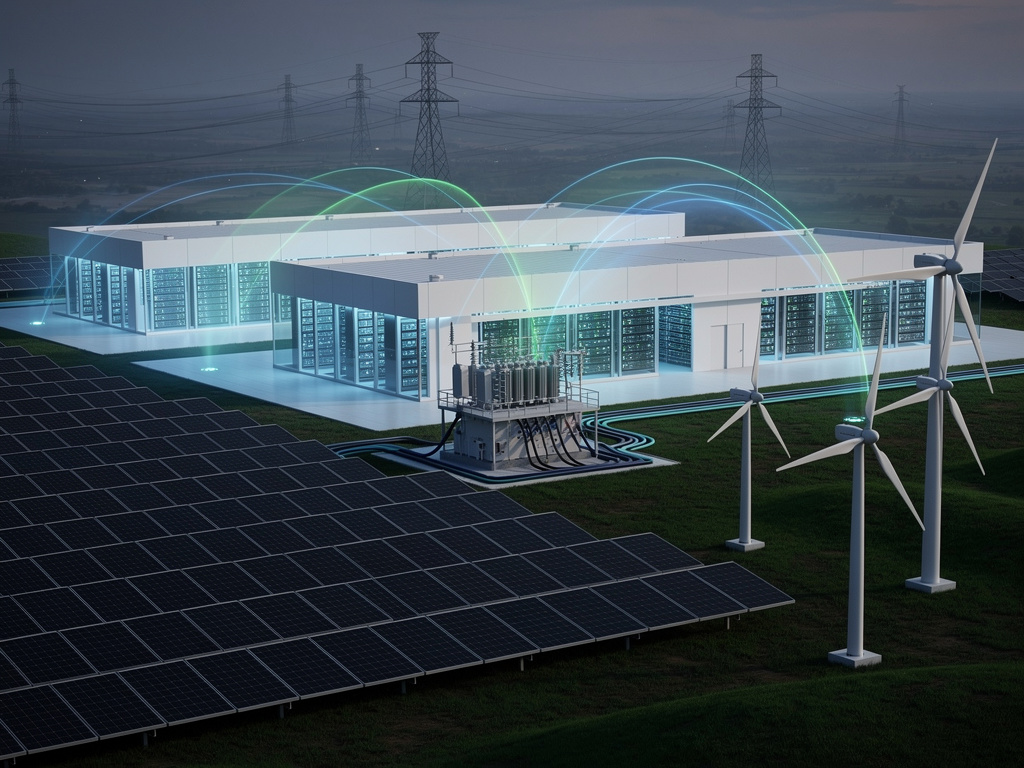
The acquisition builds on an existing partnership. Google already holds a minority stake in Intersect from a prior funding round, and the two companies have collaborated on multiple gigawatts of energy and data center initiatives. Intersect, founded in 2016 and backed by investors including TPG, specializes in developing “power-first” industrial campuses that pair large-scale renewable energy sources with on-site computing facilities. This approach allows for direct power feeds, reducing reliance on traditional utilities and potentially slashing transmission losses and delays.
Industry observers note that this transaction is part of a broader pattern of vertical integration in the tech sector, where companies are not just building data centers but also owning the energy assets that fuel them. As AI models grow more complex, requiring immense computational power, the strain on national power systems has become a critical hurdle. Alphabet’s move positions it to bring more capacity online faster, supporting its Google Cloud customers and internal AI development.
The Drive Behind the Deal: AI’s Energy Imperative
The timing of the acquisition aligns with explosive growth in AI adoption. Tech firms are pouring billions into expanding their footprints, with data centers projected to consume up to 8% of U.S. electricity by 2030, according to some estimates. Alphabet’s leadership has emphasized the need for innovative energy solutions to meet sustainability goals while scaling operations. In a statement from Alphabet Investor Relations, the company highlighted how the deal will “advance U.S. energy innovation” by incorporating Intersect’s team and projects, including those under construction.
Intersect’s assets are particularly appealing because they focus on clean energy. The company operates and develops solar farms and battery storage systems across key regions, with a pipeline exceeding 15 gigawatts in capacity. This acquisition enables Alphabet to diversify its energy mix, incorporating renewables alongside other sources. For instance, earlier in 2025, Google signed a landmark $3 billion hydropower agreement with Brookfield to upgrade plants in Pennsylvania, tying into a $25 billion data center expansion in the state, as reported in posts on X from users tracking stock market news.
Moreover, Alphabet has explored carbon-capture technology in natural gas deals, such as a 400-megawatt facility in Illinois developed by Low Carbon Infrastructure. These efforts reflect a multifaceted strategy to ensure energy reliability, blending renewables with emerging low-emission technologies. The Intersect purchase amplifies this by providing immediate access to shovel-ready projects, potentially accelerating deployment by years compared to navigating regulatory hurdles for new grid connections.
Navigating Grid Challenges and Regulatory Hurdles
One of the primary motivations for the deal is to bypass the overloaded U.S. power grid. Utilities across the country are facing unprecedented demand, with connection queues for new projects stretching into the hundreds of gigawatts. By acquiring Intersect, Alphabet can co-locate data centers directly with energy generation sites, creating self-sufficient campuses that minimize dependence on external transmission lines. This model, often dubbed “behind-the-meter” energy, has gained traction as a workaround for grid constraints.
Sources like Bloomberg report that the acquisition marks a dramatic expansion of Alphabet’s data center footprint specifically for AI. Intersect’s expertise in pairing solar and battery storage with industrial loads allows for 24/7 power availability, crucial for AI workloads that can’t tolerate interruptions. This is especially relevant in regions like Texas and the Southwest, where Intersect has significant operations and where renewable resources are abundant but grid integration is challenging.
Regulatory aspects add another layer. The deal is subject to customary approvals, including from antitrust authorities, but Alphabet’s track record suggests smooth sailing. Insiders point out that owning energy assets could help Alphabet comply with increasingly stringent environmental regulations, such as those pushing for carbon neutrality by 2030. Google’s blog post on the acquisition, accessible via Google’s official site, details how Intersect will explore emerging technologies to diversify supply, aligning with broader U.S. energy policy goals under recent infrastructure bills.
Competitive Pressures in the Tech-Energy Nexus
Alphabet isn’t alone in this pursuit. Rivals like Microsoft and Amazon have similarly ramped up energy investments. Microsoft, for example, inked a multi-billion-dollar deal with nuclear firm NBIS for AI data centers, as noted in X discussions on data center crunches. Meta Platforms has partnered with NextEra Energy for co-located campuses, highlighting a industry-wide shift toward energy self-reliance. These moves are driven by the realization that power availability is now a bottleneck for growth, with AI training alone consuming energy equivalent to small cities.
The financials of the Intersect deal underscore its scale. Valued at $4.75 billion plus debt, it eclipses many prior tech acquisitions in the energy space. CNBC notes that this will help bring more generation capacity online swiftly, a boon for Alphabet’s $85 billion capital expenditure plan for 2025. Intersect’s $15 billion in solar and battery assets provide a ready pipeline, potentially generating returns through efficient, low-cost power for Google’s operations.
From an insider perspective, this acquisition signals a maturation in how tech companies view energy not as a utility but as a core competency. Analysts suggest it could lead to new revenue streams, such as offering “green AI” services to enterprise clients, where computing is powered entirely by renewables. Posts on X from energy and tech watchers emphasize this as a pivot toward vertical integration, with one user noting it’s “not about chips anymore—it’s about guaranteed, scalable energy.”
Sustainability Goals and Long-Term Implications
Alphabet’s commitment to sustainability is woven deeply into the rationale. Google has pledged to operate on carbon-free energy around the clock by 2030, and Intersect’s clean portfolio advances that target. The deal includes projects that could offset millions of tons of carbon emissions annually, positioning Alphabet as a leader in sustainable tech infrastructure. Yahoo Finance highlights how big tech’s investments in energy firms are responding to grids struggling with AI’s electricity demands.
Looking ahead, the integration of Intersect’s team—described as “world-class” in Alphabet’s announcements—could spur innovation in areas like advanced battery tech and microgrids. This might extend to exploring fusion or other next-gen sources, though details remain speculative. Industry insiders speculate that such deals could reshape energy markets, with tech firms becoming major players in generation and distribution.
Broader economic effects are notable too. The acquisition supports job creation in renewable sectors and bolsters U.S. energy independence, aligning with national priorities. Reuters reports on the intensifying race to capitalize on AI, with power as the linchpin.
Strategic Risks and Market Reactions
No deal of this magnitude is without risks. Integrating Intersect’s operations into Alphabet’s vast ecosystem will require careful management, particularly in volatile energy markets where commodity prices fluctuate. There’s also the potential for scrutiny over market concentration, as tech giants amass control over critical infrastructure.
Market reactions have been positive, with Alphabet’s stock ticking up in after-hours trading following the announcement. TechCrunch frames it as a way to “bypass energy grid bottlenecks,” a sentiment echoed in X posts calling it an “energy race” beyond traditional computing hardware.
For industry insiders, this acquisition exemplifies the convergence of tech and energy sectors. It could inspire similar moves, potentially leading to a wave of mergers where data and power are inextricably linked.
Innovation at the Intersection of Tech and Power
Delving deeper, Intersect’s model of building integrated campuses offers a blueprint for future developments. These sites combine gigawatt-scale solar arrays with battery systems capable of storing excess energy for peak demand, ensuring uninterrupted power for AI servers. Google’s prior experiments, such as co-locating solar and batteries to “avoid the grid to the greatest extent possible,” as discussed in X threads from 2024, laid the groundwork.
The deal’s value extends to intellectual property and expertise. Intersect’s innovations in optimizing energy for high-load computing could enhance Alphabet’s efficiency, reducing operational costs. The New York Times describes it as helping Google build out AI infrastructure, a critical edge in the competitive arena.
Moreover, this positions Alphabet to influence energy policy. By demonstrating scalable clean solutions, it could advocate for incentives that favor direct tech-energy integrations, potentially accelerating the transition to renewables nationwide.
Future Horizons for Alphabet’s Energy Strategy
As Alphabet assimilates Intersect, the focus will shift to execution. Scaling these projects to meet global demands—Google operates data centers in over 20 countries—presents logistical challenges, but the U.S.-centric assets provide a strong foundation. Insiders anticipate expansions into emerging markets where grid issues are even more pronounced.
The acquisition also opens doors for partnerships. Collaborations with utilities or other tech firms could amplify impact, creating hybrid models that blend private innovation with public infrastructure.
Ultimately, this deal cements Alphabet’s role as a pioneer in redefining how technology consumes and produces energy, setting a precedent for an era where AI’s potential is unbound by power limitations. Axios captures the essence, noting tech giants’ aggressive hunt for power to serve energy-hungry data centers.
Echoes Across the Industry
Reflecting on peer strategies, Amazon’s AWS has reserved long-term energy contracts, while Oracle’s OCI partners with suppliers for compute and power. X posts highlight a “datacenter crunch,” where providers secure resources amid shortages.
This trend raises questions about equity: Will smaller players afford similar integrations? For now, Alphabet’s move strengthens its dominance, ensuring it stays ahead in the AI arms race.
In the broader context, such investments could drive down renewable costs through scale, benefiting the entire ecosystem. As one X user put it, it’s about sidestepping grids to plug directly into sustainable sources, a game-changer for tech’s future.


 WebProNews is an iEntry Publication