
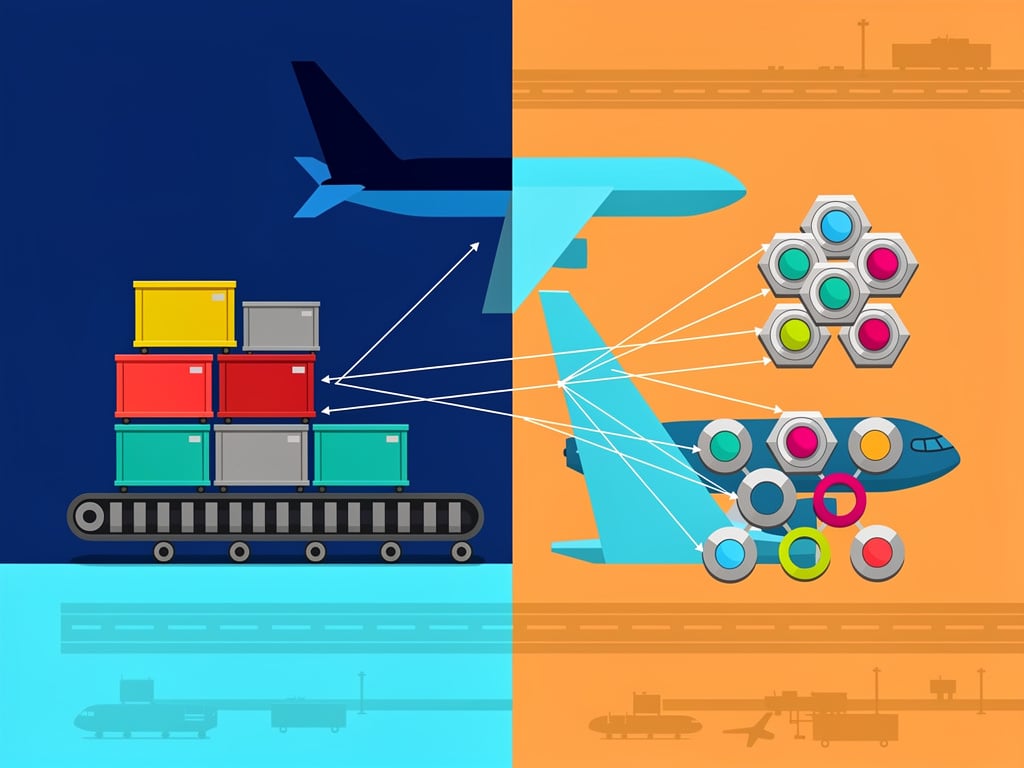
Alaska Airlines is outsourcing its cargo ground-handling operations to PrimeFlight Aviation Services, a move that reshapes how one of America’s most closely watched regional carriers manages the belly of its aircraft. The deal, announced this week, transfers warehouse and ramp cargo work across Alaska’s network to a third-party specialist — a strategic bet that shedding direct control over cargo logistics will sharpen the airline’s competitive edge on costs and service reliability.
It’s a significant shift. For decades, Alaska Airlines handled much of its own cargo operations in-house, a point of pride for a carrier known for operational discipline. Now, the airline is joining a broader industry trend: letting specialists do the heavy lifting — literally — while the carrier focuses on flying passengers and selling freight capacity.
Why PrimeFlight, and Why Now
PrimeFlight Aviation Services, headquartered in Atlanta, isn’t a household name outside aviation circles. But inside them, the company has built a reputation as one of the largest independent ground-handling firms in the United States. It provides ramp services, cargo handling, passenger services, and facility maintenance at more than 65 airports. Its client list reads like an index of major U.S. and international carriers.
According to Yahoo Finance, Alaska Airlines selected PrimeFlight to manage cargo warehouse operations and below-wing cargo handling across its system. The transition is expected to unfold over the coming months, with PrimeFlight absorbing the workforce and infrastructure responsibilities that Alaska previously managed internally.
The timing isn’t accidental. Alaska Airlines completed its acquisition of Hawaiian Airlines in September 2024, creating the fifth-largest U.S. carrier by passenger traffic. Integrating two airline networks is enormously complex. Every function that can be simplified or standardized frees up management bandwidth for the harder work of merging route networks, loyalty programs, and labor contracts. Outsourcing cargo ground-handling to a single provider across the combined network is a textbook integration play.
And the economics are compelling. Ground handling is labor-intensive, operationally messy, and subject to wide variability across stations. A dedicated third party can pool labor, standardize training, and absorb volume fluctuations more efficiently than an airline managing the function station by station. PrimeFlight’s scale — operating at dozens of airports — gives it purchasing power and staffing flexibility that a single carrier can’t easily match.
Alaska’s cargo operation, while not the revenue engine that passenger service is, remains a meaningful contributor. The airline moves freight, mail, and e-commerce packages across its network, with particular strength in routes connecting the U.S. mainland to Alaska and Hawaii — markets where air cargo isn’t optional but essential. Fresh seafood from Anchorage. Agricultural products from Maui. Medical supplies to remote communities. These aren’t discretionary shipments. They’re lifelines.
That makes the choice of ground-handling partner a high-stakes decision. A missed connection or mishandled shipment doesn’t just mean a late package. It can mean spoiled product, disrupted supply chains, and reputational damage in markets where Alaska Airlines has deep community ties.
The Outsourcing Wave Sweeping Airline Operations
Alaska’s move mirrors a pattern that’s been accelerating across the global airline industry. Carriers from Delta to Lufthansa have progressively outsourced ground-handling functions, driven by the same calculus: focus on core competencies, reduce fixed costs, and push operational variability onto partners with contractual performance guarantees.
The trend intensified after the pandemic. Airlines that furloughed or laid off ground workers in 2020 found it brutally difficult to rehire and retrain them when demand snapped back. Many concluded that maintaining large in-house ground operations was a structural vulnerability, not an asset. Third-party handlers, who serve multiple airlines at each station, can redistribute labor more fluidly when schedules change or volumes spike.
But outsourcing isn’t without risk. Quality control becomes a contract management exercise rather than a direct supervision one. Labor relations can get complicated — workers who once wore Alaska Airlines badges now wear PrimeFlight ones, potentially at different pay scales and under different benefit structures. The International Association of Machinists and other unions have historically pushed back on outsourcing deals, arguing they erode job quality and airline accountability.
Alaska Airlines has navigated labor dynamics carefully in recent years. The carrier reached a new contract with its pilots in 2023 and has been working through integration-related labor discussions following the Hawaiian Airlines merger. Adding a cargo outsourcing transition to that mix requires careful sequencing.
PrimeFlight, for its part, has experience absorbing airline workforces. The company has grown partly through winning contracts that come with existing employee bases, and it typically offers positions to incumbent workers during transitions. How smoothly that process goes at Alaska’s stations — particularly at hubs like Seattle-Tacoma International Airport and Anchorage’s Ted Stevens International — will be a key early indicator of the deal’s success.
There’s also the competitive dimension. Alaska’s rivals on the West Coast, particularly United Airlines and Delta Air Lines, have made significant investments in cargo capabilities. United’s cargo division has been expanding its product offerings and digital booking tools. Delta, through its partnership with logistics firms, has been targeting premium freight customers. Alaska needs its cargo product to remain competitive even as it shifts the operational model underneath it.
So the PrimeFlight deal isn’t just about cost savings. It’s about whether Alaska can maintain — or improve — service quality in cargo while freeing up capital and management attention for the broader integration challenge.
What Comes Next
The cargo outsourcing announcement is one piece of a much larger puzzle. Alaska Airlines CEO Ben Minicucci has been clear that the Hawaiian Airlines acquisition is a transformational moment for the company, one that requires disciplined execution across every function. The airline is working to integrate frequent-flyer programs, harmonize fleet plans, and build a unified network strategy that connects the Pacific Northwest to Hawaii and beyond.
Cargo is a supporting player in that story, but not a minor one. The combined Alaska-Hawaiian network has unique geographic advantages in trans-Pacific and intra-Pacific cargo markets. Hawaii’s dependence on air freight for everything from consumer goods to medical supplies gives the merged carrier a built-in demand base. Alaska’s strength in moving seafood and perishables from the 49th state adds another dimension.
If PrimeFlight can deliver consistent, reliable ground handling across this expanded network, Alaska gets the best of both worlds: operational expertise without the overhead. If the transition stumbles — delayed shipments, labor disputes, service complaints — it becomes a distraction at exactly the wrong time.
The airline industry has learned, sometimes painfully, that outsourcing works only when the contract is tight, the oversight is real, and the partner has genuine skin in the game. PrimeFlight’s track record suggests it can deliver. But track records are written in the past tense. Execution happens in the present.
For Alaska Airlines, the cargo handoff to PrimeFlight is a calculated trade: control for efficiency, direct management for specialized expertise. It’s the kind of decision that looks obvious in a strategy deck and gets tested every day on a loading dock at 5 a.m. in Seattle rain. The industry will be watching to see which version of the story plays out.


 WebProNews is an iEntry Publication