
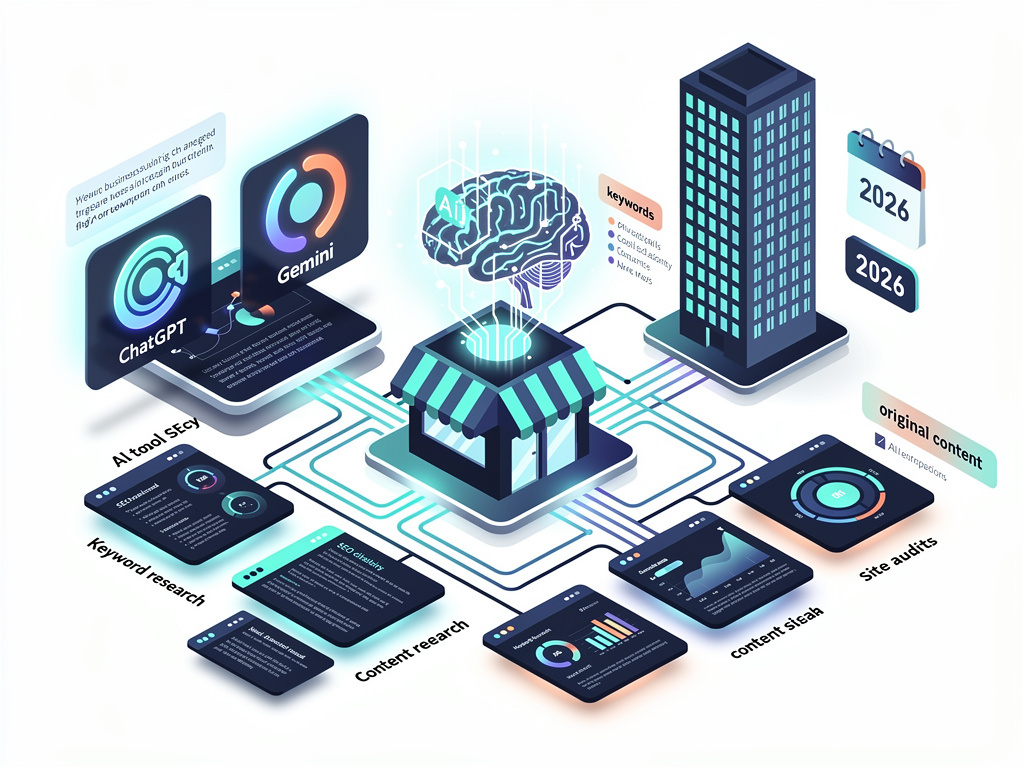
In an era where search engines increasingly deliver answers rather than links, small businesses are harnessing artificial intelligence to punch above their weight. Tools like ChatGPT and Google’s Gemini enable resource-strapped owners to conduct keyword research, craft content, and perform audits without hiring specialists. Summit Ghimire, founder of Outpace SEO agency, argues in Fast Company that these accessible AIs expand expertise and accelerate processes, making professional-grade optimization feasible for solo operators.
Traditional SEO demanded expensive platforms or agencies, but AI levels the field. Ghimire outlines using ChatGPT for grouping keywords by user intent and generating long-tail variants from seed terms, tasks once confined to tools like Ahrefs. Gemini shines in local efforts, leveraging its Google roots to optimize Google Business Profile content and analyze Search Console data exported to Sheets for traffic insights and keyword gaps.
Caution tempers enthusiasm: AI-generated content risks penalties for duplication or thinness. Ghimire stresses human editing to infuse originality, ensuring pieces rank amid Google’s emphasis on E-E-A-T—experience, expertise, authoritativeness, and trust.
Selecting Starter Tools for Maximum Impact
For small outfits, free-entry options like ChatGPT suffice initially, evolving to paid suites. SE Ranking, Ahrefs, and Semrush integrate AI for deeper workflows, as noted by Ghimire. Recent tests highlight Diib’s appeal for beginners: it assigns a ‘Growth Score’ from site health, backlinks, and engagement scans, prioritizing fixes by impact—a boon for owners juggling operations.
Sintra.ai’s review of 2026 tools praises SE Ranking for predictive analytics and affordability, ideal for scaling without enterprise costs. Surfer AI and Semrush’s toolkit analyze query intent, urging shifts from broad terms like ‘digital marketing strategies’ to precise ones such as ‘affordable tools for local businesses.’
SelfMadeMillennials tester Victoria deployed Semrush’s AI SEO Toolkit for audits and keyword strategies, noting its On-Page SEO Checker and Keyword Magic Tool streamline in-house efforts for small teams.
Mastering Keyword Research in AI Era
AI transforms keyword hunts from manual drudgery to conversational efficiency. Prompt ChatGPT with industry summaries or competitor details to cluster terms by intent—informational, commercial, transactional. Fast Company details Gemini’s edge in local semantic keywords, vital as AI overviews dominate SERPs.
ioVista’s Mike Patel warns in a January 2026 post that outdated tactics like keyword stuffing falter against generative search. Instead, embrace semantic variety with tools like Surfer SEO, incorporating related entities AI expects. For B2B, AI-driven traffic already accounts for 10% of revenue in niches like retail.
Search Engine Journal reports 34% of AI citations stem from PR coverage, blending SEO with earned media. Small businesses can mimic this via local directories, partnerships, and ‘Best of’ lists, as X user Alex Groberman advises for entity recognition across ChatGPT and Perplexity.
Content Creation: AI Drafts, Human Polish
Generate outlines embedding long-tail keywords in headers, then refine for voice. Gemini excels at meta descriptions and title tags; pair with structured briefs for consistency. Ghimire recommends this for local SEO, where geo-tagged specifics boost visibility.
DesignRush’s Cody C. Jensen cautions that AI-driven search ‘collapses question to answer,’ demanding expertise signals. Focus on brand recognition and experience-driven pieces appealing to humans and models alike. Clearscope’s 2026 playbook urges topical authority via deep clusters, ensuring citation in generative engines.
On X, Matt Diggity emphasizes entity optimization—consistent NAP across directories, schema markup—to make brands verifiable for LLMs. Claim profiles on Google Business, Bing Places, and industry sites to dominate AI responses.
Technical Audits and Site Optimization
AI audits pages for keyword density, generates schema, and flags sitemap issues. Export Search Console to Gemini for anomaly detection, per Fast Company. Core Web Vitals remain non-negotiable: aim for LCP under 2.5 seconds, as Groberman stresses on X, since slow sites lose AI trust.
Implement LocalBusiness, Service, and FAQ schema for machine readability. X’s Connor Gillivan advocates GEO—Generative Engine Optimization—structuring content for citation in AI summaries via evidence-first pages and bylines.
Salesforce notes AI automates link building and real-time metrics, enabling data-driven tweaks. For small businesses, Diib’s daily scans prevent visibility drops proactively.
Navigating 2026 Trends: GEO and Beyond
Search Engine Journal predicts SEO merges with omnichannel marketing, aligning organic with PR for 44% of AI citations from non-content sources. Small firms gain via influencers and affiliates boosting brand mentions.
ioVista’s Patel pushes structured data and topical depth to become the ‘undeniable authority’ AI cites. Onrec lists RankIQ for niche ranking, balancing cost with automation for SMBs.
X discussions from The SEO Guy warn of tool overload; winners pair AI with human strategy—relationships for backlinks, review drives to 150+ per location.
Local Domination Strategies
Groberman’s X thread details GBP mastery: 100+ geo-tagged photos, weekly posts, keyword-rich review replies. Build ZIP-specific pages with maps and FAQs for AI Overviews above map packs.
Collect reviews via post-service SMS, targeting phrases like ‘AC repair in Scottsdale.’ Secure backlinks from local blogs, events, directories—AI pulls these heavily.
Diggity’s methods include syndicating to Medium and Reddit, AI-crawled hubs reinforcing authority.
Measuring Success and Iterating
Track beyond traffic: GBP calls, branded searches, AI mentions via Semrush. Sintra.ai stresses visibility in ChatGPT and overviews, automating rank checks.
Gillivan’s framework—SEO for clicks, AEO for snippets, GEO for summaries—guides allocation. Start with audits, schema retrofits, then evidence pages.
As Patel concludes, ‘The future isn’t tricking algorithms; it’s becoming the authority they cite.’ Small businesses adopting AI now position for enduring gains amid evolving search.


 WebProNews is an iEntry Publication