
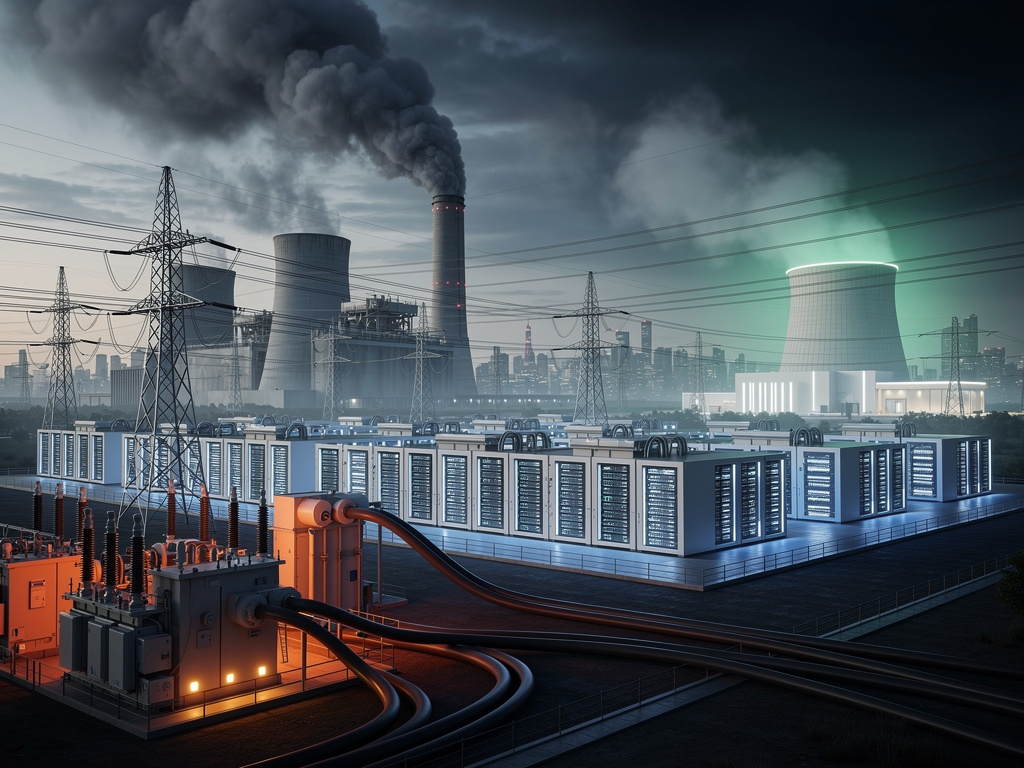
In the race to dominate artificial intelligence, U.S. data centers are consuming electricity at unprecedented rates, straining power infrastructure and threatening household energy costs. A recent Fox Business report highlights the divide in Washington, where Sen. Bernie Sanders warns that these facilities are driving up electricity bills, while proponents insist they are vital for American competitiveness against China.
The surge stems from AI’s voracious computational needs. Facilities housing thousands of servers for training models like those from OpenAI and Google require gigawatts of power, equivalent to entire cities. Federal regulators have greenlit direct connections from data centers to power plants, as noted by AP News, bypassing traditional grid constraints to meet demand.
Grid Strain Hits Critical Levels
Utilities across the U.S. are reviving obsolete ‘peaker’ plants—dirty oil- and gas-fired units designed for short bursts—to cope. In Chicago’s Pilsen neighborhood, a 1960s-era oil plant has restarted amid AI-driven loads, according to Reuters. These plants emit high pollution, clashing with decarbonization goals.
Projections paint a dire picture: AI workloads could drive data center power demand up 500% by 2040, per remarks from ADNOC CEO Sultan Al Jaber at Abu Dhabi Sustainability Week, as covered by The National. In Virginia, the world’s data center capital, grid operators warn of blackouts without massive upgrades.
Tech giants are responding aggressively. Microsoft plans to pay premium rates in data center host areas to shield residents from bill hikes, CNN Business reports. Meta is securing nuclear deals to fuel its operations, with executives claiming it positions the U.S. to win the AI race against China, via Fox Business.
Nuclear Revival and Onsite Generation
Bloom Energy’s fuel cells are emerging as a solution for onsite power, sidestepping grid bottlenecks. CEO KR Sridhar told CNBC his firm powers hyperscalers directly, fueling a stock surge amid bubble concerns. Federal approvals now allow Big Tech to co-locate data centers at plants, accelerating this shift.
Former Energy Secretary Rick Perry emphasized the geopolitical stakes on Fox Business, stating, “President Trump understands the stakes here, that we’re literally in a war with China. Whoever gets to A.I. first, so to speak, wins, and he intends to win.” This underscores AI as a national security imperative.
Water resources face parallel pressures. Hyperscale centers in arid regions like Arizona guzzle millions of gallons for cooling, testing local supplies as detailed in Bloomberg. Regulators are scrutinizing permits amid environmental pushback.
Financial Ripples and Investor Plays
Capital markets feel the heat too. Data center operators are raising billions, but grid delays inflate costs. Utilities like Dominion Energy in Virginia seek rate hikes to fund transmission lines, sparking ratepayer ire. Sen. Sanders decried this on Fox Business: facilities driving up costs for everyday Americans.
Investors eye beneficiaries: power grid firms and nuclear developers. The Motley Fool spotlights overlooked winners supporting the AI era. Yet, hype risks loom—Bloom Energy’s valuation invites bubble comparisons.
Optimists see stabilization potential. TechXplore reports AI data centers could balance grids by curtailing during peaks, acting as virtual batteries. Experts predict 2026 as a pivotal year for energy innovations, per Data Center Knowledge.
Policy Battles and Midterm Flashpoints
Politics intensifies the debate. With 2026 midterms approaching, AI power demands are a flashpoint. Politico notes grid planners grapple with uncertain forecasts, hiking costs preemptively. NPR warns of direct bill impacts, investigating how AI electricity thirst hits consumers.
Microsoft’s pledge to absorb higher costs sets a template, but skeptics question scalability. In Texas, RobotLAB deploys AI robots to ease labor strains indirectly tied to energy debates, as Fox Business covers. China’s AI push adds urgency—U.S. firms like Meta bet on nuclear to stay ahead.
The tension pits innovation against affordability. Utilities forecast 15-20% demand jumps by 2030, per NPR, forcing choices between fossil fuels, renewables, and nuclear restarts. Data center operators lobby for streamlined permitting, while communities demand protections.
Pathways to Power Equilibrium
Solutions multiply: small modular reactors (SMRs) from NuScale and others promise gigawatt-scale power without legacy plant risks. Bloom’s solid oxide tech offers efficiency gains. Grid modernization—advanced batteries and smart meters—could mitigate peaks, but trillions in investment loom.
Global ripple effects emerge. UAE’s Masdar eyes U.S. projects, blending oil wealth with green hydrogen for AI. Dr. Al Jaber’s forecast ties hydrocarbons to the boom, challenging net-zero timelines. U.S. policy under Trump prioritizes energy dominance, per Perry.
As 2026 unfolds, the AI power crunch tests America’s infrastructure resilience. Balancing explosive demand with sustainable supply will define the decade’s tech supremacy.


 WebProNews is an iEntry Publication