
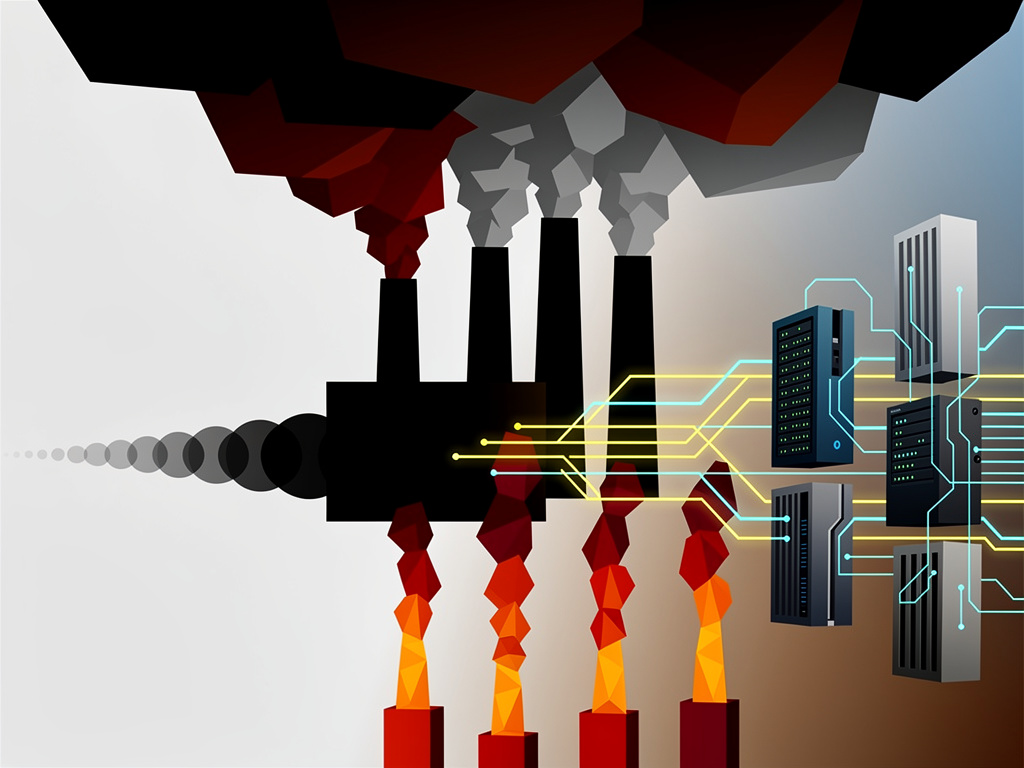
Data centers fueling the AI surge are propping up America’s aging coal plants. Utilities delay retirements. Emissions climb. Nonprofits sound the alarm just in time for Earth Day.
Three environmental groups—U.S. PIRG Education Fund, Environment America Research & Policy Center, and Frontier Group—released reports on April 22, 2026, showing how surging electricity demand from server farms has stalled the nation’s shift from fossil fuels. Coal retirements, once barreling toward a 2040 phaseout, now point to 2065. Natural gas plants flood the pipeline. And the air grows dirtier.
Roughly 40% of coal retirements or fuel switches planned by the end of 2025 didn’t happen, according to data from the Environment America report. In 2022, the U.S. shed 11.6 GW of coal capacity. By 2025, that dropped to 4.4 GW. Data centers bear much blame. Their power needs jumped from 4.4% of U.S. electricity in 2023 to projections of 6.7% to 12% by 2028, per Lawrence Berkeley National Laboratory.
Take Omaha. Server farms nearby forced OPPD to keep North Omaha’s coal generators running. Blackout risks loomed otherwise. Similar stories echo nationwide. Fifteen “zombie power plants”—units past their retirement dates—spewed 65 million metric tons of CO2-equivalent in 2023 alone. That’s more than Massachusetts’ entire net emissions that year, the groups say in their second report, Fossil Fuel Power Plants Are Staying Online Longer.
Pollutants don’t stop at greenhouse gases. Sulfur dioxide and nitrogen oxides from these plants form fine particles and ground-level ozone. They trigger asthma attacks. Worsen lung diseases. Coal adds mercury—a neurotoxin that builds in fish and harms developing brains. The 33 delayed generators across those 15 plants released 25,432 tons of SO2, 27,564 tons of NOx, and 256 pounds of mercury in 2023, per EPA data.
“It’s absurd to power the technology of tomorrow with the dirty and dangerous energy sources of yesterday,” says Quentin Good, policy analyst at Frontier Group, in The Register. “Harming the environment and jeopardizing people’s health is no way to build a better future.”
Nonprofits’ Warnings Collide With Policy Headwinds
And policy isn’t helping. The Trump administration slashed clean-energy tax credits from the 2022 Inflation Reduction Act. It froze federal wind project approvals. Interior Secretary Doug Burgum, once a software executive, declared the AI race with China trumps climate goals. Earth Day petitions target Google for cleaner data center ops. But momentum favors fossils.
Gas surges ahead. Plans call for 41.8 GW of new capacity by 2030, versus 13.2 GW retiring. That’s a net 28.6 GW gain—plants lasting 30 to 40 years. Utilities cite grid delays. Data centers turn to on-site generation. A Cleanview report flags 46 U.S. sites planning their own power plants, mostly gas-fired, as noted by Business Insider.
Texas leads the charge. West Texas oil patch sees gas plants permitted fast—up to 500 MW each, enough for 200,000 homes. Griffin Bird of the Environmental Integrity Project calls it an “explosion,” per Texas Tribune. Fermi America pitches the world’s largest data center-power plant combo in the Panhandle.
Utah’s no different. Joule Capital’s 4,000-acre site eyes 69 natural gas generators per building. QTS and Novva got approvals for 200 MW plants, though some pivoted to grid power, reports Grist. Meta’s Louisiana Hyperion campus plans 10 gas plants totaling 7.5 GW—power for 5 million homes, pollution like 5 million cars.
Trump pushes self-powered data centers. His Ratepayer Protection Pledge aims to shield consumers from bill hikes. Tech giants build or buy power. But skeptics question if it dodges grid strain or just shifts pollution local, as Inside Climate News details.
Renewables grow—solar up to 124 GW planned by 2030, batteries to 67.7 GW. Yet demand outpaces. EVs and factories add pressure. Nonprofits urge efficiency. Faster clean builds. Phased fossil outs. “We’ll all suffer if we rush to build new, polluting gas plants for uncertain data center demand,” warns Abe Scarr of U.S. PIRG Education Fund, in an Environment America release.
Delays persist into 2026. EIA data shows 6.4 GW coal retirements planned, but DOE emergency orders already froze over 4.5 GW last year—J.H. Campbell in Michigan, Craig Station in Colorado, more. Data centers strain grids. Half of 2026 projects face delays or cancellation over power woes.
AI promises progress. But at what price? Coal dust lingers. Gas flames rise. Communities breathe the fallout. Utilities balance blackouts against clean air. The grid creaks. Tech races on.
Nonprofits push petitions. Lawmakers eye reforms. Trump prioritizes power. The tension builds. Solutions? Efficiency first. Renewables accelerated. Data centers accountable. Or the zombie plants shamble longer.


 WebProNews is an iEntry Publication