
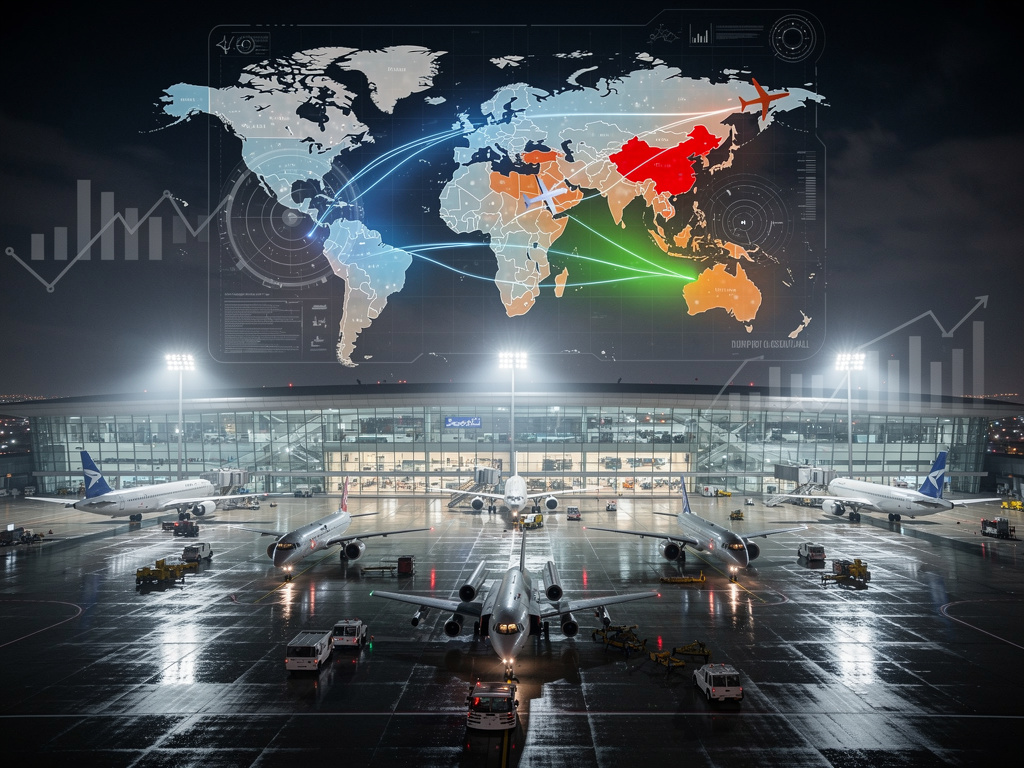
Major airlines are scrambling to extract stranded passengers from the Middle East as escalating military conflict has forced the closure of airspace across parts of the region. The disruption — triggered by intensified hostilities involving multiple state actors — has left thousands of travelers grounded at airports with limited options for departure. Several carriers have now dispatched rescue flights, a move that underscores just how rapidly the situation has deteriorated.
The crisis hit fast. Commercial flight operations into and out of key Middle Eastern airports were suspended or severely curtailed after military strikes expanded in scope during March 2026. Airports that normally handle tens of thousands of passengers daily went quiet almost overnight. Airlines pulled scheduled service, citing safety concerns and insurance restrictions on overflying active conflict zones, according to Business Insider.
Among the carriers mounting extraction operations: Lufthansa, British Airways, Air France-KLM, and several U.S.-based airlines have organized or announced special repatriation flights. These aren’t regular commercial services. They’re one-way rescue operations designed to get citizens and stranded travelers out of affected areas, often operating under special governmental coordination and with diplomatic clearances that normal flights don’t require.
The U.S. State Department issued advisories urging American citizens to leave affected areas immediately, using whatever commercial means remain available. But “available” is the operative word — options have shrunk dramatically. Some travelers have reported waiting days for seats on the limited flights still operating from airports on the periphery of the conflict zone. And prices for remaining commercial tickets have surged, with some routes seeing fares multiply several times over.
This isn’t unprecedented. Airlines organized similar rescue operations during the 2006 Lebanon war, the 2011 Arab Spring upheavals, and more recently during the early stages of the Israel-Hamas conflict in late 2023. But the current situation is broader in geographic scope, affecting a larger number of airports simultaneously and complicating routing for carriers that normally overfly the region on long-haul services between Europe and Asia.
The knock-on effects extend well beyond rescue flights. Carriers like Emirates, Qatar Airways, and Etihad — whose hub operations sit in the Gulf — have faced severe operational constraints. Flight tracking data shows significant rerouting of traffic that would normally transit Middle Eastern airspace, adding hours and fuel costs to journeys between Europe and destinations in South and Southeast Asia. Flightradar24 data confirms a dramatic drop in traffic density over parts of the region compared with the same period last year.
For the airline industry, the financial implications are immediate and material. Fuel costs rise with longer routings. Revenue disappears on suspended routes. Insurance premiums for operations near conflict zones spike. And the repatriation flights themselves are expensive to mount — often operated at a loss, with airlines absorbing costs as a matter of corporate responsibility and, in some cases, at the direction of their home governments.
The International Air Transport Association has been coordinating with member airlines and aviation authorities to manage the disruption. IATA spokesperson noted the organization is working to ensure that airspace restrictions are clearly communicated and that carriers have the operational flexibility to reroute safely. But coordination is complicated when the military situation shifts daily.
U.S. carriers face a particular set of challenges. The Federal Aviation Administration has issued NOTAMs — Notices to Air Missions — restricting American-registered aircraft from operating in specified portions of Middle Eastern airspace. These restrictions are binding. Airlines can’t simply decide to fly through; they need FAA authorization, and right now, that authorization isn’t coming for the most affected zones.
So what does this mean for passengers? Those currently in the region should monitor their airline’s communications closely and be prepared to move quickly when rescue flight availability is announced. Seats are limited. Priority has generally gone to nationals of the airline’s home country, followed by other passengers on a space-available basis. Some governments — including the UK and France — have set up consular registration systems for citizens in affected areas to facilitate organized departures.
For industry professionals watching this unfold, several things matter. First, the insurance market for aviation war risk is tightening again, much as it did after the downing of Malaysia Airlines Flight 17 over Ukraine in 2014. Premiums could remain elevated for months even after hostilities subside. Second, the rerouting of traffic is creating congestion on alternative flight paths, particularly over Central Asia and the Caucasus region. Third, airlines with heavy exposure to Middle Eastern routes — whether through their own networks or codeshare partnerships with Gulf carriers — will feel revenue pressure in upcoming quarterly results.
The situation remains fluid. Military developments could ease or worsen airspace access in coming weeks. Airlines are planning day by day, sometimes hour by hour. Recovery of normal operations, whenever it comes, won’t be instant — it took months for carriers to fully resume overflying parts of the Middle East after previous conflicts.
One thing is clear: the global aviation network’s vulnerability to regional conflict hasn’t diminished. If anything, the concentration of major hub operations in the Gulf over the past two decades has increased the industry’s exposure. When those hubs are disrupted, the effects ripple worldwide. That’s the reality airlines, insurers, and travelers are confronting right now.


 WebProNews is an iEntry Publication