
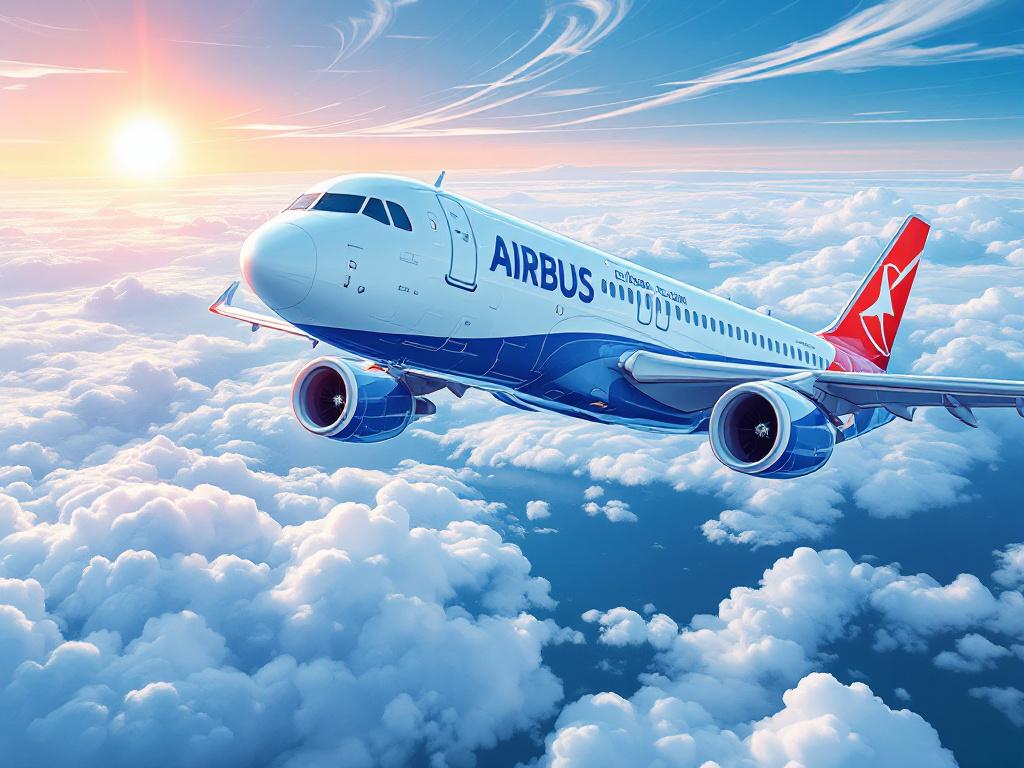
In the waning days of November 2025, the global aviation sector found itself grappling with an unprecedented challenge as Airbus, the European aerospace behemoth, issued a directive affecting roughly 6,000 aircraft worldwide. The issue stems from a vulnerability where intense solar radiation could corrupt critical flight control data, prompting urgent software updates or, in some cases, hardware replacements. This revelation, first uncovered during routine investigations following a mid-air incident, has rippled through airlines, airports, and regulatory bodies, underscoring the intricate interplay between cutting-edge technology and unpredictable cosmic forces.
The problem traces back to a specific component in Airbus’s A320 family of jets, which includes popular models like the A320 and A321. According to reports from the BBC News, the corruption risk arises from solar flares or high-energy particles that can interfere with electronic systems, potentially leading to erroneous data in flight controls. Airbus’s alert, issued on November 28, 2025, mandated immediate action to mitigate this risk, affecting a significant portion of the world’s narrow-body fleet. Airlines operating these planes, from budget carriers to major international players, were suddenly forced to ground aircraft for inspections and updates, leading to widespread cancellations and delays.
This isn’t the first time solar activity has posed threats to aviation electronics, but the scale here is monumental. Industry experts note that while aircraft are designed to withstand various environmental stressors, the increasing reliance on sophisticated software has amplified vulnerabilities. The directive came on the heels of a specific incident last month, where an A320 experienced unexpected altitude loss, prompting a diversion. As detailed in coverage from The Guardian, this event triggered a deeper probe by Airbus engineers, revealing that cosmic radiation could flip bits in memory chips, corrupting data essential for autopilot and navigation systems.
Unpacking the Technical Vulnerabilities
Delving deeper into the technical specifics, the affected systems involve the flight management computers, which process vast amounts of data in real time. Solar radiation, particularly during periods of heightened solar activity like the current solar maximum cycle peaking around 2025, can induce single-event upsets—essentially, glitches in semiconductor devices. Airbus’s response, as explained in updates from Sky News, includes a software patch that enhances error detection and correction algorithms, or in severe cases, replacing vulnerable hardware modules.
For airlines, the logistics of implementing these fixes are daunting. Each update requires certified technicians and can take several hours per aircraft, often necessitating the plane to be taken out of service. In regions with dense air traffic, such as Europe and North America, this has led to cascading effects on schedules. The BBC News reported that low-cost carriers like Ryanair and EasyJet, heavy users of the A320 series, have had to reshuffle fleets, borrowing planes from less-affected models or even leasing from competitors to minimize downtime.
Regulatory oversight has been swift. The European Union Aviation Safety Agency (EASA) and the U.S. Federal Aviation Administration (FAA) have endorsed Airbus’s directive, mandating compliance within tight deadlines. This coordination highlights the global nature of aviation standards, but it also exposes disparities in how different regions handle such crises. In Asia, for instance, carriers like Cebu Pacific and AirAsia have reported over 15,000 passengers affected in the Philippines alone, as per GMA News Online, illustrating the human cost in emerging markets where air travel is a lifeline for economic mobility.
Global Ripple Effects on Airlines and Passengers
The disruptions have not been uniform. In the Middle East, airlines such as Etihad and Saudia have issued travel advisories, with some flights rerouted or consolidated to maintain operations. Arabian Business noted in a recent update that these carriers are prioritizing software updates on high-traffic routes to mitigate delays, yet passengers have faced hours-long waits at hubs like Dubai and Riyadh. This scenario echoes broader industry strains, where supply chain bottlenecks for parts and skilled labor exacerbate the issue.
Passengers, caught in the crossfire, are navigating a maze of rebookings and compensations. Under EU Regulation 261/2004, travelers in Europe are entitled to refunds or alternative flights, plus potential compensation for delays over three hours. In contrast, U.S. Department of Transportation rules focus more on refunds without the same emphasis on monetary payouts, as explored in an analysis from Archyde. This divergence has sparked debates among consumer advocates about harmonizing global passenger rights, especially as holiday travel ramps up toward December.
Social media platforms like X have amplified passenger frustrations, with posts highlighting chaotic scenes at airports. Users have shared stories of missed connections and stranded families, painting a picture of widespread discontent. One viral thread described a family delayed for 12 hours at London’s Heathrow, underscoring how such technical mandates can unravel meticulously planned itineraries. While these anecdotes aren’t official data, they reflect the real-time sentiment rippling through the traveling public.
Industry Responses and Long-Term Implications
Airlines are responding with a mix of contingency planning and public relations efforts. Delta Air Lines, for example, has communicated via its channels that only a fraction of its A320 fleet requires immediate attention, allowing it to maintain most schedules. However, smaller operators without deep reserves are feeling the pinch more acutely. The Financial Times reported that the update could cost the industry millions in lost revenue, with estimates suggesting up to 5% of global flights impacted in the short term.
Looking ahead, this incident raises questions about the resilience of aviation technology. Airbus has been proactive, drawing from lessons in previous solar-related advisories, but critics argue that the sector needs more robust shielding for electronics. Innovations like radiation-hardened chips, already used in space applications, could become standard in future aircraft designs. As Airbus pushes forward with models like the A350, incorporating these learnings will be crucial to prevent recurrences.
Moreover, the timing coincides with a period of intense solar activity, forecasted to continue into 2026. Experts from organizations like NASA have long warned of solar storms’ potential to disrupt not just aviation but also power grids and communications. In this context, Airbus’s directive serves as a wake-up call, prompting airlines to integrate space weather monitoring into their operational protocols, much like they do for terrestrial weather.
Economic and Strategic Fallout
The economic fallout is multifaceted. Stock prices for Airbus and major airlines dipped briefly following the announcement, though markets have since stabilized as updates progress. Analysts from firms like Bloomberg suggest that while short-term losses are inevitable, the long-term benefit of enhanced safety could bolster investor confidence. For Airbus, this positions the company as a leader in proactive risk management, potentially giving it an edge over rivals like Boeing, which has faced its own share of technical woes.
Strategically, the event highlights dependencies in the global supply chain. Parts for the required hardware replacements are sourced from a network of suppliers, and any delays there could prolong disruptions. In interviews with industry insiders, executives have emphasized the need for diversified sourcing to build resilience against such black swan events.
On the passenger front, advocacy groups are pushing for better transparency. Websites and apps tracking flight statuses have seen surges in usage, with tools from Flightradar24 providing real-time insights into which aircraft are grounded. This democratization of information empowers travelers but also amplifies pressure on airlines to communicate effectively.
Pathways to Recovery and Innovation
As recovery efforts unfold, Airbus has committed to supporting airlines with technical teams and expedited parts delivery. Reports from Le Monde indicate that by early December 2025, a majority of the affected planes could be back in service, assuming no further complications arise. This optimistic timeline hinges on coordinated efforts across continents, from maintenance hangars in Toulouse to hubs in Atlanta.
Innovation is another silver lining. The software update includes advanced algorithms that not only correct for radiation-induced errors but also improve overall system efficiency. Industry journals have speculated that this could lead to broader adoptions of AI-driven predictive maintenance, reducing future downtimes.
Finally, this episode underscores the aviation sector’s vulnerability to external forces beyond human control. As solar cycles ebb and flow, the industry must evolve its defenses, ensuring that the skies remain safe amid the stars’ unpredictable fury. With lessons learned, the path forward involves not just fixes but a reevaluation of how technology interfaces with the cosmos.


 WebProNews is an iEntry Publication