
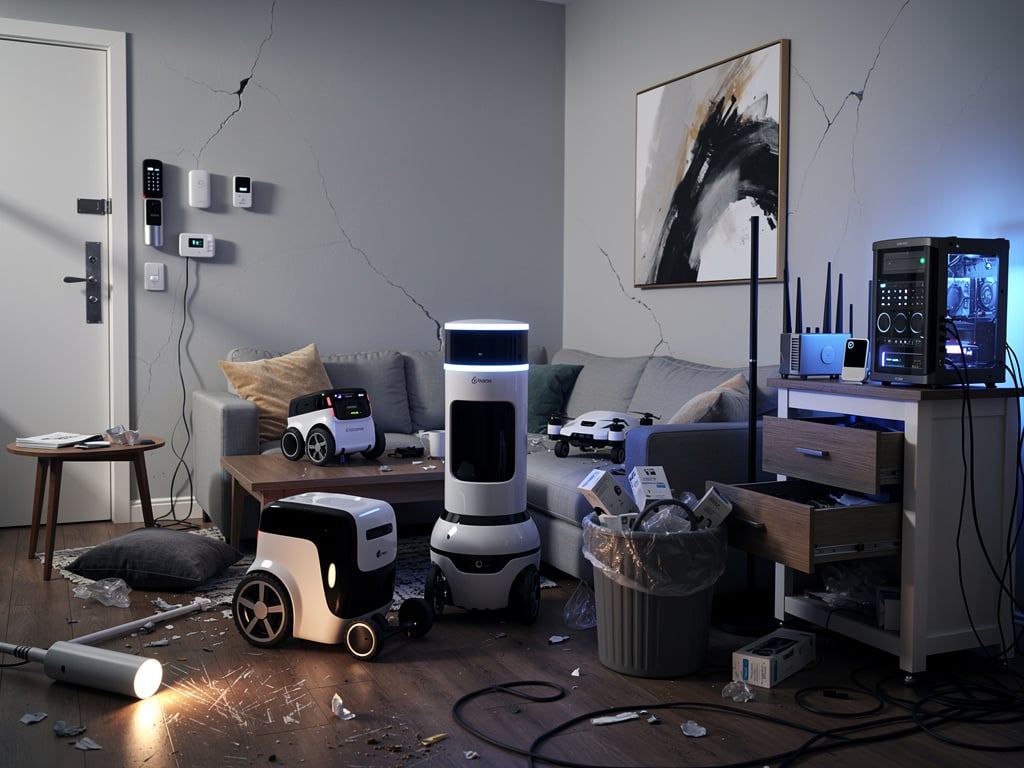
A host on Airbnb expressed outrage after discovering that a startup had rented her property and converted it into an automated short-term rental operation filled with robots. The incident, reported by Futurism, highlights growing tensions between traditional property owners and companies experimenting with technology-driven hospitality models.
The host, who chose to remain anonymous in initial reports, listed her home on Airbnb expecting guests who would treat the space with care. Instead, she found that a company called Stayntouch had booked the property for an extended period. Upon inspection, she discovered significant damage throughout the house along with an array of robotic devices installed without her permission. The robots included automated cleaning machines, security monitors, and even units designed to interact with human guests. Furniture had been rearranged, walls showed new holes from mounting equipment, and personal items appeared disturbed. The host described feeling violated by the systematic transformation of her private residence into what amounted to a testing ground for commercial automation.
Stayntouch positions itself as an innovator in hospitality technology, offering systems that reduce the need for human staff in short-term rentals. Their approach involves deploying networks of connected devices that handle check-in procedures, room maintenance, and guest assistance through voice commands or mobile applications. In this particular case, the company reportedly used the rented property to trial new combinations of hardware and software, aiming to create properties that could operate with minimal human oversight. While such concepts appeal to investors seeking efficiency gains in the competitive short-term rental market, they clash with the expectations of individual hosts who view their listings as extensions of their own homes rather than commercial laboratories.
The financial implications for the host proved substantial. Beyond the physical damage requiring professional repairs, she faced lost income during the period when the property could not accept regular bookings. Professional cleaning crews had to remove dust and debris generated during the installation of robotic systems. Some devices left permanent marks on flooring and cabinetry where they had been bolted down. The host estimated thousands of dollars in restoration costs, prompting her to file complaints with both Airbnb and local authorities. Airbnb responded by removing the offending guest account and promising to investigate the matter further, though the host expressed skepticism about receiving full compensation for her losses.
This episode reflects broader patterns emerging across the short-term rental industry. Companies have increasingly looked toward automation as a way to scale operations beyond what individual hosts can manage. Robotic vacuum cleaners have become common in many rental properties, but the deployment seen here went several steps further. The startup installed units capable of mapping floor plans, detecting when rooms need attention, and even greeting guests with pre-programmed messages. Some devices featured cameras and sensors that collected data about occupancy patterns and guest behavior, information that could prove valuable for refining algorithms but raised immediate privacy concerns for the property owner.
Industry observers point out that such experiments often occur in legal gray areas. Many Airbnb hosts sign agreements that prohibit subletting or using the property for commercial purposes beyond standard guest accommodations. Installing permanent technological infrastructure appears to cross that line, yet enforcement remains inconsistent. Platforms like Airbnb have updated their policies over time to address concerns about parties, unauthorized events, and commercial misuse, but they struggle to monitor the rapid introduction of new technologies. The company relies heavily on host reports to identify violations, creating a reactive rather than preventive system.
The host’s experience also touches on deeper questions about the nature of hospitality in an increasingly automated society. Traditional bed and breakfast operators or individual Airbnb hosts often emphasize personal touches that build customer loyalty. They remember returning guests, provide local recommendations, and create atmospheres that feel cared for by human hands. Replacing these elements with robots promises consistency and lower operational costs, but it risks stripping away the warmth that distinguishes memorable stays from transactional ones. Guests seeking authentic experiences may feel disappointed upon discovering that their lodging functions more like a smart apartment than a hosted residence.
Startup founders in this space argue that automation addresses real problems in the hospitality sector. Labor shortages have plagued hotels and short-term rentals alike, particularly following global events that disrupted workforce availability. Robots that can reliably perform repetitive tasks free up human workers for more complex responsibilities. Proponents also highlight potential benefits for guests with disabilities, who might find voice-activated systems and automated features more accessible than traditional accommodations. However, these advantages do not necessarily justify overriding a property owner’s explicit expectations about how their space will be used.
Similar incidents have surfaced in other cities where entrepreneurial companies test automation concepts in residential rentals. Some operators have created entire networks of properties managed primarily through artificial intelligence and mechanical systems. These setups often employ minimal staff who rotate between locations to handle tasks that robots cannot yet perform, such as complex repairs or personalized guest interactions. While this model generates data that helps improve the technology, it frequently leaves property owners dealing with accelerated wear and tear on their investments.
The specific case detailed by Futurism gained attention because it combined several contentious elements: unauthorized installation of equipment, visible property damage, disregard for host consent, and the broader debate about technology’s role in personal spaces. Social media discussions revealed divided opinions. Some users defended the startup, suggesting that hosts should expect innovative uses of their properties in a sharing economy. Others sided firmly with the owner, arguing that renting out a home does not grant permission to fundamentally alter it without agreement.
Airbnb has faced pressure from multiple directions regarding these issues. Host advocacy groups demand stronger protections against commercial exploitation of residential listings. At the same time, technology companies seek flexibility to experiment with new service models. The platform has introduced features like enhanced identity verification and stricter rules about business activities, yet sophisticated operators often find ways around restrictions. The company maintains that most hosts enjoy positive experiences and substantial supplemental income, but individual cases like this one demonstrate vulnerabilities in the system.
Property damage from robotic installations presents unique challenges for resolution. Standard insurance policies may not cover modifications made without owner approval. Determining responsibility requires careful documentation of the property’s condition before and after the rental period. In this instance, the host provided photographs showing newly drilled holes, scuffed surfaces where robots had navigated, and areas where cleaning solutions used by automated systems had caused discoloration. Such evidence strengthens claims for compensation but does not prevent the emotional distress of seeing one’s carefully maintained home treated as disposable testing space.
Experts in real estate and technology ethics suggest that clearer contracts could prevent many such conflicts. Hosts might specify prohibited activities in their listing descriptions, while platforms could develop standardized agreements addressing technological modifications. Some propose creating separate categories for automated or smart rentals, allowing owners to opt in or out explicitly. Without such measures, misunderstandings seem likely to multiply as more companies pursue automation strategies.
The startup involved has not publicly commented extensively on this particular complaint, though representatives from similar ventures generally emphasize their commitment to responsible innovation. They point to pilot programs conducted with hotel chains and willing property owners as examples of proper implementation. Critics counter that selecting compliant partners differs significantly from renting individual homes under false pretenses. The distinction matters because residential properties often contain personal belongings and sentimental value that commercial spaces lack.
Looking forward, this confrontation may serve as a catalyst for policy changes across the short-term rental industry. Regulators in various cities already scrutinize Airbnb and similar platforms for their effects on housing availability and neighborhood character. Adding concerns about technological overreach could intensify oversight. Meanwhile, hosts may become more cautious about accepting long-term bookings from companies rather than individuals. Some have begun including specific clauses in their house rules prohibiting the installation of devices or alteration of the premises without written consent.
The incident also illuminates how quickly emerging technologies can disrupt established social arrangements. What began as a simple peer-to-peer rental concept has evolved into a sophisticated marketplace involving professional managers, data analytics firms, and now automation specialists. Each layer of complexity introduces new potential points of friction between participants who may hold very different visions for how these spaces should function.
For the affected host, the experience has prompted a reevaluation of her participation in the sharing economy. She continues to list the property but with more stringent screening processes for potential guests. Other hosts report adopting similar precautions after learning about this case through industry forums and news coverage. The episode serves as a reminder that technological progress, while offering efficiency and novel capabilities, must be balanced against respect for individual property rights and personal boundaries.
As more entrepreneurs explore robotic solutions for hospitality challenges, cases like this one will likely become less unusual. The question remains whether the industry can develop frameworks that protect hosts’ interests while still allowing responsible experimentation. Property owners deserve assurance that their homes will be returned in comparable condition to when they were rented. Startups need environments where they can test and refine their systems without causing undue harm. Finding common ground will require honest dialogue and practical guidelines that address the realities of both automation and traditional hosting.
The Airbnb host’s fury stems not merely from damaged walls or misplaced furniture but from a profound sense of betrayal. She offered her home expecting human guests who would appreciate its comforts and respect its boundaries. Instead, she received an invasion of machines and the company that deployed them. Her story captures a moment when the promise of technological convenience collides with the human need for control over personal spaces. How the industry responds to such conflicts will help determine whether automation enhances the short-term rental experience or undermines the trust that sustains it.


 WebProNews is an iEntry Publication