
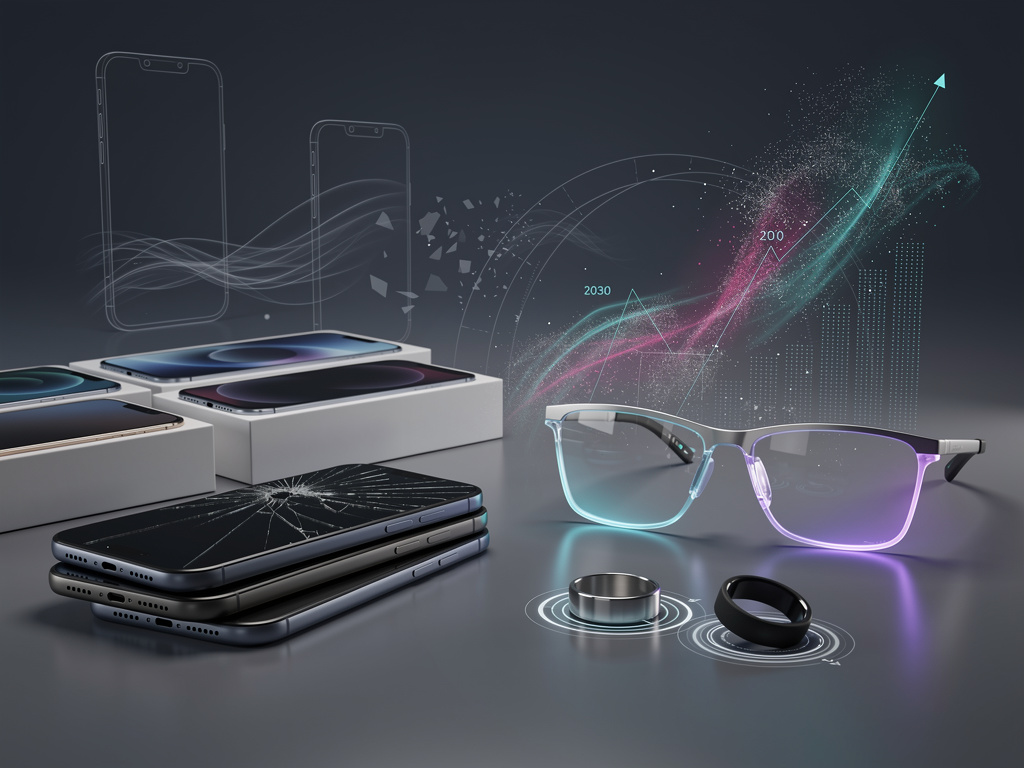
The Fading Glow of Smartphones: How AI Wearables Are Stealing the Spotlight
In the ever-evolving world of consumer technology, a seismic shift is underway. Smartphones, once the indispensable hubs of daily life, are showing signs of fatigue. Sales are plateauing, innovation is stalling, and users are increasingly frustrated with the constant pull of screens. Enter AI-powered wearables: devices like smart glasses, earpieces, and rings that promise seamless, hands-free interactions with the digital world. This transition isn’t just about new gadgets; it’s a fundamental rethinking of how we connect, communicate, and compute.
Recent data underscores this trend. Global smartphone shipments have grown at a mere 2% annually in recent years, while wearable adoption surges in double digits. Industry experts, including venture capitalists and tech CEOs, are betting big on a future where wearables dominate. For instance, Meta’s Mark Zuckerberg has publicly stated that smart glasses could supplant phones by 2030, likening the shift to how mobiles overtook desktop computers without entirely erasing them. This prediction aligns with broader sentiments echoed across social platforms and tech forums.
But why now? The convergence of advanced AI, improved battery life, and miniaturized sensors has made wearables viable alternatives. Devices can now process voice commands, provide real-time translations, and even anticipate user needs through contextual awareness. As one analyst puts it, we’re moving from pocket-sized screens to ambient intelligence that blends into our surroundings.
The Roots of Smartphone Saturation
The smartphone market has reached a point of diminishing returns. Once-revolutionary features like high-resolution cameras and foldable displays now feel incremental. According to reports from WebProNews, slowing sales are driven by longer upgrade cycles—users hold onto devices for three to four years instead of annually. This stagnation opens the door for disruptors.
AI advancements accelerate this change. Generative models can handle complex tasks without bulky hardware, allowing wearables to offload processing to the cloud. Imagine smart earpieces that whisper directions or translate conversations on the fly, eliminating the need to glance at a phone. Posts on X highlight this excitement, with users speculating that by 2030, all mobile phones could vanish, replaced by AI glasses from companies like Google and Samsung.
Challenges persist, however. Privacy concerns loom large, as always-on devices could capture sensitive data. Battery limitations and the need for seamless integration with existing ecosystems also pose hurdles. Yet, optimists argue these are solvable, pointing to rapid progress in sensor technology and energy efficiency.
The wearable surge draws from multiple innovations. Smart rings track health metrics with unprecedented accuracy, while augmented reality glasses overlay digital information onto the real world. Publications like Mashable forecast that foldables and AI robots will dominate 2026 headlines, but wearables stand out for their intimacy and convenience.
At CES 2026, AI gadgets stole the show. From lightweight pins that record memories to smart glasses with extended battery life, the event showcased prototypes pushing boundaries. ZDNET reported on exclusive reveals, emphasizing how these devices are becoming more user-friendly and capable.
This isn’t mere hype. Venture capital firms like True Ventures predict smartphones could become obsolete within a decade, supplanted by voice-activated interfaces and context-aware tech. Jon Callaghan, co-founder of True Ventures, envisions a world where devices capture thoughts and generate content dynamically, without traditional apps or operating systems.
Industry Giants Place Their Bets
Tech behemoths are investing heavily. Google’s AI glasses project aims to make screens redundant, integrating real-time AI for navigation, reminders, and more. Samsung follows suit, developing wearables that reshape how we interact with information. Elon Musk has even proclaimed that the “phone” will die, replaced by AI edge nodes delivering hyper-personalized experiences.
On X, discussions amplify these views. Influencers and tech enthusiasts share threads about Meta’s Orion smart glasses, which Zuckerberg touts as the next major computing platform. These posts, garnering millions of views, reflect growing public anticipation for a screen-free future.
Critics, however, warn of overstatement. Smartphones won’t disappear overnight; they’ll evolve or coexist. Still, the momentum is undeniable. TechInsights outlines five key trends for 2025, including sensor advancements and the rise of smart rings, signaling a broader ecosystem shift.
Health and fitness applications drive much of the wearable appeal. Devices now monitor vital signs with medical-grade precision, offering insights beyond what phones can provide. One Day Advisor explores innovations extending into business and automotive sectors, where AI wearables enhance productivity.
At the heart of this transformation is ambient computing—a vision where technology fades into the background. Instead of pulling out a phone, users might gesture or speak to an earpiece for instant responses. This paradigm reduces screen time, potentially improving mental health amid rising concerns about digital addiction.
Forecasts from Eastgate Software at CES 2026 highlight AI-powered robots and next-gen chips, but wearables emerge as the consumer-facing stars. Trifold phones may grab attention, yet they still rely on screens, whereas wearables promise liberation from them.
Navigating the Transition Challenges
Adoption barriers include cost and compatibility. High-end smart glasses can exceed $1,000, pricing out average consumers. Integration with legacy systems remains tricky, as wearables must sync effortlessly with home devices, cars, and workplaces.
Privacy and security are paramount. Always-listening devices raise dystopian fears of surveillance. Regulators are watching closely, with potential laws to govern data collection. Despite this, proponents argue that built-in safeguards, like on-device processing, can mitigate risks.
Battery life improvements are crucial. Recent breakthroughs in solid-state batteries and energy-harvesting tech could extend usage from hours to days. Mobile InfoWorld discusses trends like 6G connectivity, which could enable ultra-low-latency interactions for wearables.
The economic implications are vast. A shift to wearables could disrupt supply chains, from display manufacturers to app developers. Jobs in smartphone assembly might decline, while new opportunities arise in AI software and wearable design.
Consumer sentiment, as gauged from X posts, leans optimistic. Threads predict AI-native devices outselling traditional ones, with implicit interactions via gaze and sensors becoming standard. This reflects a desire for technology that’s intuitive rather than intrusive.
Experts like Robert Scoble foresee a bifurcation in the market, with “Metaverse 2.0” devices leading the charge. Prototypes from Apple, though shrouded in secrecy, are rumored to align with this trajectory.
Envisioning a Wearable-Dominated Future
By 2030, ambient intelligence might render smartphones relics. Imagine waking to a gentle earpiece nudge with your schedule, glasses displaying navigation overlays during commutes, and rings monitoring health in real time. This integrated approach could enhance efficiency and connectivity.
Yet, not all sectors will transition equally. Professional environments might cling to larger screens for productivity, while casual users embrace wearables for their portability. The New Indian Express notes how AI influenced every tech category in 2025, setting the stage for 2026’s wearable boom.
Geopolitical factors play a role too. Supply chain tensions and rising hardware costs, as detailed in another WebProNews piece, could accelerate innovation in efficient, wearable formats.
The path forward involves collaboration. Standards for interoperability will be key, ensuring wearables from different brands work together seamlessly. Industry consortia are already forming to address this.
User education will bridge the gap. As with smartphones’ rise, early adopters will pave the way, demonstrating benefits to skeptics. Marketing campaigns emphasizing freedom from screens could sway the masses.
In this emerging era, the true winners will be those who adapt. Companies pivoting to AI wearables stand to gain, while laggards risk obsolescence. The smartphone’s glow may be fading, but the dawn of wearables promises a brighter, more immersive technological horizon.
Lessons from Past Tech Shifts
Historical parallels abound. The move from landlines to mobiles transformed communication; now, wearables could do the same for computing. Lessons from that era—focusing on user-centric design and affordability—will guide the transition.
Innovation hubs like Silicon Valley buzz with startups tackling wearable challenges. From thought-capturing interfaces to dynamic content generation, the possibilities excite investors.
Ultimately, this evolution reflects humanity’s quest for seamless integration with technology. As AI matures, wearables could become extensions of ourselves, blurring lines between human and machine.
The journey ahead is fraught with uncertainties, but the trajectory is clear. Smartphones, while enduring, face formidable competition from AI wearables poised to redefine our digital lives.


 WebProNews is an iEntry Publication