
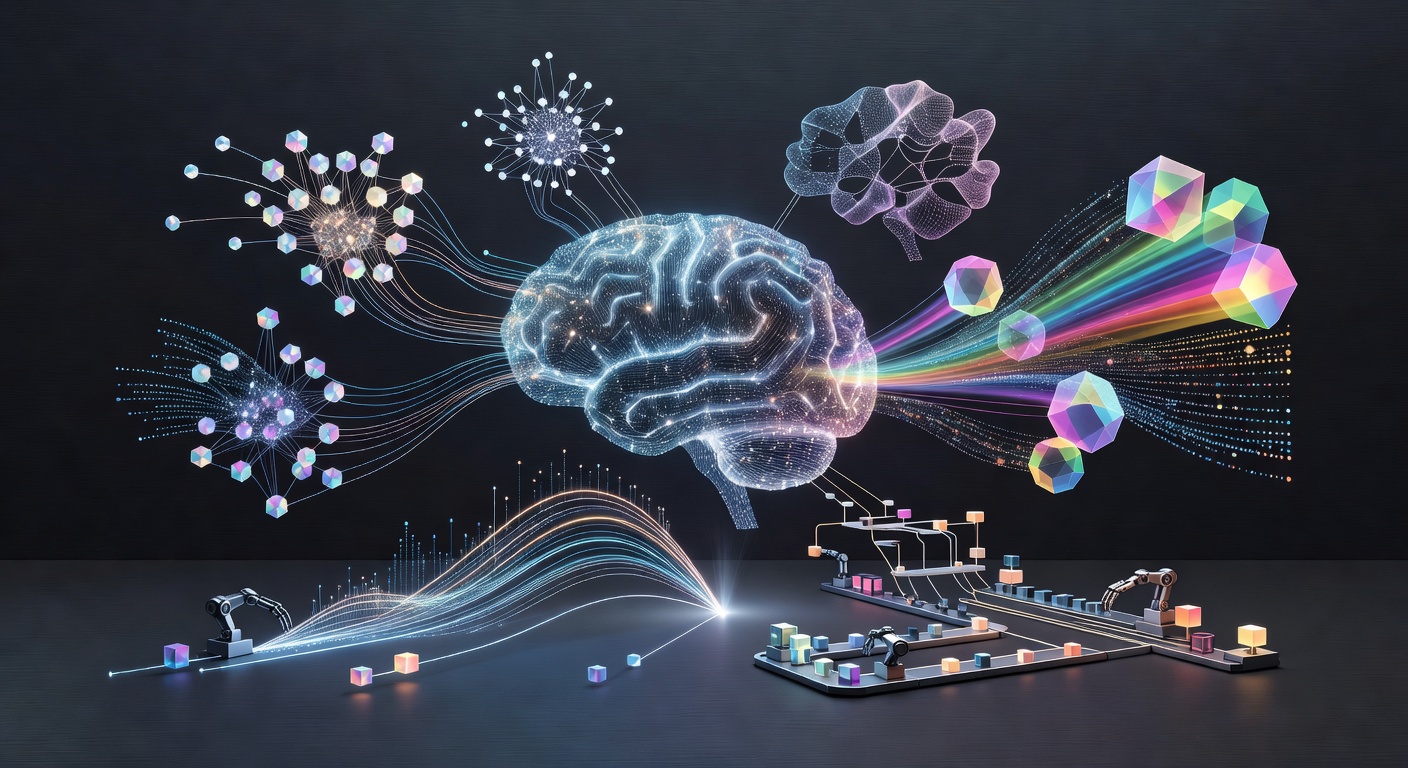
Artificial intelligence has become a significant force in reshaping marketing strategies and operations. Marketers now use AI tools to analyze vast amounts of data, predict consumer behavior, and automate routine tasks. This shift allows for more precise targeting and efficient campaigns. For chief marketing officers, or CMOs, these developments mean adapting to new technologies while leading teams through changes in how marketing functions.
One primary way AI influences marketing is through data analysis. Traditional methods often involved manual review of customer information, but AI algorithms process this data at speeds and scales impossible for humans. For instance, machine learning models identify patterns in purchasing habits, website interactions, and social media activity. This enables marketers to segment audiences more accurately. A report from McKinsey highlights that companies using AI for customer insights see up to a 15% increase in sales conversion rates. You can find more details in their analysis here.
Personalization stands out as another area where AI makes a difference. By examining individual preferences and past behaviors, AI recommends tailored content, products, or offers. Email campaigns, for example, can be customized based on user data, leading to higher open and click-through rates. Netflix employs AI to suggest shows and movies, a technique that has inspired similar approaches in e-commerce. Amazon’s recommendation engine, powered by AI, drives a substantial portion of its sales. According to a study by Epsilon, personalized emails deliver six times higher transaction rates than non-personalized ones. This demonstrates how AI helps create experiences that feel unique to each customer.
Content creation has also seen transformations due to AI. Tools like natural language processing generate blog posts, social media updates, and ad copy. While human oversight remains essential for creativity and brand voice, AI speeds up the process. For example, platforms such as Jasper or Copy.ai assist in drafting content that aligns with specific tones or keywords. Marketers report saving hours weekly on these tasks, allowing focus on strategy. However, concerns arise about originality; AI-generated content must be checked for plagiarism and relevance to avoid alienating audiences.
Predictive analytics represents a further application of AI in marketing. By forecasting trends and outcomes, these tools help anticipate market shifts. Retailers use AI to predict demand for products, optimizing inventory and reducing waste. In B2B marketing, AI assesses lead quality, scoring prospects based on likelihood to convert. Salesforce’s Einstein AI integrates with CRM systems to provide such predictions, enhancing sales efficiency. A Forrester report notes that firms adopting predictive analytics achieve 2.9 times faster revenue growth. Access the full findings here.
Automation extends AI’s reach into marketing operations. Chatbots handle customer inquiries 24/7, improving response times and satisfaction. Social media scheduling tools use AI to determine optimal posting times based on audience engagement data. This not only streamlines workflows but also frees marketers to engage in higher-level planning. HubSpot’s AI features automate lead nurturing, sending targeted messages at key moments in the customer journey.
The integration of AI into marketing tools has led to more sophisticated advertising platforms. Programmatic advertising, driven by AI, buys and places ads in real time across digital channels. This ensures ads reach the right people at the right moments, maximizing return on investment. Google Ads and Facebook’s algorithms optimize bids and targeting automatically. A study from Statista indicates that programmatic ad spending will exceed $500 billion globally by 2025, underscoring AI’s growing dominance in this space.
Voice search and virtual assistants introduce new dimensions to marketing. With devices like Amazon Echo and Google Home, consumers interact via voice commands. Marketers optimize content for these queries, which often differ from typed searches. AI helps in understanding natural language, making SEO strategies more complex. Brands create voice-specific campaigns, such as audio ads or skills for smart devices.
Ethical considerations come into play as AI handles sensitive data. Privacy regulations like GDPR and CCPA require careful management of customer information. Marketers must ensure AI systems comply with these laws to avoid penalties. Transparency in how data is used builds trust; explaining AI-driven recommendations can mitigate concerns about surveillance.
For CMOs, these advancements redefine their responsibilities. Previously focused on creative campaigns and brand management, CMOs now oversee technology adoption and data governance. They collaborate with CIOs and data scientists to integrate AI into marketing stacks. This requires understanding technical aspects without being experts. Leadership involves fostering a culture that embraces innovation while addressing employee fears of job displacement.
Skill development becomes key for CMOs. They need familiarity with AI concepts, such as machine learning and neural networks, to make informed decisions. Many pursue certifications or partner with AI specialists. The role evolves into one that balances art and science, blending creative intuition with data-driven insights.
Strategic planning shifts under AI’s influence. CMOs use AI for scenario modeling, simulating campaign outcomes before launch. This reduces risks and improves budgeting. In a volatile market, AI provides agility, allowing quick pivots based on real-time data.
Team dynamics change as well. CMOs build multidisciplinary teams including data analysts, AI engineers, and traditional marketers. Training programs upskill staff, ensuring everyone contributes effectively. Collaboration tools powered by AI facilitate this, with features like automated project tracking.
Challenges persist for CMOs. Integrating AI with legacy systems can be costly and time-consuming. There’s also the risk of over-reliance on AI, where algorithms make decisions without human context, leading to errors. For example, biased data can result in discriminatory targeting, damaging brand reputation. CMOs must implement checks to audit AI outputs.
Budget allocation reflects these priorities. Investments in AI tools and talent often compete with other marketing needs. Justifying ROI requires demonstrating tangible benefits, such as increased engagement or revenue. Metrics evolve; beyond clicks and impressions, CMOs track AI-specific indicators like prediction accuracy.
Case studies illustrate these impacts. Coca-Cola uses AI to analyze social media sentiment, adjusting campaigns accordingly. Their “Share a Coke” initiative benefited from data insights to personalize bottles. Similarly, Sephora’s Virtual Artist app employs AI for makeup try-ons, enhancing online shopping. These examples show how AI drives innovation and customer loyalty.
In the automotive industry, Ford applies AI to predict maintenance needs, tying into marketing by offering timely service reminders. This proactive approach strengthens customer relationships. Financial services firms like American Express use AI for fraud detection, which informs targeted security-focused marketing.
Looking ahead, AI’s role in marketing will expand with advancements in areas like generative AI and augmented reality. Tools that create immersive experiences, such as virtual product demos, will become standard. CMOs will need to stay informed about emerging technologies to remain competitive.
Sustainability emerges as a focus, with AI optimizing energy use in digital campaigns or analyzing supply chains for eco-friendly practices. Marketers align brands with values, using AI to measure environmental impact.
Global differences affect AI adoption. In regions with strict data laws, CMOs navigate compliance carefully. Emerging markets might leapfrog to AI-driven strategies, bypassing traditional methods.
Education and continuous learning are vital for CMOs. Attending conferences, reading industry reports, and networking with peers provide insights. Organizations like the American Marketing Association offer resources on AI trends. Their whitepaper on AI in marketing is available here.
Partnerships with tech companies accelerate AI implementation. Collaborations with IBM or Microsoft bring expertise and tools tailored to marketing needs. These alliances help CMOs scale efforts without building everything in-house.
Diversity in AI development is another consideration. Ensuring teams represent varied backgrounds reduces bias in algorithms. CMOs advocate for inclusive practices, leading to fairer marketing.
Measurement of success evolves. AI enables attribution modeling, tracing customer journeys across touchpoints. This provides a holistic view of campaign effectiveness, guiding future strategies.
Customer experience takes center stage. AI personalizes interactions at every stage, from awareness to loyalty. CMOs orchestrate these efforts, ensuring consistency across channels.
Innovation labs within companies experiment with AI applications. CMOs sponsor these initiatives, fostering creativity and testing new ideas.
Risk management includes preparing for AI failures. Backup plans and human intervention protocols safeguard against disruptions.
The human element remains irreplaceable. While AI handles data and automation, empathy and storytelling define great marketing. CMOs blend these with technology for compelling narratives.
As AI matures, its integration deepens. Marketers who adapt thrive, while those resistant fall behind. CMOs lead this transition, shaping the future of their field.
In essence, AI enhances marketing efficiency and effectiveness, prompting CMOs to evolve their roles. By embracing these changes, they position their organizations for sustained growth. The ongoing development of AI promises even greater possibilities, making it essential for marketing leaders to engage actively with this technology.


 WebProNews is an iEntry Publication