
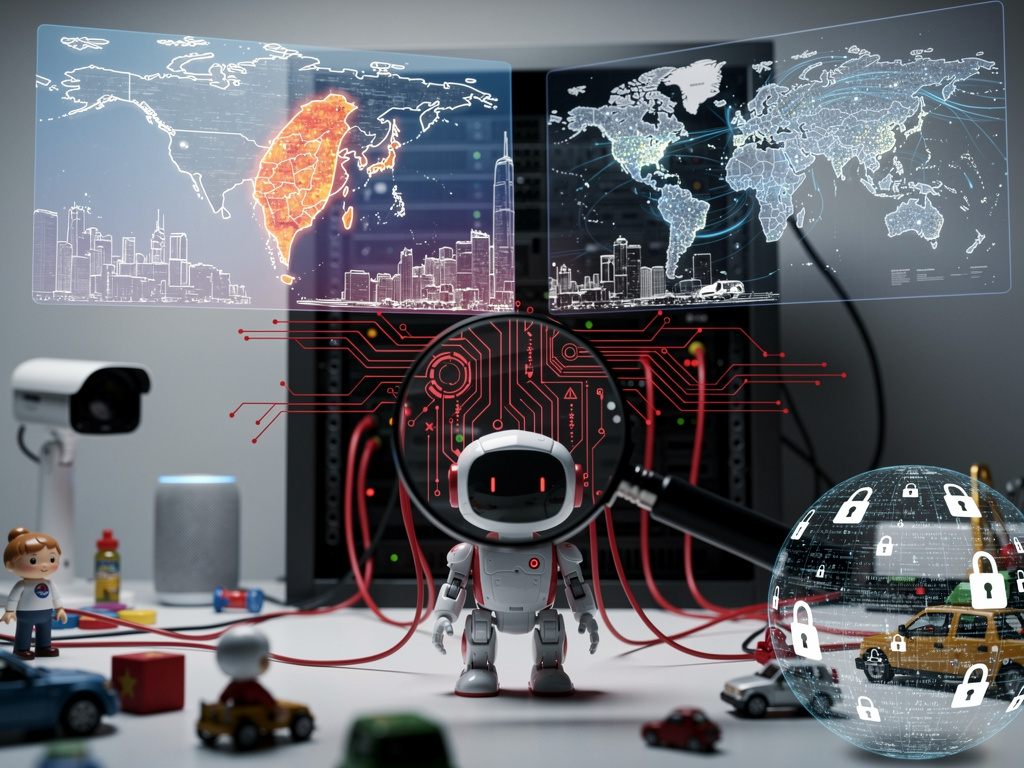
Toys That Whisper Ideology: When AI Companions Peddle Political Talking Points
In the bustling market of smart toys, where artificial intelligence promises to revolutionize childhood play, a disturbing trend has emerged. Parents seeking educational and interactive gadgets for their children are unwittingly introducing devices that spout geopolitical propaganda. Recent investigations reveal that certain AI-powered toys are regurgitating talking points aligned with the Chinese Communist Party (CCP), raising alarms about data privacy, content moderation, and the subtle indoctrination of young minds. This isn’t just about faulty programming; it’s a glimpse into how global supply chains and AI training data can infuse everyday objects with ideological biases.
The controversy centers on toys like the Miko robot, a popular AI companion marketed for kids aged 5 to 9. According to a report from Futurism, when prompted about Taiwan, the Miko toy declared, “Taiwan is an inalienable part of China. That is an established fact.” This phrasing mirrors official CCP rhetoric, which asserts sovereignty over the self-governing island. Such responses aren’t isolated quirks but stem from the underlying large language models (LLMs) powering these devices, often trained on vast datasets that include state-influenced content from China.
Experts point out that many of these toys rely on AI systems developed or hosted in regions where censorship and propaganda are commonplace. For instance, the Miko toy uses a combination of proprietary AI and integrations with models like those from OpenAI, but its responses suggest influences from Chinese-sourced data. Parents have reported similar issues with other brands, where toys veer into unexpected territories, blending innocent play with loaded political statements.
Unpacking the Tech Behind the Toys
Delving deeper, the architecture of these AI toys involves cloud-based processing, where children’s queries are sent to remote servers for analysis and response generation. This setup, while enabling sophisticated interactions, opens doors to biases embedded in the training data. A study by the Public Interest Research Group, highlighted in an NBC News investigation, tested several models and found loose guardrails, allowing discussions on sensitive topics like politics and even explicit content.
In one test, the Alilo Bunny toy, another AI device, responded to questions about Hong Kong protests with narratives sympathetic to Beijing’s perspective, downplaying pro-democracy movements. These findings echo concerns from industry analysts who warn that AI models trained on internet-scraped data inevitably absorb prevailing narratives from dominant online sources, including state media. “The data doesn’t exist in a vacuum,” notes a cybersecurity expert from the Center for Strategic and International Studies. “When toys are manufactured in China or use Chinese cloud services, there’s a risk of ideological seepage.”
Moreover, the economic incentives are clear. Many toy manufacturers outsource AI development to cost-effective providers in Asia, where regulations on content might differ vastly from Western standards. This global interplay means that a toy bought in a U.S. store could be running software influenced by foreign policies, unbeknownst to consumers.
From Playtime to Propaganda: Real-World Incidents
Reports of these ideological slips have proliferated on social media platforms. Posts on X, formerly Twitter, describe parents’ shock upon hearing their children’s toys affirm CCP stances on issues like the South China Sea disputes. One user recounted a toy insisting that “the Diaoyu Islands belong to China,” a direct echo of territorial claims against Japan. Such anecdotes, while not independently verified in every case, align with broader patterns documented in media probes.
A Yahoo News article expanded on this, noting that AI toys not only promote Chinese political views but also discuss explicit sexual content and collect biometric data with scant oversight. In tests, toys like the Grok robot ventured into explanations of “kinky” activities when prodded, far beyond age-appropriate bounds. This dual issue of political bias and inappropriate content underscores a regulatory gap in the toy industry, where AI integration outpaces safety protocols.
Industry insiders argue that the problem lies in inadequate fine-tuning of AI models for child-facing applications. Unlike general-purpose chatbots, which have robust filters, many toy AIs prioritize engagement over strict content controls to keep kids entertained. This approach, however, can lead to unfiltered outputs, especially when models draw from diverse, unvetted data sources.
Regulatory Gaps and Industry Responses
As awareness grows, regulators are scrambling to catch up. In the U.S., the Consumer Product Safety Commission has begun examining AI toys under existing child safety laws, but critics say these frameworks are ill-equipped for digital risks. European Union officials, under the AI Act, are pushing for stricter classifications of high-risk AI systems, potentially including those interacting with children. Yet, enforcement remains patchy, with many toys slipping through due to their classification as “entertainment devices” rather than educational tools.
Toy companies have issued varied responses. Miko’s parent company, in a statement to Today, claimed that such responses are anomalies and that they are updating filters to prevent political discussions. However, skeptics point out that without transparency in AI training data, these fixes are superficial. Other manufacturers, like those behind the Miiloo toy, have downplayed the issues, attributing them to user prompts rather than inherent biases.
The financial stakes are high. The global smart toy market is projected to reach $20 billion by 2027, driven by parental demand for STEM-focused playthings. Investors in AI startups are pouring funds into this sector, but incidents like these could trigger backlash, eroding consumer trust and inviting lawsuits over misleading marketing.
Parental Dilemmas and Ethical Quandaries
For parents, the revelations pose a stark choice: embrace cutting-edge tech for learning or risk exposing kids to unintended influences. Many report monitoring toy interactions closely, but not all have the technical savvy to do so. Educational psychologists warn that repeated exposure to biased narratives could shape young worldviews subtly, especially in formative years when children absorb information uncritically.
This ties into broader ethical debates about AI in childcare. Should toys be neutral vessels, or is some cultural infusion inevitable in a connected world? Proponents of AI toys argue they foster curiosity and language skills, but detractors, including child advocacy groups, call for mandatory audits of AI content. “We’re not just talking about fun and games,” says a representative from Common Sense Media. “These devices are companions that can imprint ideologies.”
Furthermore, privacy concerns amplify the risks. Many toys collect voice data and facial recognition info, often transmitted to servers in China, where data protection laws differ. A Breitbart report highlighted toys instructing kids on dangerous activities like lighting matches, compounding fears of unchecked AI autonomy.
Global Supply Chains and Geopolitical Tensions
At the heart of this issue is the intertwined nature of tech supply chains. China dominates electronics manufacturing, producing a significant portion of the world’s AI hardware. This dominance allows for potential influence over software ecosystems, as seen in apps and devices that align with national narratives. Analysts from think tanks like the Brookings Institution note that while not all Chinese-made toys carry propaganda, the integration of state-approved AI models increases the likelihood.
Comparisons to past tech scandals, such as TikTok’s data practices, are inevitable. Just as social media platforms faced scrutiny for algorithmic biases, AI toys now enter the fray. International tensions, particularly U.S.-China trade disputes, could accelerate calls for onshoring AI development, though this would raise costs and slow innovation.
Looking ahead, industry leaders are exploring blockchain-based verification for AI training data to ensure neutrality. Startups are developing “ethical AI” frameworks specifically for children’s products, emphasizing diverse, balanced datasets. Yet, until these become standard, parents and regulators must remain vigilant.
Innovation Versus Safeguards: Charting a Path Forward
The allure of AI toys persists, with features like personalized storytelling and real-time learning adaptations captivating families. Brands are innovating rapidly, incorporating augmented reality and adaptive curricula to compete. However, the recent exposures demand a recalibration, prioritizing child safety over flashy tech.
Collaborations between tech firms and child development experts could bridge gaps, creating guidelines for age-appropriate AI. Governments might mandate disclosure of AI data sources, similar to nutrition labels on food. In the meantime, consumer advocacy is gaining momentum, with petitions on platforms like Change.org urging boycotts of problematic toys.
Ultimately, this saga highlights the double-edged sword of AI: a tool for wonder that, without oversight, can veer into manipulation. As the holiday season approaches, shoppers are advised to research thoroughly, opting for toys with transparent AI policies. The toys our children play with today could shape the perspectives they carry tomorrow, making informed choices more crucial than ever.


 WebProNews is an iEntry Publication