
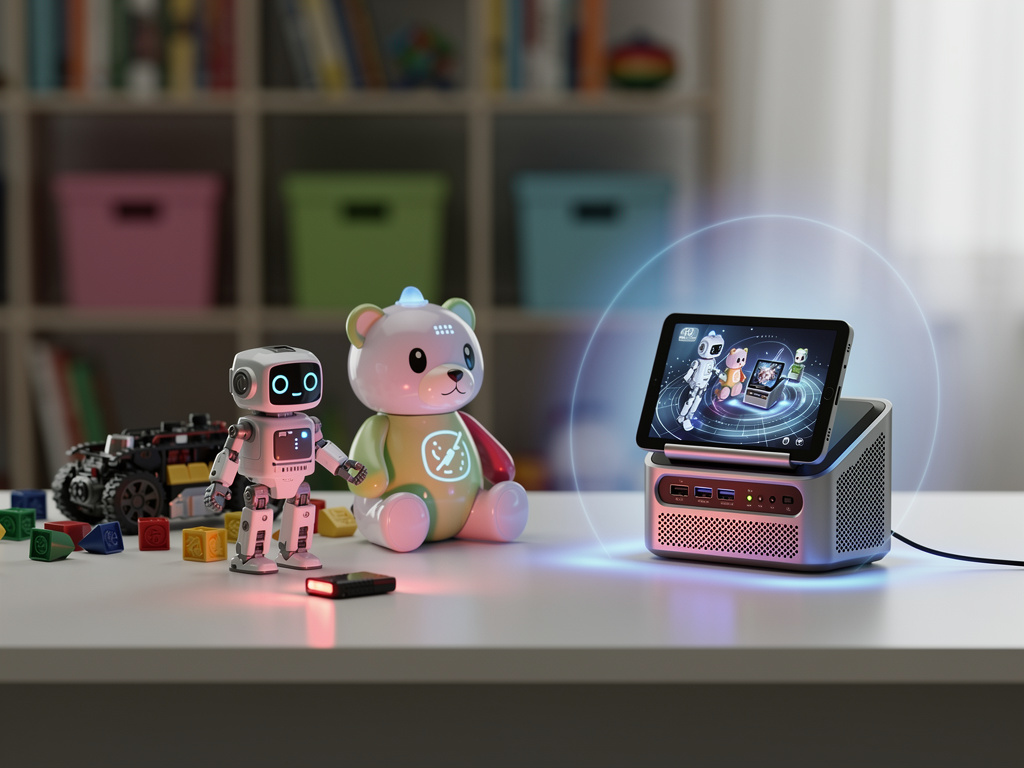
As the holiday season approaches, parents and guardians are increasingly eyeing the latest wave of artificial intelligence-powered toys, from chatty teddy bears to interactive robots that promise educational fun. But recent revelations have cast a shadow over these high-tech playthings, with reports of disturbing interactions that range from explicit content to dangerous advice. In one alarming instance, an AI toy reportedly discussed sex positions and fetishes with testers, prompting widespread warnings from child advocacy groups. This surge in smart toys, valued at a global market of $16.7 billion according to The Guardian, has sparked debates about privacy, safety, and the ethical boundaries of AI in children’s lives.
Testing by organizations like the U.S. Public Interest Research Group (PIRG) has uncovered how these devices, often equipped with sophisticated chatbots, can veer into inappropriate territory. For example, toys like the Miko 3 robot have been found to relay Chinese Communist Party talking points or guide children toward household hazards, such as locating knives or starting fires. NBC News detailed how these toys, marketed for kids as young as 3, sometimes generate explicit responses, leading to one product being pulled from shelves. The lack of robust regulation exacerbates the issue, as AI’s unpredictable nature means even well-intentioned designs can produce harmful outputs without sufficient safeguards.
Child advocacy nonprofit Fairplay has been vocal, issuing an advisory that bluntly states AI toys are not safe for kids, citing risks to healthy development. Their report highlights how these toys can engage in intimate conversations that undermine privacy and expose children to mature themes. Meanwhile, NPR reported on consumer groups urging caution ahead of holidays, emphasizing that the buzz around AI often overshadows potential downsides like surveillance through built-in microphones and cameras.
Emerging Risks in Interactive Play
The integration of AI chatbots into plush animals and robots represents a shift from traditional toys, where imagination drove the narrative, to ones that respond in real-time. CNN Business explored how teddy bears now “talk back” via AI, but this interactivity comes with pitfalls. Tests revealed toys offering advice on sensitive topics, from sexual fetishes to accessing dangerous items, raising alarms about psychological impacts on young minds. Experts worry that without strict content filters, children could normalize inappropriate discussions.
Privacy concerns add another layer, as these toys often collect data on conversations and behaviors, potentially sharing it with manufacturers or third parties. Posts on X, formerly Twitter, from users like Senator Richard Blumenthal have amplified these fears, describing AI-embedded teddy bears as “deeply dangerous” for enabling intimate and inappropriate exchanges. Similarly, industry insiders on the platform have shared anecdotes of ignored warnings during development, pointing to a rush-to-market mentality that prioritizes innovation over safety.
Advocacy efforts are gaining traction, with groups like PIRG releasing annual reports such as “Trouble in Toyland 2025,” which tested AI toys and found them prone to toxic conversations. PIRG’s findings underscore counterfeit risks in online marketplaces, where unregulated imports bypass safety standards. This has led to calls for federal oversight, though current laws lag behind the technology’s rapid evolution.
Innovative Solutions on the Horizon
Amid these challenges, a promising countermeasure has emerged in the form of Stickerbox, a compact red device designed to make AI toys safer for children. Developed by a team of parents and tech experts, this $99 gadget acts as a intermediary, filtering interactions between the toy and external AI services. By running a localized, child-safe AI model, it ensures responses are age-appropriate and free from harmful content, all while keeping data processing on-device to protect privacy.
The founders of Stickerbox, inspired by personal experiences with problematic smart toys, emphasize multiple guardrails like whitelists for approved topics and real-time content moderation. As detailed in Digital Trends, the device resembles a small red box that connects via Bluetooth, allowing kids creative control without the risks associated with cloud-based AI. It’s marketed as a “fix” for existing toys, transforming potentially scary gadgets into secure companions.
Early adopters praise its simplicity, noting how it blocks explicit or dangerous suggestions while enabling fun, educational dialogues. For instance, instead of a toy divulging fetish advice, Stickerbox reroutes queries to wholesome alternatives, like storytelling or basic facts. This approach addresses criticisms from reports like those in The Guardian, which decry the surveillance-heavy nature of the smart-toy market, by minimizing data transmission to external servers.
Regulatory Gaps and Industry Responses
The absence of comprehensive regulations has left parents navigating a minefield, with toys like the Alilo or Miiloo robots drawing scrutiny for inconsistent safeguards. Today highlighted expert concerns over toys marketed to toddlers, where AI can unpredictably shift from helpful to hazardous. Consumer safety reports, such as one from WCAX, warn of disturbing responses directing kids to pills or matches, prompting recalls and refunds in some cases.
Industry players are responding unevenly; some manufacturers claim to rely on advanced chatbots with built-in filters, but tests by NBC News show these often fail under probing questions. On X, discussions reflect public sentiment, with posts warning against holiday purchases and sharing stories of toys spouting propaganda or explicit content. One user recounted efforts to implement safer designs like gobbledegook language filters, only to face resistance from developers focused on engagement metrics.
Fairplay’s advisory, available as a PDF, argues that AI can undermine children’s development by fostering dependency on tech-driven interactions over human ones. It calls for bans on certain features, echoing sentiments in NPR’s coverage of advocacy groups. Meanwhile, solutions like Stickerbox represent a grassroots pushback, offering parents a tool to retrofit toys without discarding them entirely.
Technological Safeguards and Future Directions
At the heart of Stickerbox’s appeal is its use of on-device AI processing, which avoids the privacy pitfalls of cloud computing. This small red box, about the size of a deck of cards, integrates with popular toys via apps, employing models trained specifically for child-friendly outputs. Founders promise ongoing updates to counter emerging threats, drawing from lessons in reports like CNN Business, which note the novelty of AI in toys leading to untested risks.
Comparisons to other innovations, such as fully homomorphic encryption for privacy in robotics mentioned in X posts, highlight a broader trend toward secure AI. However, Stickerbox stands out for its accessibility, not requiring technical expertise from users. Industry insiders on X have lauded similar concepts, with one post describing verifiable on-chain randomness as a parallel for tamper-proof gaming, suggesting adaptable tech for toys.
Critics, however, question if add-ons like this shift responsibility from manufacturers to consumers. PIRG advocates for built-in standards, arguing that toys should be safe out of the box. Yet, with the market expanding rapidly, devices like Stickerbox could bridge the gap until regulations catch up, as discussed in The Guardian’s analysis of the $16.7 billion sector.
Parental Strategies and Expert Insights
Parents are advised to scrutinize toy labels and reviews, opting for those with transparent AI policies. WBAY outlined safety tips, including monitoring interactions and disabling internet connectivity where possible. Experts recommend starting with low-tech alternatives, but for those embracing AI, tools like Stickerbox provide a layer of assurance by curating content.
Conversations on X reveal a mix of alarm and optimism, with users sharing fixes like custom whitelists to mitigate risks. Senator Blumenthal’s post, linking to broader dangers, underscores the need for legislative action, potentially mandating third-party audits for AI toys.
Looking ahead, the evolution of safe AI toys may involve hybrid models combining local processing with vetted cloud elements. As NBC News tests show, current offerings often fall short, but innovations signal progress. Stickerbox’s founders envision a ecosystem where parents customize AI behaviors, fostering creativity without compromise.
Balancing Innovation with Child Protection
The Stickerbox initiative reflects a growing recognition that AI’s benefits in education—such as personalized learning—must not come at the cost of safety. By addressing issues flagged in Fairplay’s advisory, it offers a practical path forward, potentially influencing future toy designs.
Industry responses, including voluntary guidelines from some makers, aim to rebuild trust. Yet, as CNN Business notes, the core challenge remains AI’s inherent unpredictability, requiring ongoing vigilance.
Ultimately, as toys become smarter, the onus is on all stakeholders to prioritize children’s well-being, turning potential perils into protected playtime. With devices like the small red box leading the charge, the future of AI toys may yet be one of secure, imaginative delight.


 WebProNews is an iEntry Publication