
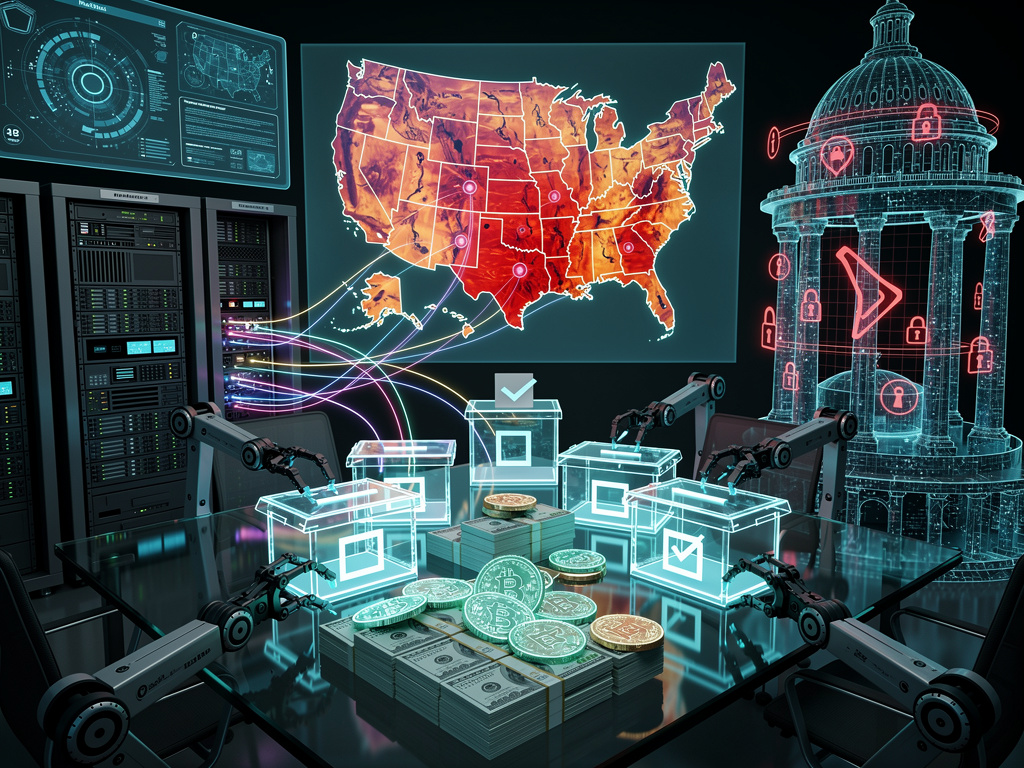
Silicon Valley’s AI powerhouses are unleashing a torrent of cash into super PACs, targeting the 2026 midterms to cement favorable policies amid surging state-level restrictions. Leading the Future, a bipartisan super PAC launched last summer with over $100 million in commitments, mirrors the crypto industry’s 2024 triumph through Fairshake, which became the top corporate donor and backed over 50 winning candidates. Backers include Andreessen Horowitz co-founders Marc Andreessen and Ben Horowitz, OpenAI President Greg Brockman and his wife Anna, Palantir co-founder Joe Lonsdale, Perplexity AI, and SV Angel’s Ron Conway, positioning the group as the political vanguard for unchecked AI advancement. (CNBC)
The strategy emphasizes electing pro-innovation candidates across parties while ousting perceived threats, focusing on states like New York, California, Illinois, and Ohio. Leading the Future leaders John Vlasto, former press secretary to Sen. Chuck Schumer and chief of staff to ex-NY Gov. Andrew Cuomo, and Zac Moffatt, advisor to Mitt Romney and Tim Scott, draw from Fairshake’s playbook of issue-agnostic ads on borders and China to sway races indirectly. Meta joined the fray last year with its own super PAC, pledging tens of millions through entities like Meta California and American Technology Excellence Project to champion U.S. tech dominance. (WIRED)
Silicon Valley Mirrors Crypto’s Electoral Triumph
Fairshake’s 2024 success, including $800,000 daily ad spends in Ohio’s Senate race that helped defeat crypto-friendly Bernie Moreno in favor of Sherrod Brown, sets the template. AI groups aim to replicate this by threading China competition narratives into campaigns, warning that stifling rules hand superiority to Beijing. Leading the Future opposed New York’s RAISE Act—signed into law by Gov. Kathy Hochul in December despite industry pushback—as a ‘bureaucratic patchwork’ favoring adversaries. Public polls underscore tensions: Pew Research and Gallup show Americans more worried than excited about AI’s job, privacy, and bias impacts. (NOTUS)
Sen. Mark Warner (D-Va.) predicts AI will dominate 2026 and 2028 races, stating, “I am making a major bet… this will be an issue in 2026, and even much more so in 2028.” JPMorgan CEO Jamie Dimon cautions, “It may go too fast for society,” urging retraining akin to trade adjustment assistance amid forecasts of workforce shrinkage. Brookings’ Darrell West highlights fears of job loss, privacy invasion, and bias, while UCLA’s Rick Hasen anticipates industry sway despite Trump executive order challenges. (CNBC)
Opening Salvos in Key Races
Leading the Future fired early shots, spending over $118,000 via affiliate Think Big PAC against New York Assemblymember Alex Bores in the Democratic primary for Manhattan’s 12th district. Bores co-sponsored the RAISE Act mandating safety protocols and incident disclosures for major AI firms; the PAC branded him pushing ‘ideological and politically motivated legislation’ that would ‘handcuff’ U.S. AI edge. A separate ad backs Texas GOP primary candidate Chris Gober, a former Elon Musk and Sen. Ted Cruz aide, touting him as a ‘Trump conservative’ promoting American tech investment to beat China—without direct AI mention. (CNBC)
In November, Leading the Future launched a $10 million campaign urging Congress for a national AI framework preempting state laws, aligning with Trump’s December 2025 executive order for a unified approach—facing legal hurdles over federalism. The White House expressed frustration with the PAC’s bipartisan tilt and Schumer ties, with officials questioning, “AI has no better ally than President Trump, so it’s inexplicable why any company would put money into the midterms behind a Schumer-operative who is working against President Trump to elect Democrats.” (NBC News)
Counteroffensives and Bipartisan Clashes
Opposition mobilized swiftly: Former Reps. Chris Stewart (R-UT) and Brad Carson (D-OK) launched Public First in December, a bipartisan network with Jobs and Democracy PAC for Democrats and Defending Our Values PAC for Republicans, pledging half of Leading the Future’s sum to elect regulation advocates amid job loss, mental health, and privacy alarms. Carson noted broad AI sector involvement ‘far beyond.’ Meta VP Brian Rice leads state efforts, countering over 1,100 AI bills in 2025, mostly from New York, New Jersey, Texas, and California. (Built In)
Elon Musk donated $10 million to a Kentucky Senate race replacing Mitch McConnell, hinting broader influence, while Greg Brockman gave $25 million to MAGA Inc. for GOP midterm fights. Fairshake holds $116 million for 2026, sharing donors like Andreessen Horowitz. Issue One reports Big Tech’s $50 million lobbying in 2025’s first nine months, blending with electoral pushes. (Business Insider)
State-Level Power Plays Intensify
Meta targets California governor’s race and beyond, arguing Sacramento rules ‘could stifle innovation, block AI progress.’ Y Combinator formed Little Tech PAC for startups against Big Tech dominance on AI policy. Leading the Future affiliate American Mission PAC supported Gober; Build American AI, a dark-money offshoot, amplifies advocacy. POLITICO notes tech’s data center defense, with millions flipping narratives from resource hogs to job creators amid voter backlash. (POLITICO)
Over $200 million pledged across new PACs like those from The New York Times reports, instantly elevating AI in midterms. Washington Post details Silicon Valley’s push against philosophical AI risk debates. TechCrunch highlights PACs’ digital ads and donations against strict rules. As races heat, industry bets on crypto-style wins to secure deregulation, national preemption, and global lead—risking public backlash per experts like Hasen. (The New York Times)
High Stakes for Innovation and Oversight
Trump’s order threatens funding cuts and litigation against state AI laws, but courts loom. Public First tests money’s limits in Bores’ race amid skepticism. Warner’s ‘issue of our time’ forecast aligns with Dimon’s speed warnings. With OpenSecrets tracking spends, 2026 hinges on whether AI cash trumps voter fears, reshaping federal and state rules for years. (The Washington Post)


 WebProNews is an iEntry Publication