
Predicting the Inferno: AI’s Bold Leap in Taming EV Battery Fires
Electric vehicles promise a cleaner future, but their lithium-ion batteries have long harbored a fiery risk. Fires sparked by thermal runaway—a chain reaction where overheating cells ignite neighbors—have made headlines, from garage infernos to highway blazes. These incidents not only endanger lives but also slow the adoption of EVs, as consumers and regulators grapple with safety concerns. Now, a breakthrough from a high-tech firm aims to flip the script, moving from after-the-fact firefighting to foresight-driven prevention.
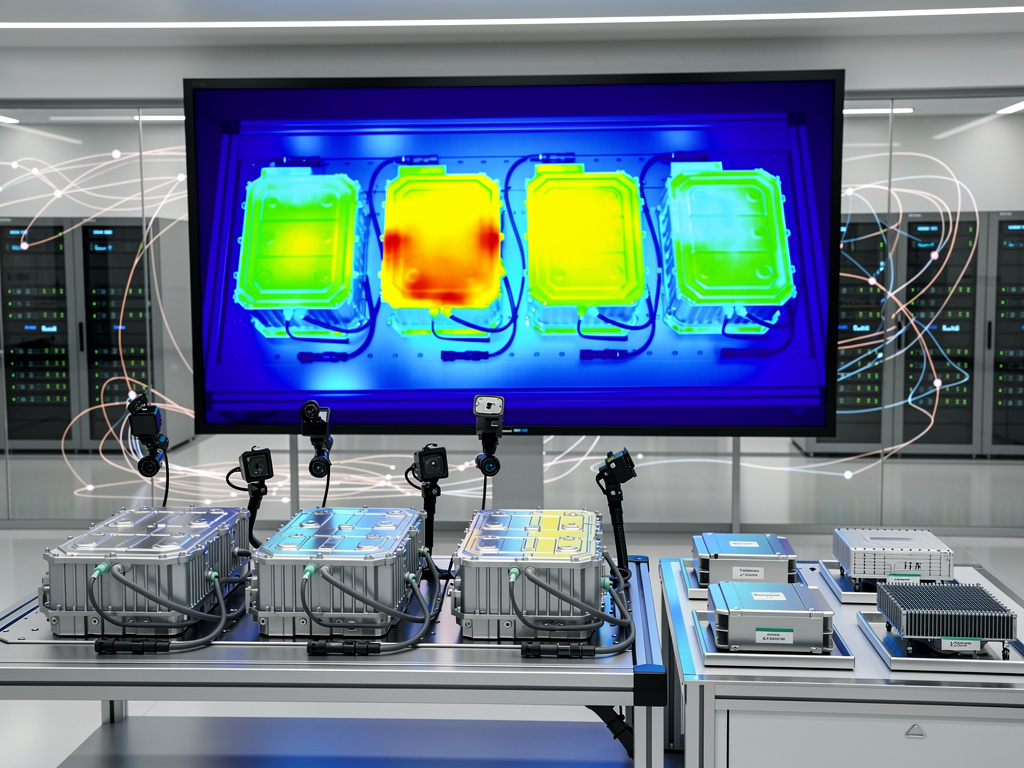
The innovation comes courtesy of Teledyne FLIR, a leader in thermal imaging, which has unveiled an AI-powered system designed to detect battery anomalies before they escalate. As detailed in an article from The Cool Down, this technology employs advanced sensors and machine learning to monitor battery temperatures in real time, predicting potential failures with unprecedented accuracy. By analyzing heat patterns, it shifts the paradigm from reactive measures, like traditional fire suppression, to predictive interventions that could halt disasters in their tracks.
This isn’t just a gadget; it’s a comprehensive thermal management platform integrated into EV designs. Engineers can embed FLIR’s infrared cameras directly into battery packs, feeding data into AI algorithms that flag irregularities such as unusual hot spots or rapid temperature spikes. The system promises to integrate seamlessly with existing vehicle software, alerting drivers or even autonomously shutting down power to compromised cells.
Emerging Tech Frontiers in Battery Safety
Industry experts see this as part of a broader wave of advancements. For instance, recent reports highlight how companies are pushing boundaries in battery chemistry to inherently reduce fire risks. A piece from PV Magazine USA notes that longer-duration storage and safety-focused procurement are driving alternative chemistries toward commercial scale, including solid-state batteries that promise greater stability.
Solid-state tech, in particular, is gaining traction. Verge Motorcycles showcased at CES 2026 a motorcycle with solid-state batteries enabling 10-minute charging and up to 370 miles of range, as covered by TechAeris. This development underscores a shift where fire prevention is baked into the battery’s core structure, minimizing liquid electrolytes that fuel thermal runaway. Meanwhile, a solid-state EV battery maker recently went public after demonstrating over 745 miles on a single charge, per Electrek, signaling investor confidence in safer, longer-lasting power sources.
Beyond hardware, predictive methods are evolving through data analytics. Posts on X from battery research accounts discuss computational fluid dynamics (CFD) models that simulate fire characteristics under various conditions, such as different cathode chemistries or CO2-enriched environments. These simulations help refine AI systems like FLIR’s, allowing for more precise forecasting of failure modes.
Global Investments and Policy Shifts
The push for safer batteries isn’t isolated; it’s fueled by massive investments and geopolitical maneuvers. Reuters’ Breakingviews column explains how U.S. efforts to reshore battery production, spearheaded by policies under President Joe Biden, are creating overcapacity stateside. Korean giants like LGES, Samsung, and SK On have poured $20 billion into American facilities, positioning them to challenge Chinese dominance, as outlined in that Reuters analysis.
This reshoring coincides with regulatory pressures. In the wake of high-profile fires, agencies are mandating stricter safety standards. For example, the Firehouse blog on fire service trends for 2026 discusses sound-based suppression and aerial drones, but emphasizes innovative batteries as a key trend, according to Firehouse. Fire departments are adapting, with X posts from firefighting accounts highlighting the challenges of extinguishing lithium-ion blazes, which burn hotter and reignite easily, often requiring thousands of gallons of water per incident.
On the manufacturing front, CATL, the world’s top EV battery producer, plans to launch sodium-ion cells in 2026, which could offer inherent fire resistance due to their non-flammable electrolytes. Electrek reports this move as a game-changer, potentially dominating markets where safety is paramount, per their Electrek coverage. Such innovations complement predictive tech, creating layered defenses against fires.
Challenges in Implementation and Real-World Testing
Adopting these technologies isn’t without hurdles. Integrating AI-driven monitoring into existing EV fleets requires retrofitting, which could be costly for automakers. Industry insiders point out that while FLIR’s system excels in new models, older vehicles remain vulnerable. A 2025 recap from InsideEVs lists breakthroughs like improved cell designs but also setbacks, such as supply chain disruptions, as noted in InsideEVs.
Real-world testing is crucial. X discussions from energy storage experts reference patented solutions like Redwood Materials’ “Battery Bin” for safe collection and monitoring, which includes fire safety features. These bins use automated sensing to pack and monitor mixed batteries, preventing incidents during recycling—a growing concern as EV adoption surges.
Moreover, environmental factors complicate predictions. Research shared on X about battery thermal management systems stresses the need for suppression tech that addresses root causes, like overcharging or physical damage. A study in Batteries MDPI explores advances in preventing thermal runaway, emphasizing active cooling and early detection, as detailed in their Batteries MDPI publication, though specific articles link back to broader journal insights.
Industry Sentiment and Future Trajectories
Sentiment on platforms like X reflects cautious optimism. Posts from tech enthusiasts praise solutions like FCL-X’s fire suppressant, which claims to douse a 57 kWh battery fire in 15 minutes, positioning it as a cost-effective fix for the industry. Others warn of persistent risks, citing incidents in Belgium where hybrid vehicle batteries nearly caused catastrophes, underscoring the need for national training guidelines.
Amprius Technologies provides context on lithium-ion dominance, racing toward better performance and sustainability, as per their Amprius Technologies overview. Yet, the real test lies in scaling these technologies. BatteryTechOnline’s insights into the 2025 market highlight growth trends, with SNE Research forecasting expanded adoption of safer chemistries, according to BatteryTechOnline.
Looking ahead, the convergence of AI prediction, solid-state batteries, and global investments could redefine EV safety. Heatmap News previews 2026 models from Chevy, Nissan, and Rivian that incorporate advanced fire-prevention features, signaling a maturing market, as reported in Heatmap News.
Pioneering Predictive Models and Collaborative Efforts
At the heart of FLIR’s approach is a shift to predictive analytics, drawing from vast datasets of battery behavior. By training AI on historical fire data, the system anticipates failures with high precision, potentially reducing incidents by up to 80%, based on internal simulations. This mirrors broader efforts, like those from IDTechEx, which analyze thermal management materials for lithium-ion storage, addressing fire impacts through passive and active tech, as explored in their IDTechEx reports.
Collaborations are key. Automakers are partnering with tech firms to embed these systems. For instance, Korean investments in U.S. production, as previously referenced in Reuters, facilitate joint ventures that integrate predictive tools directly into assembly lines. X posts from HackerNoon discuss physics-informed AI for battery failure prediction, turning data into actionable safety measures.
However, scalability remains a debate. While startups innovate, established players like CATL dominate with economies of scale. Their sodium-ion push, noted in Electrek, could lower costs while enhancing safety, but requires infrastructure adaptations.
Economic Implications and Market Dynamics
The economic stakes are high. Safer batteries could accelerate EV market penetration, projected to reach millions of units by 2030. Yet, fire risks have led to insurance hikes and regulatory scrutiny, impacting sales. FLIR’s tech addresses this by providing verifiable safety data, potentially lowering premiums.
From a supply chain perspective, reshoring efforts reduce dependency on foreign entities, fostering innovation hubs in the U.S. The overcapacity mentioned in Reuters could drive down prices, making advanced safety features more accessible.
X conversations also touch on recycling’s role, with Redwood’s bin innovation preventing fires during end-of-life handling, a critical step in sustainable battery ecosystems.
Innovators Leading the Charge
Pioneers like Teledyne FLIR are not alone. Amprius and others are exploring silicon-anode batteries for higher energy density with reduced fire risk. Industry reports from PV Magazine USA predict that safety-driven procurement will prioritize these alternatives.
Fire service adaptations, as in Firehouse, include drones for rapid response, complementing predictive tech. X posts from secret firefighter accounts emphasize training for lithium fires, advocating for tech integration.
Ultimately, this ecosystem of innovations— from AI monitoring to novel chemistries—positions the EV sector for a safer era. As technologies mature, the once-dreaded battery fire may become a relic, paving the way for widespread electrification without the shadow of infernos.


 WebProNews is an iEntry Publication