
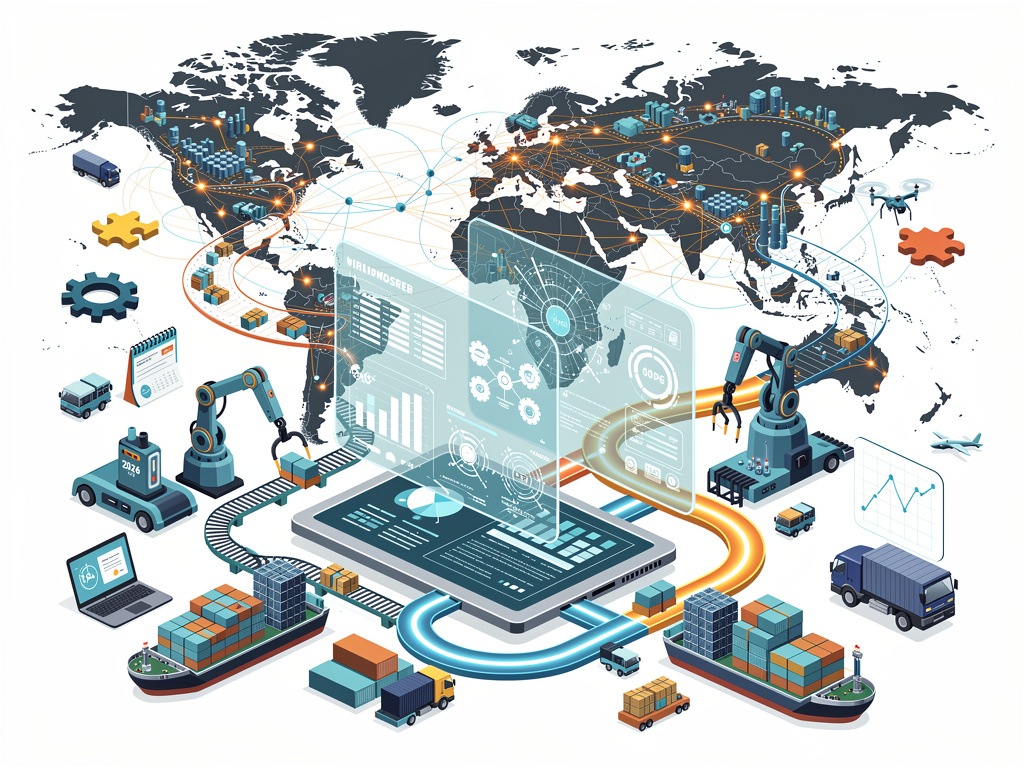
Global supply chains face mounting pressures from rising customer demands, broader product assortments, and tighter delivery timelines amid persistent volatility. Operations falter not from insufficient staff but from overwhelmed decision-making capacity, as retiring veterans depart with invaluable institutional knowledge and newcomers confront intricate, fast-evolving scenarios. “Operations don’t fail because there aren’t enough people on the floor. They struggle because the pace and complexity of decisions have outgrown the tools and processes we’ve given the workforce,” states a report in Global Trade Magazine.
The newest AI systems shift focus from full automation to real-time decision support, integrating data on labor, inventory, transport, schedules, and constraints to deliver actionable insights. Planners gain trade-off evaluations, supervisors receive early warnings, and operators get priority directives, allowing humans to emphasize execution, oversight, and refinement. This partnership preserves human accountability while AI manages signal overload.
AI-augmented roles free workers from constant firefighting: planners move beyond historical fixes, supervisors escape perpetual exceptions, and operators validate guidance amid flux. Essential skills evolve to include AI tool proficiency, trust in outputs tempered by anomaly detection, grasp of decision interlinks, and agility with shifting priorities. Training via simulations and explanations accelerates adoption, as “when people understand the ‘why’ behind recommendations, collaboration improves quickly,” per Global Trade Magazine.
Workforces Under Siege
Distribution and manufacturing teams grapple with surging orders, SKUs, exceptions, and regulations yearly. Supervisors juggle labor shortfalls, stock imbalances, delays, and gear limits, while operators navigate diverse mixes and convoluted flows. Traditional alerts presume ample expertise and bandwidth, eroded by retirements. A Supply Chain Dive survey reveals two-thirds of U.S. hiring leaders plan headcount growth in early 2026—the highest since 2020—yet over a third report unfilled roles, with 50% citing skill deficits over compensation.
AI complexities rank as top barriers, with 39% of headcount cutters blaming tech advances. Express Employment Professionals and Harris Poll data underscore applicants’ experience gaps, complicating informal skill assessments. Economic caution tempers expansion, per ManpowerGroup, while Korn Ferry flags entry-level and administrative disruptions.
This strain demands hybrid fortification. “The issue most warehouses face today isn’t labor headcount. It’s decision capacity,” notes Global Trade Magazine, positioning AI as the equalizer for sustainable operations.
Decision Engines Ignite
Modern AI processes vast signals into precise actions, excelling at prioritization, threat spotting, and adjustments. Benefits span rapid choices, proactive jam clearance, even workloads, eased cognitive loads, heightened safety through explicit directives, and collective intelligence over solo feats. Turnover dips as roles turn viable. Amazon deploys AI in human-in-the-loop logistics, curbing excess handling and optimizing placements for 2024 peaks, per Logistics Viewpoints.
Walmart leverages AI for forecasting via history, locales, and weather, empowering restock calls. Toyota equips factory staff with Google Cloud platforms to craft machine learning for gear oversight, slashing downtime and reclaiming over 10,000 labor hours yearly. These cases highlight AI as copilot, not autopilot, fostering trust via transparency and intervention rights.
“AI takes on the heavy lifting of prioritization, risk detection, and plan adjustment so people can focus on execution, leadership, and improvement,” affirms Global Trade Magazine. Outcomes include preemptive fixes and resilient teams.
Skill Forges Ahead
Upskilling proves vital: KPMG leaders Brian Higgins and Lenny LaRocca stress structured data literacy and analytics programs, pairing scientists with analysts for AI synergy, as detailed in Supply Chain Management Review. “AI agents will become embedded team members across organizations and thus, the imperative to upskill workers and have processes in place to govern, manage and develop agents,” they write.
World Economic Forum’s 2025 report forecasts 39% core skill shifts by 2030 from AI, prioritizing analytical thought, tech fluency, and flexibility; half of firms aim AI-centric pivots, two-thirds seek AI talent, 40% anticipate cuts in routine tasks, per Supply Chain Management Review. “If you do not know AI, you are not going to get hired,” warns an academic panelist.
Unilever trained 23,000 in AI tools for 25% project gains. ASCM updates CPIM 8.0 for AI forecasting; Ohio State and Arkansas programs embed it curricula-wide. Governance curbs risks like shadow AI, echoing Samsung’s ChatGPT ban post-leak.
Agentic Allies Emerge
Agentic AI evolves to dynamic workflows, acting as digital partners in procurement, logistics, support. Stanford’s 2025 AI Index logs $34 billion GenAI investment in 2024, up 18.7%; 78% firms used AI last year, per World Economic Forum. Daily users report peak engagement yet note coworker disconnects.
Inbound Logistics outlines emergent roles: AI risk auditors, robot fleet orchestrators, prompt engineers translating lore to logic, labor gap strategists forecasting shortages. “Gig workers using AI tools as dark-warehouse custodians and logistics pros evolving into warehouse AI specialists,” it projects, birthing human-AI ecosystems.
“The future of supply chain management is inextricably linked with AI,” declare Messrs. Higgins and LaRocca. Local-for-local production pairs with AI for agility amid volatility.
New Roles Redefine Duty
IDC predicts 40% G2000 roles engage AI agents by 2026, per its Futurescape, risking $5.5 trillion from gaps. PwC foresees agentic AI absorbing mid-tier work, hourglassing knowledge tiers. Cisco’s Vinod Muthukrishnan envisions multi-agent orchestration spawning brand concierges by year-end.
Supply Chain Dive notes skills trump pay as hurdles; Robert Half spots job-shift surges amid mismatches. “AI is evolving from a tool to a collaborative teammate,” states Supply Chain Management Review. McKinsey pegs GenAI at $2.6-$4.4 trillion value, led by chains.
Success hinges on machine velocity fused with human discernment. “The tools themselves won’t define the next generation of supply chain work. What will matter is how well organizations combine machine speed with human judgment,” concludes Global Trade Magazine, heralding adaptive enterprises.


 WebProNews is an iEntry Publication