
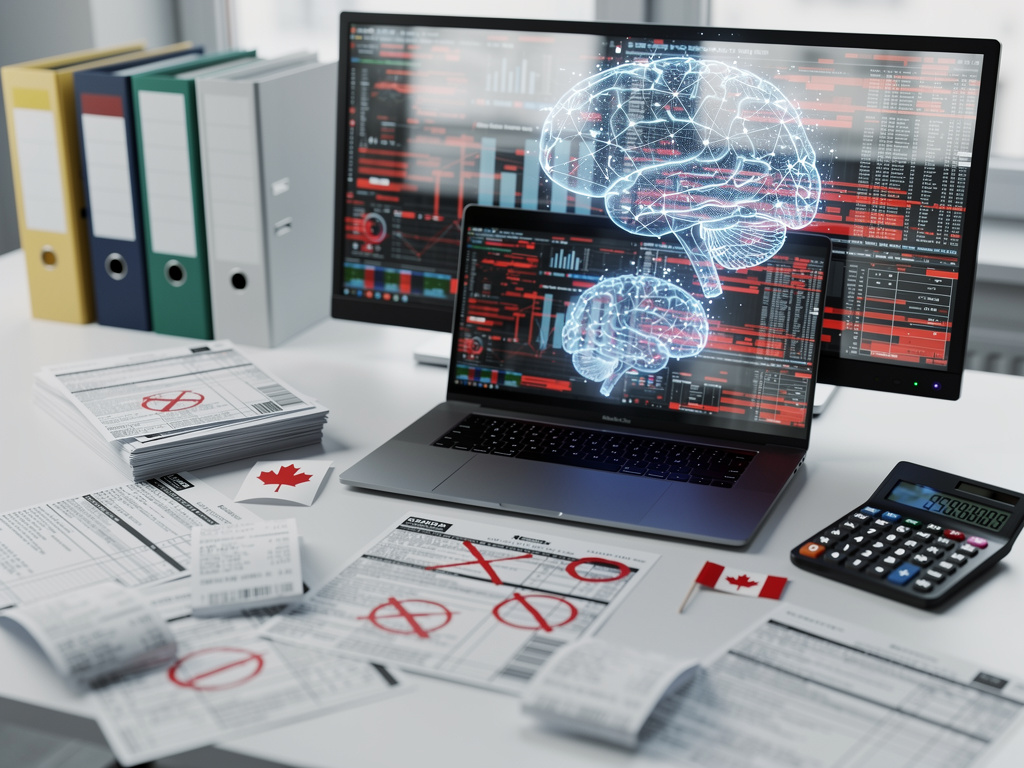
Canadian taxpayers are increasingly turning to general-purpose artificial intelligence tools like ChatGPT for tax and bookkeeping advice, but accountants warn this rush is spawning a wave of costly errors that could invite penalties and heightened scrutiny from the Canada Revenue Agency. A 2025 survey of 500 accountants and bookkeepers commissioned by Dext revealed that 76% observed a rise in business clients using large language models for such tasks, spotting regular mistakes in the process, according to a report in Yahoo Finance Canada.
Common pitfalls include misinterpreting business expenses (44% of respondents), incorrect tax claims (43%), flawed personal tax planning (36%), payroll miscalculations (35%) and erroneous business tax strategies (35%). These issues not only drain accountants’ time—44% spend up to three hours monthly correcting them, per CPA Practice Advisor—but also expose users to broader risks like fines and agency audits.
Overhyped Promises Fuel False Confidence
“There’s always risk of errors posed when you’re using generative AI tools for things like calculation and automation,” said Melissa Robertson, principal of research and thought leadership at CPA Canada, as quoted in the Yahoo Finance Canada article. She highlighted the need for rigorous review of AI outputs, especially as transaction volumes grow, a caution echoed across the profession amid tools’ tendency to overpromise reliability.
Ryan Minor, CPA Canada’s director of tax, noted AI’s value in document location but stressed its limitations: “If you’re not in the industry and you don’t have a hunch what the answer would be, you may be misled,” he told Yahoo Finance Canada. Jason Heath, managing director of Objective Financial Partners, added that clients often present AI-generated insights that are “mostly correct but may have gaps, fail to apply to specific situations, or confuse U.S. and Canadian tax rules.”
Real-World Errors Hit Hard
A prime example involves sales taxes on short-term rentals like Airbnb, where AI misguidance can lead to liabilities in the hundreds of thousands, lingering undetected for years. “The CRA isn’t going to provide leniency because you relied on AI advice that you thought was correct,” Heath warned in the Yahoo Finance Canada piece, treating it as no different from flawed professional counsel.
Dext’s survey projected escalating dangers into 2026: 27% foresaw higher insolvency risks for businesses, 42% misuse of AI for fraudulent claims, 40% more fines and penalties, and 38% increased CRA audits from faulty filings. Productivity hits are mounting, with 27% of accountants dedicating four to six hours monthly to fixes, per CPA Practice Advisor.
CRA’s Own AI Struggles Amplify Risks
The Canada Revenue Agency’s track record with AI offers little reassurance. Its $18 million Charlie chatbot delivered wrong answers 56% of the time in Auditor General Karen Hogan’s tests, achieving only 44% accuracy, as detailed in a National Post report. Despite over seven million conversations, responses were often brief and context-poor, with a later generative AI upgrade claiming 70-90% accuracy—still far from foolproof.
Call center woes compound the issue: CRA agents answered just 17% of individual tax queries accurately, per an Auditor General audit cited in CBC News. Officials like Assistant Commissioner Melanie Serjak are eyeing AI and training upgrades, but experts such as Anatoliy Gruzd urge fixing human accuracy first, warning against over-reliance, according to Montreal CityNews.
Accountant Time Sinks and Client Costs Mount
Accountants face mounting bills for remediation, billing clients extra while grappling with AI-fed misconceptions. CPA Canada’s Robertson emphasized in Yahoo Finance Canada: “I think there’s a lot of overpromise in what some AI tools can do right now, and there is a lot of risk when organizations just take those tools at face value.” Free, instant AI appeals amid professional fees, but poor prompts yield misleading results, as Heath observed.
The CRA deploys its own AI for compliance, using data analytics for audits and penalties, per TaxPage.com. This digital vigilance on e-transfers, crypto and more means AI-induced filing errors could trigger swift enforcement, with predictive models prioritizing high-risk returns.
Professional Safeguards in a Tool-Filled World
Firms like M. Bloomberg Professional Corporation stress double-checking AI outputs against CRA bulletins to avoid bias or missed deductions, maintaining CPA standards of integrity, as outlined on their blog. Tools like TaxGPT promise cited responses from official sources, but general AI’s pitfalls persist.
Experts advocate AI as a research aid, not a replacement. CPA Canada warns excessive reliance erodes critical knowledge, per their guidance. Taxpayers must verify outputs, lest they face CRA’s unyielding stance on errors, regardless of source.
Path Forward Amid Rising Stakes


 WebProNews is an iEntry Publication