
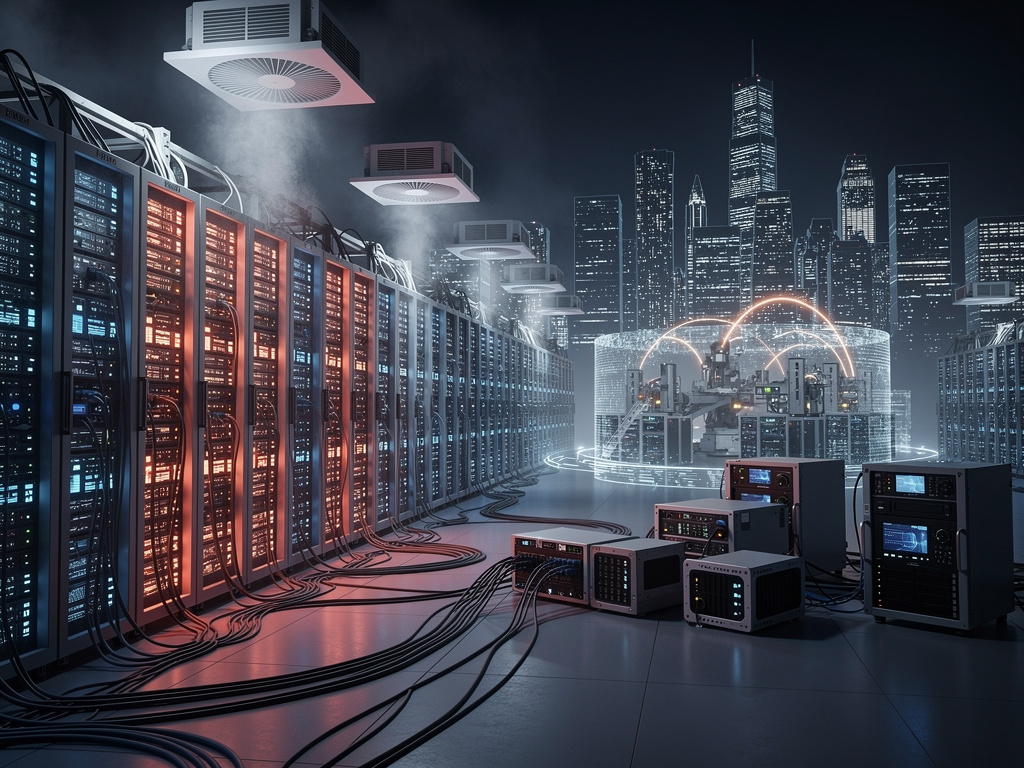
AI’s Relentless Hunger: Fortifying Corporate Tech Against the Infrastructure Onslaught
The surge of artificial intelligence is reshaping corporate operations, but it’s also exposing vulnerabilities in the very foundations that support it. Companies racing to integrate AI are discovering that their existing setups—networks, data centers, and power supplies—are buckling under unprecedented demands. This isn’t just a technical hiccup; it’s a strategic imperative that could determine which firms thrive in the coming decade.
At the heart of the issue is AI’s insatiable appetite for computational power. Training large language models and running inference tasks require massive amounts of electricity and specialized hardware, often far beyond what traditional IT environments were designed to handle. Data centers, once reliable workhorses, are now hotspots for energy consumption, with AI workloads pushing them to the brink of capacity.
Recent reports highlight the scale of this challenge. For instance, a study from Deloitte Global estimates that AI could help avoid up to $70 billion in direct natural disaster costs to infrastructure by 2050, but only if companies invest wisely in resilient systems. Without such foresight, the strain could lead to outages, increased costs, and lost opportunities.
Navigating the Power Crunch
The energy demands of AI are staggering. A single AI query can consume ten times the electricity of a standard web search, according to posts circulating on X that echo warnings from energy regulators about potential blackouts. This reality is forcing companies to rethink their power strategies, from sourcing renewable energy to optimizing data center locations.
Infrastructure providers are feeling the heat too. As AI adoption accelerates, the need for low-carbon energy solutions becomes critical, as noted in a piece from the World Economic Forum. Firms must balance rapid deployment with sustainability goals, ensuring that their tech backbone doesn’t contribute to environmental degradation.
Moreover, the shift toward production-scale AI is revealing inadequacies in existing computing setups. Enterprises are finding that fragmented systems hinder scalability, prompting a reevaluation of hardware investments. A report from Deloitte’s Tech Trends series points out that as AI moves beyond proofs of concept, the underlying infrastructure must evolve to support inference economics efficiently.
Strategies for Building Robust Foundations
To counter these pressures, companies are adopting multifaceted approaches. One key tactic involves modernizing data centers with AI-ready architecture, including advanced cooling systems and high-density servers. This not only handles the thermal output from GPUs but also improves overall efficiency.
Hybrid cloud environments are emerging as a vital tool for resilience. By distributing workloads across on-premises, public, and edge computing resources, firms can mitigate risks associated with single points of failure. This flexibility allows for better load balancing during peak AI usage, reducing the likelihood of disruptions.
Insights from CIO emphasize the importance of getting the basics right: robust networking, scalable storage, and redundant power supplies. Leaders are advised to invest in architectures that prioritize continuity, ensuring AI initiatives don’t falter due to infrastructural weaknesses.
Harnessing AI for Its Own Defense
Ironically, AI itself is becoming a weapon in the fight for infrastructure resilience. Predictive analytics powered by machine learning can forecast potential failures, from overheating components to network bottlenecks, allowing preemptive maintenance. This proactive stance is detailed in a systematic review published in Frontiers in Climate, which explores how AI enhances system adaptability to climate-induced stresses.
Companies are also leveraging AI for optimizing resource allocation. Algorithms can dynamically adjust power usage based on real-time demands, minimizing waste and extending hardware lifespan. This is particularly crucial in sectors like supply chain management, where IoT integration with AI bolsters resilience against disruptions.
A Medium article by Jose Halerio Soares de Siqueira Nario discusses how AI and IoT serve as enablers for supply chain fortitude in the U.S., highlighting strategic implementations that reduce vulnerabilities. By embedding intelligence into logistics networks, firms can respond swiftly to strains, whether from AI demands or external shocks.
The Investment Imperative
The financial stakes are high. Projections indicate that AI-equipped data centers will require trillions in capital expenditures by 2030, as per research from AInvest. This “infrastructure reckoning” demands that executives view compute strategy not as a cost center but as a competitive edge.
Failing to address these needs could erode long-term viability. The World Economic Forum warns that tech companies must mitigate their impact on natural resources to safeguard resilience, a sentiment echoed in recent news from ANI News. Ignoring this could lead to regulatory backlash and operational fragility.
Strategic resilience through AI and technology yields real returns on investment, according to BDO. Firms that integrate these elements see improved efficiency and innovation, turning potential pitfalls into opportunities for growth.
Edge Computing as a Resilience Booster
Shifting some AI processing to the edge—closer to where data is generated—alleviates central infrastructure strain. This decentralized approach reduces latency and bandwidth needs, making systems more robust against network failures. It’s especially beneficial for industries like manufacturing and healthcare, where real-time decisions are paramount.
However, edge strategies require careful orchestration. Security becomes a top concern, as distributed nodes can introduce new attack vectors. Companies must implement stringent protocols to protect these endpoints, ensuring that resilience gains aren’t offset by vulnerabilities.
Posts on X from users like Lukas Ekwueme underscore the fragility of the AI revolution, noting how energy strains from data centers heighten blackout risks. This public discourse reflects broader industry anxieties, pushing firms toward diversified energy portfolios.
Overcoming Organizational Hurdles
Beyond technology, cultural and organizational shifts are essential. Teams accustomed to traditional IT must upskill in AI-specific management, fostering a mindset geared toward agility and foresight. Leadership plays a crucial role in championing these changes, aligning departments around resilience goals.
Collaboration with external partners is another pillar. Alliances with cloud providers and energy firms can provide access to cutting-edge infrastructure without prohibitive upfront costs. This ecosystem approach, as discussed in a Frontier Enterprise article, shows how AI workloads are fundamentally altering data management paradigms.
Microsoft’s initiative for community-first AI infrastructure, detailed in their On the Issues blog, exemplifies responsible development. By prioritizing local impacts, companies can build goodwill and sustainable operations.
Future-Proofing Against Evolving Threats
As AI evolves, so too will the strains it imposes. Emerging threats like quantum computing could further disrupt infrastructure norms, necessitating ongoing vigilance. Firms should establish dedicated task forces to monitor trends and adapt strategies accordingly.
Sustainability remains a core thread. Integrating green practices, such as carbon capture in data centers, addresses both environmental and operational resilience. Uptime Intelligence, referenced in a NetworkWorld piece shared on X, highlights how power shortages and AI automation are redefining digital growth.
Ultimately, resilience isn’t a one-time fix but a continuous journey. By embedding AI thoughtfully into their core operations, companies can transform potential weaknesses into strengths, ensuring they not only survive but excel in an AI-dominated era.
Case Studies in Action
Real-world examples illuminate successful strategies. One tech giant revamped its data centers with AI-optimized cooling, slashing energy use by 30% while boosting capacity. This move, inspired by Deloitte’s analysis on minimizing disaster costs, demonstrates tangible benefits.
In the financial sector, a major bank adopted hybrid models to handle AI-driven fraud detection, maintaining uptime during high-demand periods. Such implementations underscore the value of tailored approaches over generic solutions.
Looking ahead, the interplay between AI and infrastructure will define corporate success. Firms that anticipate and adapt to these dynamics will lead, while laggards risk obsolescence. The path forward demands innovation, investment, and an unwavering commitment to resilience.


 WebProNews is an iEntry Publication