
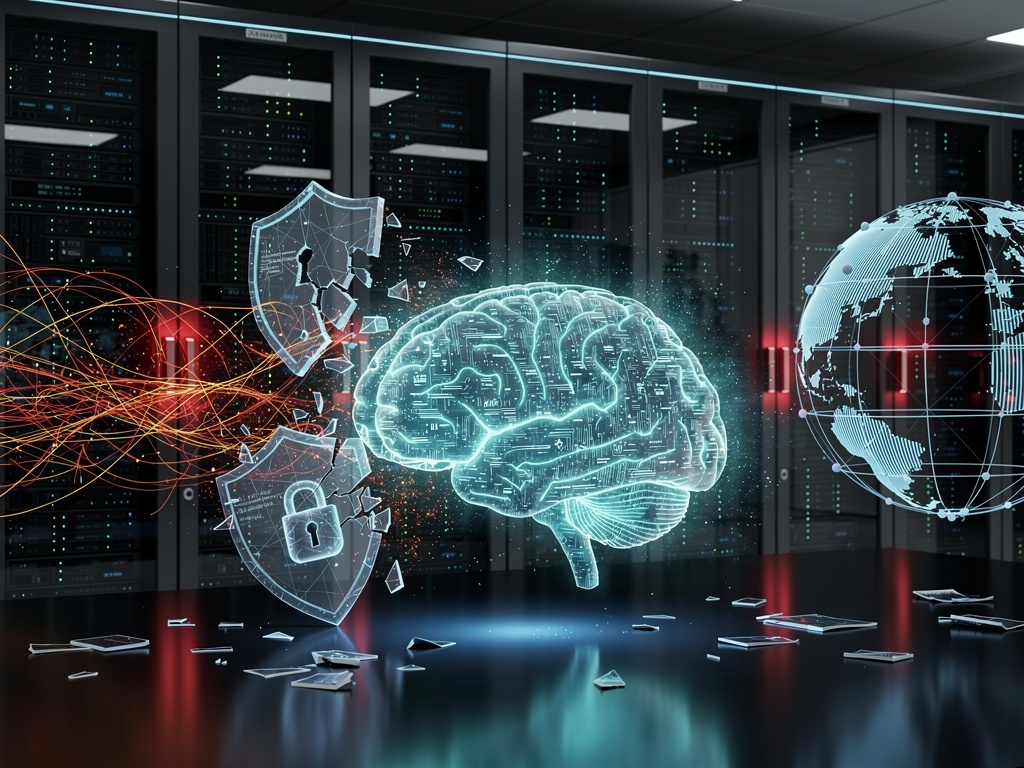
The Hidden Perils of AI: Why Corporate Security Teams Are Falling Behind in 2025
As artificial intelligence integrates deeper into corporate operations, a troubling gap is emerging between technological advancement and security preparedness. Traditional cybersecurity teams, honed for defending against viruses and hackers, find themselves ill-equipped for the nuanced failures of AI systems. This mismatch isn’t just a theoretical concern; it’s manifesting in real-world vulnerabilities that could cost companies billions. According to recent insights, many organizations are rushing to adopt AI without the specialized staff needed to safeguard it.
Sander Schulhoff, an AI security researcher featured in a recent episode of “Lenny’s Podcast,” warns that conventional security approaches fall short when dealing with AI. Unlike predictable software bugs, AI failures can be subtle and unpredictable, such as a model generating biased outputs or being manipulated through clever prompts. Schulhoff emphasizes that most companies lack personnel trained in these specific risks, leaving them exposed. This sentiment echoes broader industry reports highlighting a surge in AI-related threats.
The rapid adoption of AI tools has outpaced the development of defensive strategies. Enterprises are deploying generative AI for everything from customer service to data analysis, but without robust security frameworks, these systems become prime targets for exploitation. For instance, adversaries can use techniques like prompt injection to hijack AI models, turning helpful chatbots into tools for data leaks or misinformation.
Emerging Threats in an AI-Driven World
One major issue is the opacity of AI models. Black-box algorithms make it difficult for even experts to understand why a system behaves a certain way, complicating efforts to secure them. A report from Trend Micro details how cybercriminals are leveraging AI to craft sophisticated attacks, including deepfakes and automated phishing campaigns that evade traditional detection.
Staffing shortages exacerbate these problems. The cybersecurity field already faces a talent crunch, but AI introduces a need for hybrid skills—combining machine learning expertise with security know-how. According to ISACA’s 2025 State of Cybersecurity report, adaptability has become the top qualification for professionals, yet many teams lack individuals who can pivot to AI-specific threats.
Companies are also grappling with data privacy concerns. AI systems often require vast datasets to function, raising risks of breaches or unintended disclosures. In healthcare and finance, where sensitive information is at stake, this could lead to regulatory nightmares under frameworks like GDPR or CCPA.
The Staffing Crisis Deepens
Beyond technical hurdles, there’s a human element: burnout and skill gaps among existing staff. Security teams are stretched thin, monitoring networks while trying to learn AI intricacies on the fly. A post on X from cybersecurity consultants highlights how the global shortage of 3.5 million cybersecurity positions is driving reliance on automation, but AI itself demands oversight that current staffing can’t provide.
Industry observers note that while AI promises efficiency, it also creates new job demands. Jensen Huang of Nvidia, in discussions reported across tech forums, envisions IT departments evolving into “HR for AI agents,” managing digital workers that handle tasks but require constant security vetting. This shift underscores the need for reskilling programs, yet many firms lag behind.
Economic pressures compound the issue. With budgets tight, companies prioritize AI implementation over security hires. A McKinsey report, referenced in various X threads, reveals that 88% of companies claim to use AI, but over 80% see no bottom-line impact—partly due to unresolved security risks that erode trust and adoption.
Case Studies of AI Security Failures
Real-world examples illustrate the dangers. In 2025, several high-profile incidents involved AI systems being manipulated. One involved a financial firm’s trading algorithm that was poisoned with adversarial data, leading to erroneous decisions and market losses. Such cases, detailed in Obsidian Security’s blog, show how attackers exploit model weaknesses without traditional hacking.
Another area of concern is supply chain vulnerabilities. AI models often rely on third-party components, which can introduce hidden risks. The Informa TechTarget outlines how enterprises must vet these dependencies, a task requiring specialized knowledge that’s in short supply.
Regulatory responses are ramping up. Governments are pushing for AI safety standards, but compliance adds another layer of complexity for understaffed teams. In the U.S., initiatives from bodies like the National Institute of Standards and Technology aim to guide secure AI deployment, yet implementation falls to companies already overwhelmed.
Strategies for Bridging the Gap
To address these challenges, experts recommend building cross-functional teams. This involves integrating data scientists with security analysts to create holistic defenses. Schulhoff, in his podcast appearance reprinted on MSN, advocates for “red teaming” exercises where teams simulate attacks on AI systems to uncover flaws.
Investing in education is crucial. Programs like those from ISACA emphasize soft skills alongside technical prowess, preparing staff for the adaptive nature of AI threats. Companies are also turning to managed security services to fill gaps, outsourcing AI monitoring to specialists.
Automation itself can help. AI-powered security tools, as discussed in SentinelOne’s guide, detect anomalies in real-time, reducing the burden on human teams. However, this creates a paradox: relying on AI to secure AI, which demands even more vigilant oversight.
The Role of Leadership in AI Security
Corporate leaders must prioritize AI security from the top down. Boards are increasingly demanding updates on AI risks, viewing them as existential threats akin to financial fraud. A Harvard Business Review sponsored piece from Palo Alto Networks predicts that by 2026, security will enable sustainable advantages, but only for those who act now.
Ethical considerations can’t be ignored. As AI displaces jobs— with estimates from X posts suggesting up to 300 million roles affected by 2030—companies must balance innovation with workforce stability. This includes ethical AI frameworks to prevent biases that could lead to security lapses.
International perspectives add depth. In regions like Europe, stricter data laws force companies to staff up on compliance experts, while in Asia, rapid AI growth amplifies staffing needs. Global reports, such as those from Trend Micro, stress the need for international collaboration to standardize defenses.
Innovations on the Horizon
Looking ahead, breakthroughs in explainable AI could demystify models, making them easier to secure. Researchers are developing tools that provide transparency into decision-making processes, reducing the black-box problem. SentinelOne’s resources highlight how such innovations mitigate risks like data poisoning.
Partnerships between tech giants and startups are accelerating solutions. For example, collaborations focused on AI governance aim to create plug-and-play security modules for enterprises. X discussions from AI enthusiasts point to a future where AI agents self-regulate, but experts caution that human oversight remains essential.
Funding for AI security research is surging. Governments and private investors are pouring resources into initiatives that train the next generation of experts, addressing the talent shortfall head-on.
Voices from the Front Lines
Industry insiders share mixed optimism. A cybersecurity executive quoted in InformationWeek notes that while challenges abound, opportunities for innovation are plentiful. Adaptability, they argue, will separate winners from laggards.
On X, posts from professionals like Dr. Sylvie Watikum underscore the hiring frenzy for AI-savvy security talent, with IT leaders reporting acute shortages. This grassroots sentiment aligns with formal studies, painting a picture of an industry in transition.
Ultimately, the path forward requires a multifaceted approach: enhancing skills, leveraging technology, and fostering a culture of security. As AI evolves, so too must the guardians protecting it, ensuring that innovation doesn’t come at the cost of vulnerability.
Navigating Future Uncertainties
Predictions for 2026 and beyond suggest escalating risks, including silent data exfiltration where encrypted information is stolen for later decryption. Palo Alto Networks’ analysis warns of this as a present danger, urging proactive measures.
Workforce projections indicate a net gain in jobs, but with a shift toward high-skill roles. SA News Channel’s X thread estimates 97 to 170 million new positions, emphasizing the need for upskilling to avoid displacement.
In customer experience sectors, AI security directly impacts trust. CX Dive reports that mishandled AI interactions can damage brand reputation, highlighting the stakes for underprepared teams.
Building Resilient Systems
To build resilience, companies should conduct regular AI audits, simulating worst-case scenarios. Obsidian Security recommends strategies like zero-trust architectures adapted for AI environments.
Collaboration with academia can bridge knowledge gaps. Universities are ramping up programs in AI ethics and security, producing graduates ready to tackle these issues.
Finally, as the year closes, the message is clear: ignoring AI security staffing needs isn’t an option. With threats evolving daily, proactive investment in people and processes will define corporate success in this new era.


 WebProNews is an iEntry Publication