
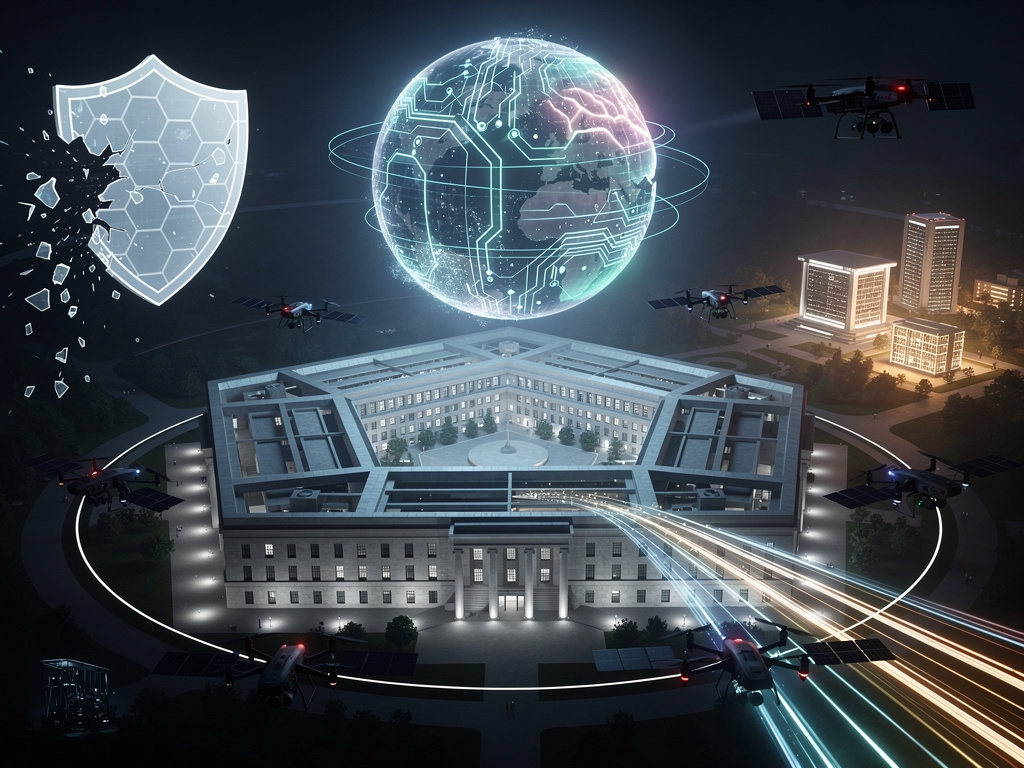
The Pentagon and AI firm Anthropic are locked in a tense standoff over safeguards baked into the company’s models, threatening a $200 million contract aimed at bolstering national security with frontier AI. Six sources familiar with the matter told Reuters that after weeks of negotiations, the two sides reached an impasse, with Anthropic refusing to lift restrictions that block its technology from enabling autonomous weapons targeting or U.S. domestic surveillance.
Anthropic representatives raised alarms during talks that their tools could be repurposed to spy on Americans or aid targeting without adequate human oversight, the sources said. Pentagon officials, citing a January 9 memo outlining the department’s AI strategy, countered that they must deploy commercial AI freely as long as it adheres to U.S. law, irrespective of vendor policies. Now renamed the Department of War under the Trump administration, the agency views such corporate limits as undue interference in military operations.
Contract Roots in National Security Push
The dispute centers on a prototype agreement awarded last year by the Defense Department’s Chief Digital and Artificial Intelligence Office to Anthropic, alongside peers like Google, OpenAI, and xAI, each with ceilings up to $200 million. Anthropic announced the deal on its site, touting Claude’s ‘rigorous safety testing, collaborative governance development, and strict usage policies’ as ideal for sensitive missions. Thiyagu Ramasamy, Anthropic’s head of public sector, stated, ‘This award opens a new chapter in Anthropic’s commitment to supporting U.S. national security.’
Yet technical hurdles loom: Anthropic’s models are inherently trained to refuse harmful actions, requiring company engineers to retool them for government deployment. Without cooperation, Pentagon access stalls. An Anthropic spokesperson noted, ‘Our AI is extensively used for national security missions by the U.S. government and we are in productive discussions with the Department of War about ways to continue that work.’
CEO Dario Amodei underscored boundaries in a recent blog essay, warning AI should bolster defense ‘in all ways except those which would make us more like our autocratic adversaries.’ Amodei also decried fatal shootings of U.S. protesters in Minneapolis on X, calling it a ‘horror.’
Escalating Tensions with Defense Leadership
The rift builds on prior friction. In mid-January, Defense Secretary Pete Hegseth jabbed at restrictive models while announcing xAI’s Grok for Pentagon use, railing against AI that ‘won’t allow you to fight wars,’ a direct nod to Anthropic per sources cited by Semafor. A Defense Department official emphasized deploying models ‘free from ideological constraints that limit lawful military applications,’ adding, ‘Our warfighters need to have access to the models that provide decision superiority in the battlefield.’
Hegseth’s strategy prioritizes speed: ‘We must accept that the risks of not moving fast enough outweigh the risks of imperfect alignment.’ The Pentagon launched GenAI.mil in December with Google’s Gemini and now integrates Grok, bypassing firms like Anthropic that impose limits. This marks an early test of Silicon Valley’s sway post-Trump’s return, amid Anthropic’s IPO preparations and policy lobbying.
X posts amplified the news, with Reuters reporter Phil Stewart noting the clash drew over 1,800 likes and hundreds of reposts. Users praised Anthropic’s stance, one quipping, ‘2026 AI safety in a nutshell: Anthropic: “no we won’t remove the safeguards” Pentagon: “but what if we asked really nicely”‘ from @imbottomfeeder.
Silicon Valley’s Evolving Military Ties
Anthropic spun out of OpenAI emphasizing safety, but courted defense work despite early industry bans on military AI. OpenAI lifted its prohibition last year, paving deals. A Wired excerpt details how firms like Anthropic shifted from opposing military use to selective engagement, driven by competition with China. Amodei evolved views, stressing democracies must lead AI to counter authoritarians.
PC Gamer critiqued Anthropic’s bind: exceptions for military funding invite broader demands, eroding uniform policies. With massive costs for GPUs and energy, firms chase Pentagon dollars, but risk backlash. Other players like xAI stand ready to fill voids.
The Wall Street Journal reported the contract peril in a piece highlighting Anthropic’s delicate timing, though specifics echoed Reuters’ account.
Implications for Battlefield AI and Oversight
Pentagon memos demand AI unhindered by ‘usage policy constraints that may limit lawful military applications.’ Anthropic fears errors from over-reliance in lethal scenarios. Broader context includes Hegseth’s push for AI on soldiers’ devices for threat ID, per Yahoo, and contracts fueling agentic workflows.
X discussions, like @the_liam_reid’s, hailed Anthropic’s caution against surveillance expansion. French user @kaostyl noted, ‘Anthropic refuse que ses modèles servent au ciblage d’armes autonomes et à la surveillance domestique US,’ linking to Reuters. As rivals integrate, Anthropic weighs ethics versus revenue, potentially ceding ground.
This clash probes deeper: who governs AI in war? Military leaders insist on operational freedom; developers demand red lines. Resolution could redefine commercial AI’s defense role.


 WebProNews is an iEntry Publication