
Revolutionizing the Built World: Cutting-Edge Tech Poised to Redefine Construction by 2026
The construction sector, long characterized by its reliance on manual labor and traditional methods, is on the cusp of a profound transformation. As we enter 2026, innovations in technology are not just enhancing efficiency but fundamentally altering how buildings rise from the ground. From artificial intelligence optimizing project timelines to robotic systems handling hazardous tasks, these advancements promise to address chronic challenges like labor shortages, safety concerns, and environmental impact. Industry experts predict that by integrating these tools, firms could see productivity gains of up to 50%, according to a recent outlook from Deloitte Insights.
Drawing from a video compilation on emerging tools featured in MSN, several standout technologies are gaining traction. These include 3D printing for rapid prototyping of structures, augmented reality for on-site visualization, and advanced materials that self-heal or adapt to environmental stresses. But beyond these, real-time data from recent industry reports and social media buzz on platforms like X highlight a broader shift toward sustainable and automated practices. For instance, posts on X from users like The Kobeissi Letter emphasize the surge in AI-driven construction, noting a 60% year-over-year increase in project planning indices, signaling a boom in non-residential builds fueled by tech integration.
This momentum is echoed in broader web searches, where sources point to a convergence of digital twins—virtual replicas of physical assets—and blockchain for transparent supply chains. As firms grapple with rising costs and regulatory pressures, these technologies offer a lifeline, enabling predictive maintenance and reducing waste. Yet, adoption isn’t uniform; smaller contractors often lag due to high upfront costs, while giants like those profiled in Deloitte’s analysis are investing heavily to stay competitive.
AI Takes the Helm in Project Management
Artificial intelligence is emerging as the linchpin of modern construction workflows. By analyzing vast datasets from sensors and historical projects, AI algorithms can forecast delays, optimize resource allocation, and even suggest design modifications in real time. A report from Intellectsoft outlines how AI-powered tools are set to dominate 2025-2026 trends, with applications ranging from predictive analytics to automated bidding processes. This isn’t mere hype; practical implementations, such as AI systems that monitor equipment health, have already slashed downtime by 30% on major sites.
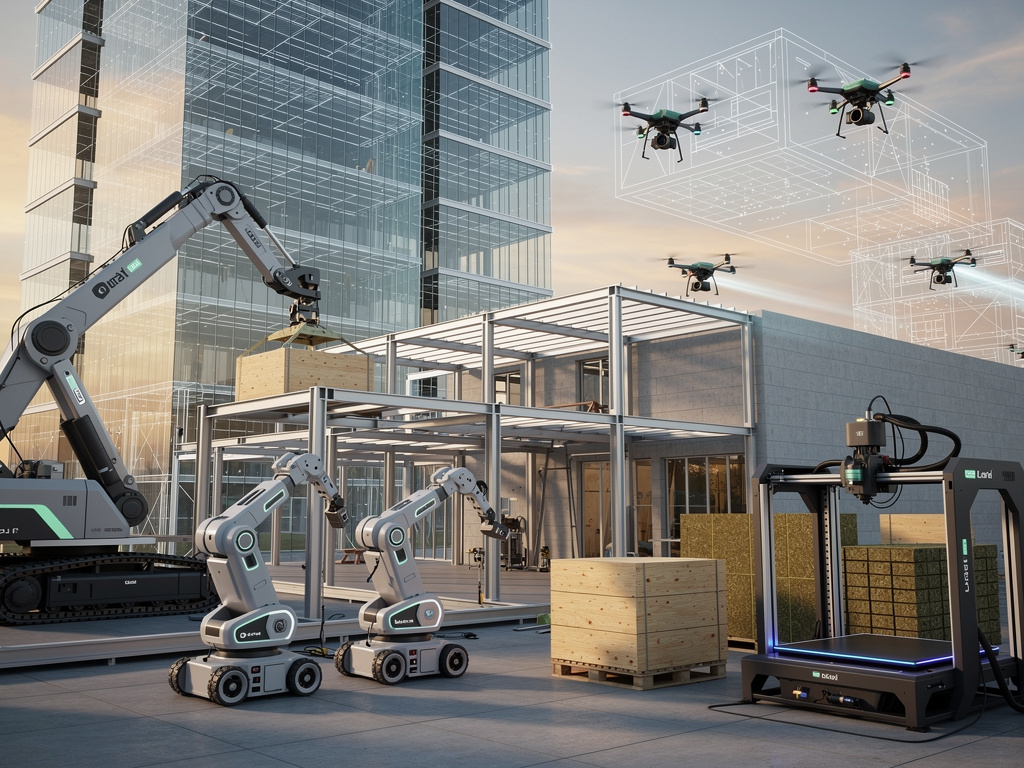
Complementing AI are robotics, which are tackling labor-intensive tasks with precision. Autonomous drones, for example, are revolutionizing site surveys by providing high-resolution aerial imagery and 3D mapping, as detailed in QuickBooks. These flying inspectors can detect structural flaws early, preventing costly rework. On the ground, robotic arms and exoskeletons are assisting workers, reducing injury rates—a critical issue in an industry where accidents claim thousands of lives annually.
Sustainability is another arena where AI shines. By integrating with building information modeling (BIM), AI helps design energy-efficient structures that minimize carbon footprints. FieldEx’s compilation of top trends, available across regional blogs like FieldEx UK and FieldEx Canada, underscores how these tools are fostering modular construction, where prefabricated components are assembled on-site like Lego blocks, cutting build times by half.
Sustainable Materials and Green Innovations Lead the Charge
The push for eco-friendly practices is accelerating, driven by global regulations and consumer demand for greener buildings. Advanced materials, such as carbon-capturing concrete, are at the forefront. A post on X from Mario Nawfal highlights breakthroughs like NTU Singapore’s CO2-infused 3D-printed concrete, which not only strengthens structures but also sequesters emissions—addressing the cement industry’s 8% share of global CO2 output.
This aligns with broader innovations in waste management. An article from Ynetnews describes Israeli technology that converts construction debris into usable blocks and panels, turning potential landfill waste into revenue streams. Such recycling methods are gaining traction amid reports of millions of tons of illegal dumping annually, offering both environmental and economic benefits.
Moreover, bio-based materials and self-healing polymers are entering the mainstream. These substances can repair cracks autonomously, extending building lifespans and reducing maintenance costs. World Construction Today’s overview, found at World Construction Today, connects these material advancements to AI and BIM, creating a synergistic effect that enhances overall project resilience.
Robotics and Automation Bridge Labor Gaps
Labor shortages continue to plague the industry, but robotics are stepping in as a viable solution. Exoskeletons, wearable devices that augment human strength, are allowing workers to lift heavier loads without strain, as noted in various FieldEx entries, including FieldEx EN. This technology is particularly vital in aging workforces, where physical demands often lead to early retirements.
Autonomous machinery takes this further. Self-driving excavators and bricklaying robots, powered by machine learning, are performing repetitive tasks with unmatched accuracy. Intellectsoft’s blog details how these systems integrate with IoT sensors to create smart construction sites, where equipment communicates seamlessly to avoid collisions and optimize paths.
Safety enhancements are a key byproduct. Wearable tech, such as smart helmets with AR overlays, provides real-time hazard alerts. QuickBooks reports that these innovations are boosting profitability by minimizing accidents and insurance claims, with some firms reporting a 20% drop in incidents after implementation.
Digital Twins and VR Redefine Planning
Virtual reality (VR) and digital twins are transforming the pre-construction phase. By creating immersive simulations, teams can walk through designs before breaking ground, identifying issues early. The MSN video compilation showcases how VR headsets enable collaborative reviews, reducing errors that could cost millions.
Digital twins extend this into operations, offering ongoing monitoring. Deloitte Insights explains how these virtual models use real-time data from embedded sensors to predict failures, ensuring structures remain efficient post-completion. This is especially crucial for infrastructure in critical sectors like transportation and energy.
Integration with blockchain adds transparency. Secure ledgers track materials from source to site, combating fraud and ensuring compliance. Posts on X, such as those from Paul Helmick and 323Works, echo this by highlighting digital transformation as a core opportunity for 2026, with links to broader business trends.
Modular and Prefab Construction Gains Momentum
Modular building techniques are surging, promising faster and cheaper construction. Components manufactured in controlled factory settings are shipped and assembled on-site, minimizing weather delays. FieldEx’s trends list emphasizes how this approach, combined with robotics, addresses housing shortages in urban areas.
Cost savings are significant; projects can be completed 20-50% faster, per Intellectsoft. Sustainability benefits too, with less on-site waste. X posts from users like Chander Bhatia predict rising labor costs will further drive adoption, making prefab a necessity rather than a novelty.
However, challenges remain, including transportation logistics and regulatory hurdles. Industry insiders note that while tech enables modularity, scaling requires investment in supply chains.
The Role of Drones and IoT in Site Efficiency
Drones are not just for surveys; they’re evolving into delivery tools, transporting small materials across sites. QuickBooks highlights their role in enhancing safety by inspecting hard-to-reach areas without scaffolding.
Internet of Things (IoT) networks amplify this by connecting everything from tools to vehicles. Real-time data streams enable proactive management, as per World Construction Today. This interconnectedness reduces inefficiencies, with some sites reporting 15% energy savings through optimized operations.
Adoption barriers include data security, but advancements in edge computing are mitigating risks, ensuring sensitive information stays protected.
Global Perspectives and Future Outlook
Looking globally, innovations vary by region. X posts point to China’s rapid adoption of tech-heavy methods, building skyscrapers at unprecedented speeds, as shared by Evrim Kanbur. In contrast, Western markets focus on sustainability, per Guardian tech trends.
Emerging tech like spatial computing, mentioned in PCMag’s CES preview at PCMag, could integrate with construction for holographic planning. IBM’s insights on AI trends, available via IBM, suggest quantum computing might soon optimize complex simulations.
For insiders, the key is strategic integration. Firms that pilot these technologies now, as advised in Deloitte’s outlook, will lead. Regulatory support, like incentives for green tech, will accelerate uptake.
Overcoming Adoption Hurdles
Despite promise, hurdles persist. High costs deter small firms, but falling prices—driven by scale—are changing that. Training workers is another issue; upskilling programs are essential, as noted in FieldEx reports.
Collaboration between tech providers and constructors is vital. Partnerships, like those forming around CES 2026 previews from CNET, foster innovation.
Ultimately, these technologies aren’t just tools; they’re reshaping industry dynamics, promising a more efficient, safe, and sustainable future for construction. As 2026 unfolds, those who adapt will thrive in this evolving arena.


 WebProNews is an iEntry Publication