
AI’s Unseen Revolution: Redefining the Frontiers of Scientific Inquiry
In the rapidly evolving realm of scientific research, artificial intelligence is emerging as a transformative force, reshaping how discoveries are made and accelerating the pace of innovation. Recent advancements highlight AI’s integration into core scientific processes, from hypothesis generation to data interpretation. A pivotal study published in Nature underscores this shift, detailing how self-supervised learning and geometric deep learning enable scientists to handle vast datasets with unprecedented efficiency. These tools not only augment human capabilities but also uncover insights that traditional methods might overlook, marking a new era where machines collaborate intimately with researchers.
The implications extend across disciplines, with AI facilitating breakthroughs in drug design, protein engineering, and beyond. For instance, generative AI models are now capable of creating novel molecular structures by analyzing multimodal data, including sequences and images. This capability is not merely supportive; it’s revolutionary, allowing for the rapid prototyping of potential therapies that could address complex diseases. Industry insiders note that such integrations are reducing the time from concept to experimentation, a bottleneck that has long plagued scientific progress.
Yet, this integration raises questions about the balance between automation and human oversight. As AI systems become more autonomous, ensuring their outputs align with ethical standards and scientific rigor becomes paramount. Discussions among experts emphasize the need for robust validation frameworks to prevent errors that could mislead research directions.
Pioneering Partnerships and Automated Labs
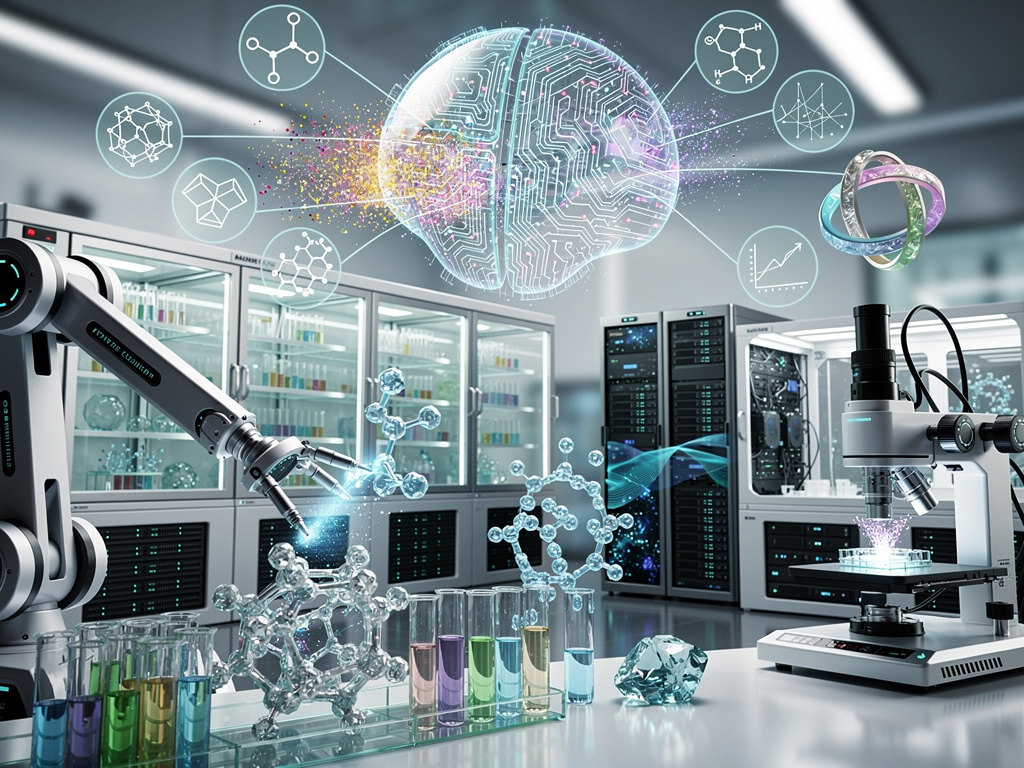
Recent initiatives underscore the growing collaboration between tech giants and academic institutions to harness AI for discovery. A notable example is the partnership between Google DeepMind and the UK government, aimed at bolstering AI-driven research in critical sectors. According to a report from GOV.UK, this alliance focuses on turning cutting-edge AI into tangible benefits for everyday applications, including scientific advancements. DeepMind’s announcement of an automated research lab in the UK, as detailed in CNBC, promises to use AI and robotics to conduct experiments autonomously, potentially slashing the timeline for discoveries in fields like materials science and biology.
This development builds on earlier efforts, such as those from MIT’s FutureHouse, which has created AI agents to automate key steps in scientific workflows. A piece in MIT News describes how these agents handle hypothesis testing and data analysis, freeing researchers to focus on creative interpretation. The convergence of such technologies suggests a future where labs operate with minimal human intervention, raising efficiency while challenging traditional notions of scientific labor.
However, challenges persist in scaling these systems. Issues like data quality and model interpretability remain hurdles, as AI’s “black box” nature can obscure the reasoning behind its suggestions. Insiders in the field stress the importance of interdisciplinary teams to bridge these gaps, ensuring AI enhances rather than supplants human expertise.
Breakthroughs in Hypothesis Generation
At the heart of AI’s impact is its role in generating novel hypotheses, a process once solely the domain of human intuition. Google’s AI co-scientist system, outlined in a Google Research blog, exemplifies this by synthesizing knowledge across subjects to propose original research ideas. Built on advanced models like Gemini 2.0, it mirrors the scientific method, from literature review to experimental design, tailored to specific goals. This capability is particularly potent in complex areas like climate modeling or genomics, where vast variables make manual hypothesis formation daunting.
Complementing this, reports from Nature reveal that AI is driving a paradigm shift in research methodologies, with autonomous labs accelerating validation of these hypotheses. For example, in drug discovery, AI has enabled the design of proteins that target specific pathogens, reducing development cycles from years to months. Such efficiencies are echoed in sentiments from industry forums, where experts predict AI will dominate hypothesis-driven research by the end of the decade.
Critically, these tools are not without scrutiny. A recent analysis in The Guardian points to a “slop problem” in AI-generated research, where low-quality outputs flood academic spaces, complicating peer review. This highlights the need for stringent quality controls to maintain the integrity of scientific output.
Ethical Frameworks and Global Governance
As AI permeates scientific endeavors, ethical considerations are gaining prominence. Collaborative efforts, such as those between Google DeepMind and the UK AI Security Institute, focus on safety research, including monitoring AI reasoning and evaluation protocols. Details from Google DeepMind’s blog emphasize risk classification and auditing to mitigate potential harms in high-stakes applications like healthcare and energy.
Global trends, as captured in posts on X, reflect optimism tempered with caution. Users discuss emerging integrations of AI with quantum computing and blockchain, suggesting hybrid systems that could revolutionize data security in research. For instance, one post highlights quantum-AI simulations on the horizon, pointing to enhanced modeling of molecular interactions that could lead to breakthroughs in materials science.
Nevertheless, the push for governance is intensifying. The UK’s AI for Science Strategy, as published on GOV.UK, advocates for autonomous labs and ethical AI deployment, recognizing that interfacing AI with the physical world is key to validation. This strategy aligns with broader calls for international standards to ensure equitable access and prevent misuse.
Innovations Across Disciplines
AI’s versatility is evident in its applications beyond biology. In physics, tools like those discussed at a National Academies workshop, reported in National Academies News, are advancing discoveries in neurology and meteorology through predictive modeling. Geometric deep learning, for example, leverages data structures to improve accuracy in simulating weather patterns, potentially aiding climate change mitigation.
In chemistry, AI-driven designs are creating bio-based materials, as noted in X posts about 2025 trends. These innovations extend to renewable energy, where decentralized systems powered by AI optimize grid management. The fusion of AI with IoT and 5G, as mentioned in various online discussions, is expanding its strategic role, from operational tasks to long-term planning in scientific projects.
Looking ahead, the acceleration of clinical trials via AI, such as gene-editing therapies for rare disorders, signals transformative potential in personalized medicine. Astronomers’ use of AI for anomaly detection, like discovering new satellites, further illustrates its broad utility.
Challenges in AI-Driven Research
Despite the promise, researchers grapple with explaining AI’s rapid progress. A gathering covered in NBC News revealed academics and industry leaders debating the mechanisms behind these surges, with some attributing it to architectural innovations like Continuous Thought Machines from Sakana AI Labs.
Quality concerns persist, as evidenced by critiques of prolific AI-generated papers. Experts call for better curation to avoid diluting scholarly discourse. Additionally, the energy demands of training large models pose sustainability issues, prompting calls for greener AI practices.
Integration with emerging technologies, such as augmented reality for virtual experiments, could address some limitations, enhancing accessibility for global researchers.
Future Trajectories and Collaborative Horizons
Microsoft’s outlook on AI for 2026, shared in Microsoft Research, anticipates adaptive robotics and agent-native economies, which could redefine collaborative science. These agents might form networks that simulate entire research teams, accelerating discoveries in underrepresented fields.
Posts on X also spotlight foundational advances, like superionic states in Earth’s core, where AI aids in high-pressure simulations. Such applications underscore AI’s role in fundamental science, from cosmology to geophysics.
Ultimately, the synergy between AI and human ingenuity is poised to unlock unprecedented insights, provided frameworks evolve to harness its full potential while safeguarding against pitfalls. As one insider put it, the true measure of success will be in how these tools democratize discovery, making science more inclusive and innovative.
In neurology, AI is decoding brain signals with greater precision, potentially leading to advanced prosthetics. Meteorology benefits from AI’s pattern recognition, improving forecast accuracy amid climate volatility. These cross-disciplinary gains suggest AI is not just a tool but a catalyst for holistic progress.
Security remains a focal point, with AI agents revolutionizing cybersecurity in research environments. Capgemini’s insights, echoed online, predict transformative impacts, ensuring data integrity in sensitive scientific domains.
The road ahead involves balancing innovation with responsibility, as global efforts like those in the UK’s strategy pave the way for sustainable AI integration.


 WebProNews is an iEntry Publication