
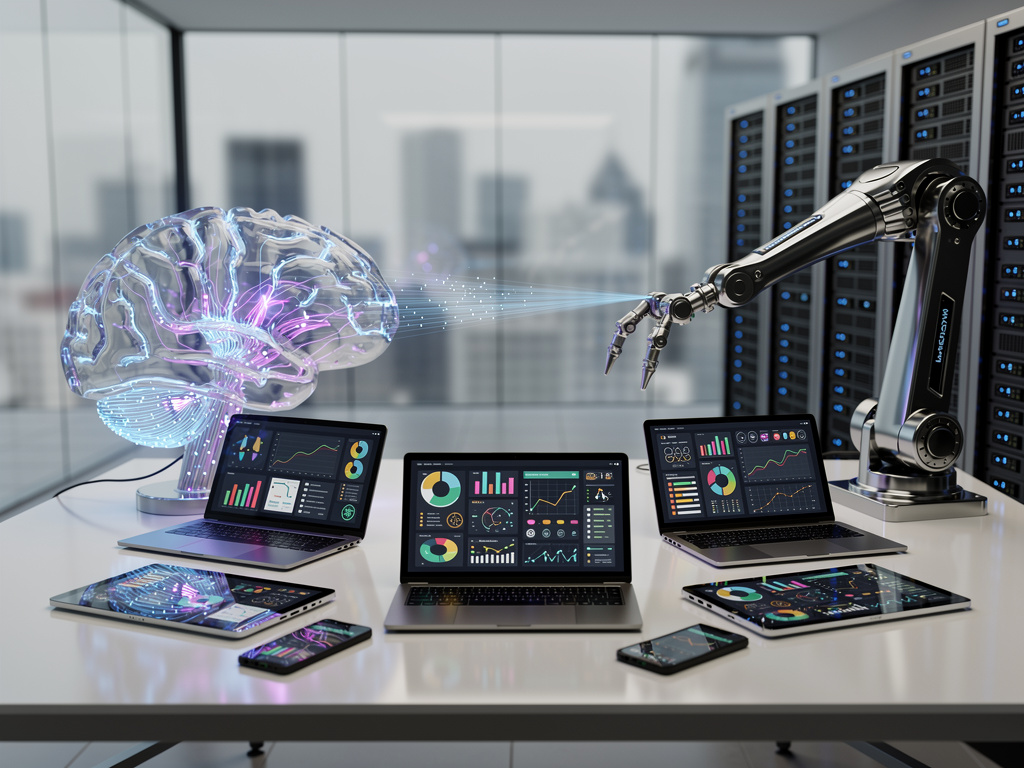
AI’s Ad Revolution: Machines Speed Up the Game, But Humans Hold the Creative Reins
In the fast-evolving world of advertising, artificial intelligence is no longer a futuristic gimmick but a core tool reshaping how campaigns are conceived and executed. Stephan Pretorius, chief technology officer at WPP, the global advertising powerhouse, recently emphasized this shift in an interview with Fortune. He highlighted how WPP’s AI platform, WPP Open, has seen explosive adoption, with over 85,000 of the company’s 108,000 employees using it monthly—a dramatic jump from 30,000 in early 2024. This surge underscores AI’s role in streamlining operations, from planning to running campaigns for clients like Google and L’Oréal.
Yet, Pretorius is quick to caution that while AI excels at efficiency and scale, the essence of creative judgment must stay firmly in human hands. This perspective comes at a time when the industry is grappling with AI’s potential to automate routine tasks, freeing up talent for higher-level innovation. WPP has invested heavily in training programs to ensure its workforce not only adopts these tools but also understands their limitations, reinforcing the idea that technology augments rather than replaces human insight.
The broader industry echoes this sentiment. Recent developments show advertising giants racing to integrate AI into their core operations. For instance, at CES 2026, WPP, Omnicom, and Havas unveiled AI-driven operating systems designed to turn human expertise into scalable platforms, as reported by Storyboard18. These systems aim to address mounting pressures on fees, speed, and measurable outcomes, signaling a pivot toward tech-fueled efficiency.
The Rise of AI-Powered Platforms
WPP’s approach exemplifies this trend. The company’s WPP Open platform allows brands to access AI for planning, creating, and publishing campaigns directly, sometimes bypassing traditional agency intermediaries, according to a Reuters report from late 2025. This democratization of tools empowers marketers but raises questions about the future role of agencies. Pretorius argues that AI handles the “heavy lifting” of data analysis and content generation, but human oversight ensures cultural relevance and ethical alignment.
Training is a cornerstone of WPP’s strategy. The ad giant is pouring resources into upskilling employees, helping them grasp AI’s capabilities and, crucially, its boundaries. This investment reflects a belief that empowered humans, armed with AI, can deliver superior results. As Pretorius told Fortune, the “mic drop” moment for WPP isn’t flashy AI-generated ads but the widespread internal adoption that boosts productivity across the board.
Looking beyond WPP, the industry is witnessing a proliferation of AI agents specialized in areas like brand analytics and behavioral science. WPP recently launched an “agent hub” on its platform, featuring AI tools dedicated to creativity and optimization, as detailed in a Research Live article. This move positions agencies as tech vendors rather than just creative partners, a transformation explored in an Ad Age piece comparing systems from Publicis, Dentsu, and others.
Human Judgment in the Age of Algorithms
Despite these advancements, the consensus among insiders is that AI cannot replicate the nuanced judgment that defines great advertising. Posts on X from industry figures highlight this tension, with users noting that while AI can generate thousands of campaign variations quickly, it lacks the emotional intelligence to discern what truly resonates with audiences. For example, sentiments shared on the platform suggest that by 2026, creative teams will rely on AI for testing and scaling, but human directors will be the most sought-after roles, aligning with findings in the Merca2.0 trend report.
This human-centric view is vital in an era where consumers demand authenticity. A recent Getty Images VisualGPS post on X pointed out that while 66% find AI-made art exciting, most prefer real images in ads, underscoring the need for responsible AI use to maintain credibility. WPP’s training initiatives address this by emphasizing ethical guidelines, ensuring that AI outputs are vetted for bias and cultural sensitivity—areas where machines often falter without human intervention.
Moreover, AI’s integration is reshaping brand storytelling. As outlined in an Adgully article, AI enables hyper-personalized narratives, but it’s the human touch that infuses meaning and emotional depth. Pretorius’s comments in the Fortune interview reinforce this, stressing that creative judgment—rooted in empathy and experience—remains irreplaceable.
Industry Pressures and AI Adoption
The push toward AI is driven by economic realities. Agencies face squeezed fees and demands for faster, data-backed results. A white paper from WPP, discussed on WARC, outlines how enhanced AI capabilities demand a new model for marketing services, blending technology with human expertise to meet these challenges.
On X, marketers like those from AlphaSense have quantified AI’s impact, predicting improvements in ad generation that could boost cost-per-mille metrics. However, these gains depend on human oversight to avoid pitfalls like generic content that fails to engage. The platform buzzes with discussions on AI synthetic focus groups, which offer instant feedback with high accuracy, as noted in posts validating their use for ad testing and optimization.
WPP’s client list, including heavyweights like Mastercard and LVMH, benefits from this hybrid approach. By leveraging AI for efficiency, agencies can allocate more time to strategic creativity, potentially leading to breakthrough campaigns that blend machine precision with human ingenuity.
Challenges and Ethical Considerations
Not everything is seamless in this transition. Concerns about job displacement loom large, though Pretorius insists AI creates opportunities by handling mundane tasks. Industry reports, such as one from Yahoo Finance, echo WPP’s encouragement of AI embrace while investing in training to highlight workers’ critical roles.
Ethical dilemmas also surface. AI’s potential for bias in creative decisions requires vigilant human monitoring. Posts on X from users like those at We Are Social emphasize that social media, combined with AI and human insight, forms the future of brand building, with humans at the center to ensure meaningful work.
Furthermore, as brands assert more control over AI tools, marketers must navigate hype versus reality. A Marketing Dive article advises separating genuine innovations from overpromises, a task that demands seasoned judgment.
The Future of Creative Roles
Looking ahead to 2026 and beyond, the role of the AI creative director is poised to become pivotal. As per the Merca2.0 report, this hybrid position merges tech savvy with artistic vision, making it highly desirable. WPP’s investments position it well to lead in this space, training staff to excel in AI-augmented environments.
X posts from marketers predict that agencies will package AI outcomes, such as autonomous campaign agents, shifting from hourly billing to value-based models. This evolution could redefine agency-client relationships, fostering deeper collaborations centered on outcomes rather than processes.
Ultimately, the industry’s trajectory suggests a symbiotic relationship between AI and humans. While machines handle scale and speed, creative judgment—nuanced, empathetic, and innovative—remains a uniquely human domain. WPP’s strategy, as articulated by Pretorius in Fortune, serves as a blueprint for balancing technological advancement with the irreplaceable spark of human creativity.
Innovations on the Horizon
Emerging tools like vibe marketing, discussed in X threads, illustrate AI’s potential to auto-generate campaign plans based on performance data. Yet, experts warn that without human curation, these could lead to homogenized content lacking brand distinction.
WPP’s ongoing innovations, including AI agents for behavioral science, aim to enhance personalization. As detailed in Research Live, these tools analyze consumer patterns but rely on human interpretation to craft compelling stories.
In client-facing applications, AI enables rapid prototyping. For instance, synthetic focus groups, validated in X posts for their accuracy, allow pre-testing ads without hefty budgets, accelerating iteration cycles while humans refine based on insights.
Sustaining Human-Centric Creativity
To thrive, agencies must foster cultures that value human input amid AI proliferation. WPP’s training programs, as highlighted in Yahoo Finance, exemplify this by empowering employees to leverage tools confidently.
Industry sentiment on X underscores that AI embeds in creative processes but humans drive meaningful connections. Reports like We Are Social’s Think Forward 2026, mentioned in posts, affirm social’s criticality with AI as an enhancer, not a replacement.
As the sector adapts, success will hinge on integrating AI seamlessly while preserving the human elements that make advertising an art form. Pretorius’s vision, shared in Fortune, points to a future where technology amplifies creativity, ensuring advertising remains dynamic and impactful.


 WebProNews is an iEntry Publication