
AI’s Corporate Revolution: Inside the Strategies Reshaping Business in 2026
In the opening days of 2026, artificial intelligence has moved beyond hype to become a cornerstone of corporate operations. Companies across sectors are no longer experimenting in silos; they’re integrating AI into core processes, driven by a mix of competitive pressures and tangible returns. Drawing from recent insights, including a discussion among reporters at MSN, it’s clear that AI adoption is accelerating, but with a focus on practical, measurable outcomes rather than flashy pilots.
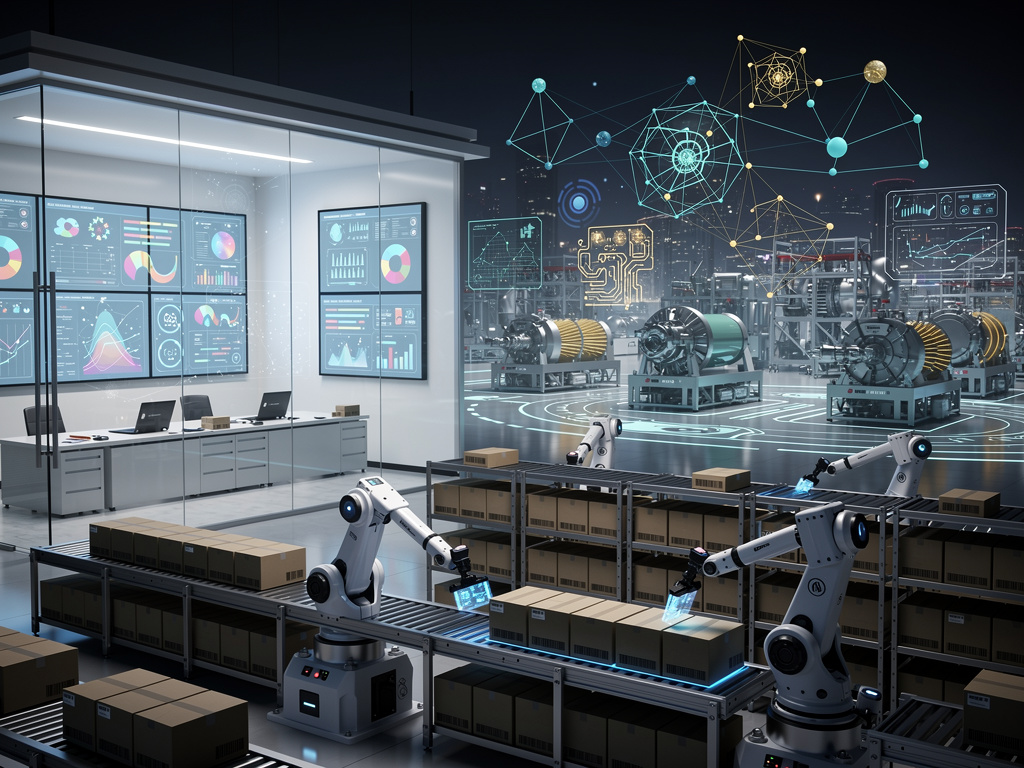
The MSN conversation highlights how firms like retailers and manufacturers are using AI for inventory management and predictive maintenance, turning data into actionable intelligence. One reporter notes that while generative AI tools grab headlines, the real value lies in backend applications that optimize supply chains. This aligns with broader patterns observed in industry reports, where AI is streamlining operations without displacing human oversight.
Moreover, posts on X from industry analysts emphasize a shift toward “agentic AI,” where systems not only analyze but also execute tasks autonomously. For instance, users discuss how enterprises are building AI agents that handle end-to-end workflows, from customer service to financial forecasting, reflecting a maturing approach to technology integration.
Agentic Systems Take Center Stage
This evolution toward agentic AI is echoed in predictions from major consultancies. According to PwC‘s 2026 AI Business Predictions, companies are transitioning from scattered experiments to centralized programs. Leaders are funding dedicated AI studios to reengineer processes, with agentic workflows showing early proof of ROI through efficiency gains.
IBM’s outlook, detailed in The trends that will shape AI and tech in 2026, points to experts forecasting a surge in AI-driven security and quantum integrations. These advancements are enabling businesses to tackle complex challenges, such as real-time threat detection in cybersecurity, which is becoming essential in an era of sophisticated digital risks.
On X, posts from figures like Rohan Paul highlight PwC’s emphasis on central platforms that orchestrate multiple agents, reducing silos and enhancing scalability. This sentiment underscores a growing consensus that 2026 will see AI infrastructure solidify, separating innovators from laggards.
From Pilots to Production-Scale Deployment
Delving deeper, the McKinsey Global Survey on AI, as covered in The state of AI in 2025, reveals that while 88% of enterprises use AI in at least one function, many remain in pilot stages due to data verification issues. However, entering 2026, there’s a push toward verifiable, scalable implementations, with firms investing in robust data pipelines to support agentic systems.
Microsoft’s trends report, What’s next in AI: 7 trends to watch in 2026, identifies AI as a “true partner” in boosting teamwork and infrastructure efficiency. Companies are leveraging AI for collaborative tools that enhance human productivity, such as automated research assistants that simulate real-world scenarios for better decision-making.
X discussions, including those from Perceptron Network, reinforce McKinsey’s findings, noting that without reliable data, enterprise-scale AI falters. Yet, optimistic posts suggest 2026 will bridge this gap, with custom models and voice interfaces driving adoption.
Regulatory Pressures and Ethical Frameworks
As AI permeates business functions, regulatory considerations are gaining prominence. The Stanford AI Index, in its 2025 report, tracks policy developments, indicating that governments are imposing stricter guidelines on AI ethics and transparency. Companies are responding by embedding responsible innovation into their strategies, as PwC predicts a focus on ethical AI to mitigate risks.
VentureBeat’s analysis, Four AI research trends enterprise teams should watch in 2026, emphasizes self-correcting agents that learn from interactions, redefining automation in sectors like healthcare and finance. This trend is crucial for maintaining trust, especially as AI handles sensitive data.
Echoing this, X posts from Dr. Khulood Almani question whether teams are mastering the agentic stack, stressing layers for reasoning and execution. Such conversations reveal a community grappling with ethical deployment, ensuring AI augments rather than undermines human roles.
Investment Shifts and ROI Demands
Financially, 2026 is poised for a reckoning in AI investments. Axios reports in AI 2026 trends: bubbles, agents, demand for ROI that leaders from OpenAI and others predict a burst of AI bubbles, with a pivot toward proven returns. This comes amid surveys showing slow ROI in prior years, pushing firms to prioritize high-value applications.
TechCrunch’s piece, Investors predict AI is coming for labor in 2026, warns of labor market impacts, yet investors see emerging patterns where AI enhances jobs rather than replaces them. Enterprises are forecasted to allocate budgets toward training and integration, fostering a hybrid workforce.
From X, Anand Kulkarni’s post differentiates companies building AI infrastructure from those with mere toys, aligning with Databricks’ priorities for production-grade agents. This reflects a broader investment trend toward sustainable, impactful AI strategies.
Industry-Specific Transformations
Sector by sector, AI’s influence varies but intensifies. In retail, as per the MSN discussion, AI optimizes pricing and personalization, with tools analyzing consumer behavior in real time. Manufacturers are using predictive analytics to minimize downtime, a point reinforced by IBM’s predictions on efficiency gains.
The Appinventiv blog, Latest AI Trends for 2026 & Beyond, outlines how businesses in logistics employ AI for route optimization, reducing costs and emissions. This practical application is key to competitive edges in global markets.
X users like Vala Afshar share Gartner’s predictions, including AI’s challenge to productivity tools, prompting a $58 billion market shift. Such insights illustrate how AI is reshaping hiring and operations in diverse industries.
Innovation Hubs and Collaborative Ecosystems
To fuel these changes, companies are establishing innovation hubs. IMD’s article, 2026 AI trends – Staying Competitive, advises leaders to assess AI readiness, recommending cross-functional teams to drive adoption. This collaborative approach is vital for staying ahead.
Analytics Insight’s predictions, What’s Next in AI? 10 Predictions for Automation and Work in 2026, foresee AI reshaping workplaces through automation that adapts to human needs, enhancing rather than automating away creativity.
Posts on X from Artificial Analysis detail adoption surveys, showing rising AI usage among developers and executives, with trends like custom models gaining traction for enterprise needs.
Challenges in Data and Talent Management
Despite progress, hurdles remain in data quality and talent acquisition. The McKinsey survey notes that fewer than one in three enterprises scale beyond pilots due to data issues, a challenge addressed in Perceptron Network’s X posts urging verifiable foundations.
Microsoft’s trends highlight the need for skilled teams to manage AI infrastructure, predicting a surge in demand for AI-savvy professionals. Companies are investing in upskilling, as per PwC, to build internal expertise.
Furthermore, X discussions from Python Developer stress the closing gap between users and experts, emphasizing skills over tools for effective AI implementation.
Future Trajectories in AI Integration
Looking ahead, the fusion of AI with emerging tech like quantum computing, as IBM explores, promises breakthroughs in complex simulations. This could revolutionize fields from drug discovery to climate modeling, with enterprises positioning themselves early.
VentureBeat’s roadmap envisions agents that self-correct and simulate realities, offering businesses unprecedented automation capabilities. Combined with regulatory maturity from Stanford’s tracking, this sets a stable path for growth.
X posts from Headline Hungama predict a shift from model wars to infrastructure control, encapsulating the strategic focus for 2026. As companies navigate these dynamics, AI’s role in business will only deepen, driven by innovation and pragmatism.
Sustaining Momentum Through Adaptation
Sustaining AI momentum requires adaptive strategies. IMD’s insights encourage ongoing assessments, ensuring organizations remain competitive amid rapid changes. Leaders must balance innovation with risk management, as Axios warns of potential bubbles.
In labor terms, TechCrunch investors anticipate clearer impacts, with AI augmenting roles in creative and analytical domains. This human-AI synergy is central to long-term success.
Finally, drawing from the MSN reporters’ talk, the essence of corporate AI lies in its quiet revolutions—optimizing the mundane to unlock extraordinary potential. As 2026 unfolds, businesses that master this balance will lead the charge.


 WebProNews is an iEntry Publication