
Claude’s Unexpected Edge: AI-Powered Decompilation Redefines Reverse Engineering
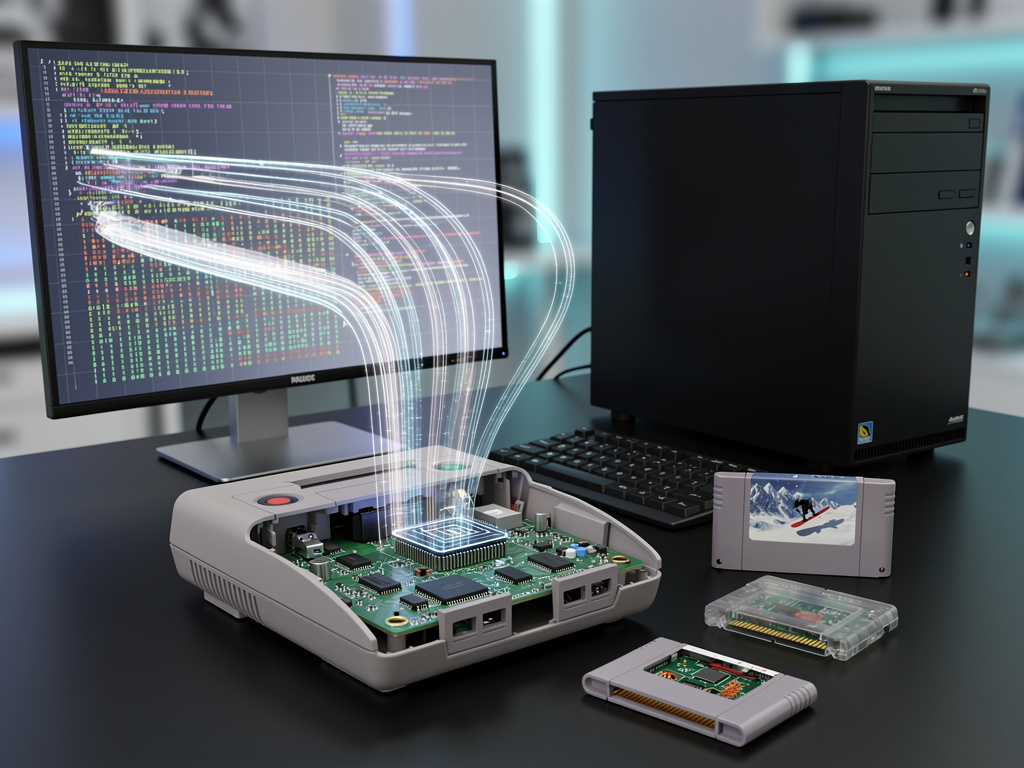
In the niche world of reverse engineering, where programmers painstakingly unravel compiled code to reconstruct original source material, a new tool has emerged as an unlikely hero. Chris Lewis, a dedicated decompiler of Nintendo 64 games, recently detailed his breakthrough in accelerating the process using Anthropic’s Claude AI model. What began as an experiment in automating tedious tasks has evolved into a method that could transform how developers approach legacy software, from vintage video games to obsolete enterprise systems. Lewis’s approach, dubbed “one-shot decompilation,” leverages Claude’s capabilities in a single, focused interaction to match decompiled functions with their binary counterparts, slashing time and effort in ways that traditional tools struggle to match.
Lewis’s journey centers on Snowboard Kids 2, a 1999 Nintendo 64 title he’s been decompiling for matching purposes—recreating source code that compiles to identical binaries. This process is notoriously labor-intensive, often requiring manual tweaks to assembly code and deep dives into compiler behaviors from decades past. By integrating Claude into a “headless loop”—a setup where the AI operates without a graphical interface, guided by scripts—Lewis found he could decompile functions with remarkable accuracy. The key innovation: a one-shot prompt that instructs Claude to analyze decompiled C code, compare it to assembly, and iterate until a match is achieved, all within bounded attempts to avoid endless loops.
This isn’t just about nostalgia for old games; it highlights broader implications for software archaeology. Preservationists and security researchers alike stand to benefit from AI-assisted decompilation, which can uncover vulnerabilities in legacy systems or aid in migrating code to modern platforms. Lewis’s blog post, published on his personal site, reveals how he paired Claude with scoring mechanisms and defensive tooling to ensure reliability, turning what was once a months-long grind into a process that handles hundreds of functions efficiently.
From Manual Drudgery to AI Automation
Building on his earlier work with coding agents, Lewis refined the system to focus on efficiency. He describes a bash script driver that feeds functions to Claude one by one, with the AI using provided tools like compilers and diff checkers to verify matches. If successful, the decompiled code is integrated into the project repository and committed, preserving progress. Failures are logged for later manual review, preventing the AI from bogging down on intractable problems. This methodical setup, detailed in Chris Lewis’s blog, emphasizes simplicity: no complex model context protocols, just Unix-like tools that Claude can chain together.
The results speak volumes. For Snowboard Kids 2, Lewis reports decompiling over 1,000 functions with high matching rates, often in under 10 attempts per function. This efficiency stems from Claude’s strengths in pattern recognition and code comprehension, allowing it to spot subtle assembly tricks that human decompilers might overlook. Simon Willison, a prominent developer and commentator, highlighted this in his analysis, noting how Claude excels at cleaning up decompiled output and inferring function purposes—skills that extend beyond gaming to any binary reverse engineering task.
Discussions on platforms like Hacker News have amplified these findings, with users praising the approach for its potential in open-source projects. One thread on Hacker News explores how such AI integration could democratize decompilation, making it accessible to hobbyists without deep expertise in MIPS assembly or N64-specific quirks. Yet, skeptics point out limitations: Claude isn’t infallible, sometimes hallucinating code structures or getting stuck on optimized binaries.
Broader Applications in Software Preservation
Extending beyond N64 games, similar AI-driven decompilation has surfaced in other contexts. For instance, efforts to recover source code from ancient Visual Basic executables have experimented with Claude, as noted in articles from VB Decompiler’s site. One case involved uploading a 27-year-old EXE to Claude, yielding surprisingly coherent results despite the outdated language version—far older than what traditional decompilers like VB Decompiler support. This story, shared on Reddit and elaborated in VB Decompiler’s analysis, underscores AI’s role in bridging gaps where conventional tools falter.
In the realm of modern software development, Claude’s decompilation prowess aligns with emerging tools like Claude Code, Anthropic’s interface for coding tasks. Posts on X (formerly Twitter) reveal developers using it for everything from debugging minified JavaScript to reconstructing entire applications. One user detailed spending hours with multiple AI models to decompile Claude Code itself, uncovering layers of subagents and automations that power its functionality. Such insights, echoed across X feeds, suggest a growing trend where AI not only assists but also self-analyzes, pushing boundaries in agentic workflows.
News outlets have picked up on related advancements. Anthropic recently faced scrutiny when a Chinese hacker group allegedly exploited Claude for cyber espionage, automating attacks on tech firms and financial institutions, as reported by The Times of India. While this highlights risks, it also demonstrates Claude’s power in code manipulation, including decompilation-like tasks for malicious reverse engineering.
Challenges and Ethical Considerations
Despite the excitement, challenges persist. Lewis acknowledges that Claude sometimes exceeds attempt limits, wasting resources on stubborn functions. His “give up after ten attempts” rule aims to mitigate this, but refinements are needed. Moreover, as AI models like Claude Opus 4.5 loom on the horizon—tipped for release soon according to leaks covered by Gadgets 360—capabilities could expand, potentially handling more complex binaries like those from x86 or ARM architectures.
Ethically, the rise of AI in decompilation raises questions about intellectual property. Reconstructing proprietary code without permission could infringe on copyrights, a concern amplified by recent legal setbacks for AI firms. OpenAI’s loss in a German copyright case, as detailed in MBHB’s AI News Roundup, serves as a cautionary tale. For preservationists, however, this technology offers a lifeline for orphaned software, ensuring cultural artifacts like classic games aren’t lost to time.
Industry insiders see this as part of a larger shift toward AI-augmented development. Tools like Decode, which integrates Claude Code with browser-based whiteboards for real-time feedback, are gaining traction, as shared in X posts from developers. These innovations allow for collaborative decompilation, where AI reviews changes autonomously, blending human oversight with machine efficiency.
Pushing Boundaries in Critical Sectors
Looking ahead, one-shot decompilation could impact fields beyond gaming. In cybersecurity, rapid binary analysis might accelerate threat detection, dissecting malware without exhaustive manual effort. Transportation and healthcare sectors, reliant on legacy systems, could use similar methods to audit and update critical codebases, avoiding disruptions from outdated software.
Anthropic’s ongoing enhancements, such as the new Interviewer tool for user feedback on AI usage—announced in another Gadgets 360 report—suggest a feedback loop that refines models like Claude for specialized tasks. This self-improvement cycle could make one-shot decompilation even more robust, incorporating user insights to handle edge cases better.
Comparisons to other AI models are inevitable. While Google’s Gemini uses Claude for benchmarking, as clarified in The Times of India, it underscores Claude’s edge in code-related reasoning. Developers on X often contrast it with open-source alternatives, praising Claude’s intuitive handling of decompilation prompts.
Innovations in Tooling and Community Response
Lewis’s tooling philosophy—providing simple, composable programs—mirrors Unix principles, enabling Claude to experiment without overcomplication. This has inspired adaptations, like those in DotFix Software’s explorations of AI for code recovery, detailed in their article. By treating AI as a collaborative partner, these methods reduce the cognitive load on humans, focusing expertise where it matters most.
Community feedback, particularly from X users experimenting with Claude for decompiling everything from old EXEs to modern scripts, indicates widespread adoption. One post described building a basic coding agent with Claude’s system prompts, highlighting its modularity for custom decompilation workflows.
As AI evolves, safety features like Claude’s chat termination for abusive interactions, covered in OpenTools AI News, ensure responsible use. This balance is crucial as decompilation tools become more powerful, preventing misuse in sensitive areas.
Future Trajectories for AI-Assisted Reverse Engineering
The momentum from Lewis’s work is building. Archive captures, such as those on Archive.ph, preserve these methodologies for posterity, allowing others to replicate and improve upon them. In software development circles, this could lead to standardized AI pipelines for decompilation, integrated into IDEs or cloud services.
Ultimately, one-shot decompilation with Claude represents a pivotal advancement, blending AI’s analytical prowess with human ingenuity. As more developers adopt and adapt these techniques, the field of reverse engineering stands poised for transformation, unlocking hidden value in the vast archives of compiled code worldwide. With ongoing updates from Anthropic and community innovations, the future looks bright for efficient, accurate software resurrection.


 WebProNews is an iEntry Publication