
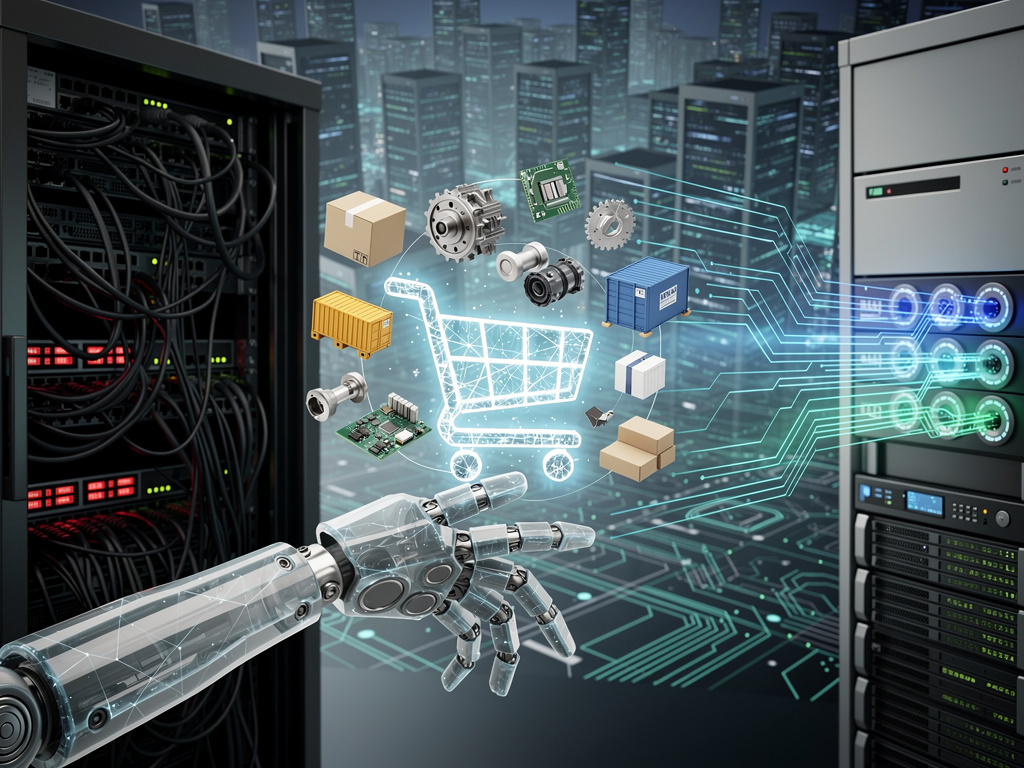
Software agents are about to start buying things. Not browsing. Not recommending. Actually completing purchases on behalf of businesses — negotiating terms, comparing vendors, and placing orders without a human clicking “confirm.” That’s the premise behind AI-powered autonomous commerce, and according to a recent analysis from TechRadar Pro, the shift is accelerating faster than most enterprises have prepared for.
The concept isn’t science fiction anymore. Gartner has projected that by 2028, AI agents will handle at least 15% of day-to-day work decisions autonomously, and procurement sits squarely in the crosshairs. We’re talking about AI systems that can evaluate supplier catalogs, cross-reference pricing against historical data, flag anomalies, and execute transactions — all within guardrails set by human operators but without requiring their direct involvement at every step.
So what’s actually changing?
Traditional e-commerce was built for human eyes. Product pages, shopping carts, checkout flows — all designed around a person making decisions with a mouse and a credit card. Autonomous buying flips that model. AI agents don’t need pretty interfaces. They need structured data, clean APIs, and machine-readable product information. Companies that haven’t invested in those backend fundamentals are about to find themselves invisible to the algorithms doing the purchasing.
This is where it gets uncomfortable for a lot of B2B sellers. The TechRadar Pro piece highlights that many organizations still rely on outdated catalog systems, inconsistent product data, and manual quoting processes. None of that works when your buyer is a bot. If an AI agent can’t parse your pricing structure or access your inventory data programmatically, it simply moves on to a competitor whose systems are ready.
And the competitive pressure is real. Amazon Business has been quietly building infrastructure for exactly this kind of machine-to-machine commerce. Shopify has rolled out AI-native tools for merchants. Salesforce’s Agentforce platform, launched in late 2024, explicitly targets autonomous agent workflows in sales and procurement. These aren’t experimental pilots. They’re production features shipping now.
The implications extend well beyond technology upgrades. Procurement teams will need to rethink how they set policies, define approval thresholds, and manage vendor relationships when AI handles the operational grunt work. Trust becomes a design problem. How much autonomy do you grant the agent? What happens when it makes a suboptimal purchase? Who’s accountable?
Right now, most implementations are what you’d call “semi-autonomous.” The AI recommends, a human approves. But the trajectory is clear. As large language models get better at reasoning and tool use — think OpenAI’s function-calling capabilities or Anthropic’s Claude acting as a computer-use agent — the gap between recommendation and execution shrinks fast.
There’s a data readiness problem too. TechRadar Pro notes that businesses need to ensure their product information is accurate, standardized, and accessible through modern APIs. That sounds basic. It isn’t. Years of accumulated technical debt in enterprise product information management mean that even large companies struggle with something as fundamental as consistent SKU data across channels.
For sellers, the strategic question is blunt: will AI agents choose you? The factors that influence a human buyer — brand loyalty, a friendly sales rep, a well-designed website — matter far less to an algorithm optimizing for price, availability, compliance, and delivery speed. Differentiation shifts from marketing to metadata.
But there’s an opportunity here for companies that move early. Firms that structure their commerce platforms for agent-readiness — clean data, open APIs, dynamic pricing engines, real-time inventory feeds — will capture disproportionate share as autonomous buying scales. First-mover advantage in machine-readable commerce could be substantial.
On the buyer side, organizations deploying procurement agents stand to cut costs significantly. McKinsey has estimated that AI in procurement can reduce sourcing costs by up to 20% through better supplier matching and faster cycle times. The efficiency gains compound quickly when you remove human bottlenecks from routine purchasing decisions.
Security and governance can’t be afterthoughts. Autonomous agents acting on behalf of a company introduce new attack surfaces — prompt injection, data poisoning, unauthorized transactions. The frameworks for securing agent-based commerce are still immature. Companies deploying these systems need to build in audit trails, spending limits, and human override mechanisms from day one.
The transition won’t happen overnight. Complex purchases involving custom specifications, relationship-dependent negotiations, or regulatory scrutiny will stay human-driven for years. But the long tail of routine B2B transactions — office supplies, standard components, commodity services — is ripe for automation right now.
Here’s the bottom line. AI-powered autonomous buying isn’t a future trend to monitor. It’s an infrastructure challenge to solve today. The companies that treat their commerce data and APIs as strategic assets — not IT housekeeping — will be the ones that AI agents actually do business with. Everyone else risks becoming invisible to the machines that increasingly hold the purchasing power.


 WebProNews is an iEntry Publication