
Whispers in the Walls: How AI Is Turning Prison Calls into Predictive Tools
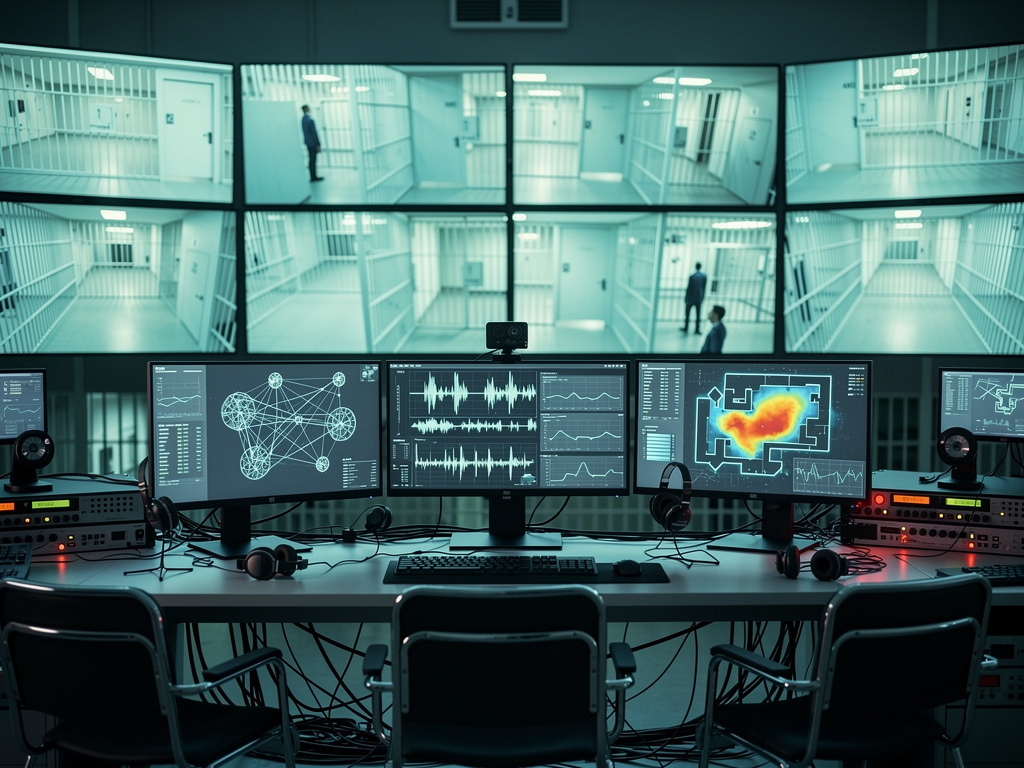
In the dimly lit corridors of America’s prisons, a new form of oversight is emerging, one that listens not just to words but to the shadows of intent. Securus Technologies, a major player in prison telecommunications, has developed an artificial intelligence system trained on vast archives of inmate phone calls, video chats, and messages. This tool aims to predict criminal activities before they unfold, raising profound questions about privacy, ethics, and the boundaries of surveillance in correctional facilities. Drawing from recent reports, this technology represents a significant shift in how prisons monitor communications, blending cutting-edge AI with the raw data of incarcerated lives.
The system, as detailed in a piece from MIT Technology Review, scans for patterns that might indicate “contemplated” crimes. Securus began building these AI models in 2023, leveraging its extensive database of recorded interactions. The company’s president, Kevin Elder, has positioned this as a way to enhance security amid staffing shortages, emphasizing efficiency over blanket surveillance. Yet, critics argue it encroaches on the already fragile privacy rights of inmates, who often pay for these calls themselves.
This development isn’t isolated. Broader trends in prison tech show AI being deployed for everything from monitoring behavior to predicting recidivism. In California, for instance, machine learning tools are used to analyze surveillance footage, as explored in an article by The Marshall Project. These systems promise to reduce violence and contraband, but they also amplify concerns about bias and opaque data practices. Inmates, many from marginalized communities, find their every utterance potentially weaponized against them.
The Ethical Tightrope of Data Harvesting
At the heart of Securus’s initiative is a massive trove of data—years of conversations that inmates believed were private, or at least semi-private. According to insights from Futurism, prisoners are alarmed to learn their calls have been used to train AI without explicit consent. This practice echoes broader debates in AI ethics, where data is often scraped from unwitting sources to fuel machine learning algorithms. Securus insists the focus is on preventing harm, not indiscriminate spying, but the lack of transparency fuels distrust.
Privacy advocates, including those from the ACLU, have voiced strong objections. Corene Kendrick, deputy director of the ACLU’s National Prison Project, highlighted in the MIT Technology Review report how this AI enables invasive monitoring with few legal checks. Courts have historically granted wide latitude to prison surveillance, but AI’s predictive capabilities push into uncharted territory. “Are we going to stop crime before it happens because we’re monitoring every utterance and thought of incarcerated people?” Kendrick asked, underscoring the dystopian undertones.
Moreover, the financial model adds another layer of complexity. Inmates in most states pay for their calls, effectively funding the very system that surveils them. This dual role—customer and subject—creates a perverse incentive for companies like Securus to expand data collection. Recent leaks, as noted in various reports, have exposed improper recordings of attorney-client conversations, violating confidentiality and raising legal red flags.
From Reactive Monitoring to Predictive Policing Behind Bars
Securus’s AI doesn’t just transcribe calls; it analyzes them for subtle cues of impending criminality. Trained on patterns from historical data, the model flags discussions that might signal plots, from drug deals to escapes. A Business of Tech analysis suggests this predictive approach could spill over into workplaces, where employee communications might be similarly scrutinized. In prisons, however, the stakes are higher, with false positives potentially leading to extended sentences or denied parole.
Comparisons to international practices offer stark contrasts. In China, AI-driven surveillance monitors prison populations to predict demonstrations, according to a CNN report. While U.S. systems claim to prioritize prevention over punishment, the parallels raise alarms about authoritarian creep. Domestically, older instances of AI in prisons, like those reported by Context by TRF in 2021, involved eavesdropping to combat gang activity, but today’s tools are far more sophisticated.
On social platforms like X, formerly Twitter, users express a mix of outrage and concern. Posts highlight the invasive nature of voiceprint databases and the indefinite retention of data even for those acquitted. One user noted Securus’s history of recording attorney calls, linking it to broader surveillance harms. These sentiments reflect a growing public unease, amplified by viral discussions about futuristic concepts like AI-simulated sentences.
Regulatory Battles and Corporate Maneuvers
Securus’s path hasn’t been without hurdles. The company recently won a regulatory battle over telecom rates, securing funding to bolster its AI endeavors, as per the MIT Technology Review. This victory underscores the interplay between profit and technology in the prison-industrial complex. Critics argue that without stricter oversight, such tools could exacerbate inequalities, disproportionately affecting minority inmates whose speech patterns might trigger biased algorithms.
Legal experts point to past scandals, such as the 2019 revelation by journalists on X (referencing broader platform discussions) that Securus retained voice prints of pretrial defendants found not guilty. This practice blurs the line between guilt and suspicion, potentially stigmatizing individuals long after their cases close. Advocacy groups call for federal guidelines to limit data retention and ensure algorithmic fairness.
Beyond Securus, other regions are adopting similar tech. In Bihar, India, a massive AI-ready surveillance grid for jails was greenlit, as reported by Financial Content Markets. This global trend suggests prisons are becoming testing grounds for advanced monitoring, with implications for civil liberties worldwide. In the U.S., where private companies dominate prison tech, the lack of uniform standards allows for rapid innovation but at the cost of accountability.
Inmate Voices and the Human Cost
Amid the tech talk, the human element often gets lost. Inmates, already stripped of many freedoms, now face the prospect of their words being dissected by machines. Stories from platforms like X describe the chilling effect on communication—families hesitant to speak freely, knowing AI might misinterpret innocent banter as threats. One post likened it to an “open prison,” where surveillance extends beyond bars via facial recognition for released prisoners.
Experts like those from the Nordic AI Institute, referenced in X discussions, question the ethics of such systems, emphasizing data rights. In the U.S., where prisons house over 1.2 million people, the scale is immense. AI could reduce incidents, but at what price? False flags might lead to unnecessary isolations, worsening mental health crises already rampant in corrections.
Furthermore, the integration of AI raises questions about rehabilitation. If every conversation is a potential data point for prediction, does it hinder genuine reform? Prison reform advocates argue for a balanced approach, where technology aids security without eroding dignity.
Future Horizons in Correctional AI
Looking ahead, Securus’s model might evolve to include more modalities, like video analysis for body language cues. Patents filed by the company, as uncovered in reports, hint at behavior evaluation systems that rank speech for risk. This could transform prisons into panopticons of the digital age, where oversight is constant and invisible.
Industry insiders speculate on spillover effects. As Business of Tech noted, predictive surveillance honed in prisons could migrate to corporate settings, monitoring employees for insider threats. This diffusion demands proactive regulation to prevent misuse.
Yet, innovation continues. Concepts like Cognify, discussed on X, propose AI implants to simulate long sentences in minutes—a radical, if controversial, idea. While not yet reality, it illustrates the accelerating pace of tech in justice systems.
Balancing Security with Rights
The debate boils down to equilibrium: how to harness AI for safer prisons without sacrificing privacy. Stakeholders, from tech firms to civil liberties groups, must collaborate on frameworks that include inmate consent and independent audits.
Recent news, such as WCPO’s coverage of Securus’s AI screening, emphasizes its year-long pilot phase. Early results are promising for crime prevention, but long-term effects on trust and equity remain unclear.
Ultimately, as AI embeds deeper into correctional practices, society must grapple with its implications. Prisons, often out of public view, are where these technologies first take root, setting precedents for broader applications. The whispers in the walls may predict crimes, but they also echo calls for caution in an era of unchecked data power.


 WebProNews is an iEntry Publication